Author: Talia Huculak
-
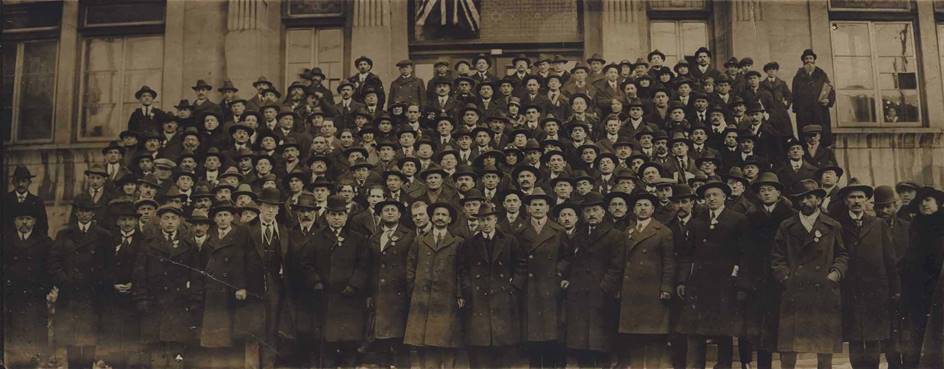
Delegates to the first Canadian Jewish Congress Plenary Assembly, March 1919.Photo Credit : Alex Dworkin Canadian Jewish Archives -
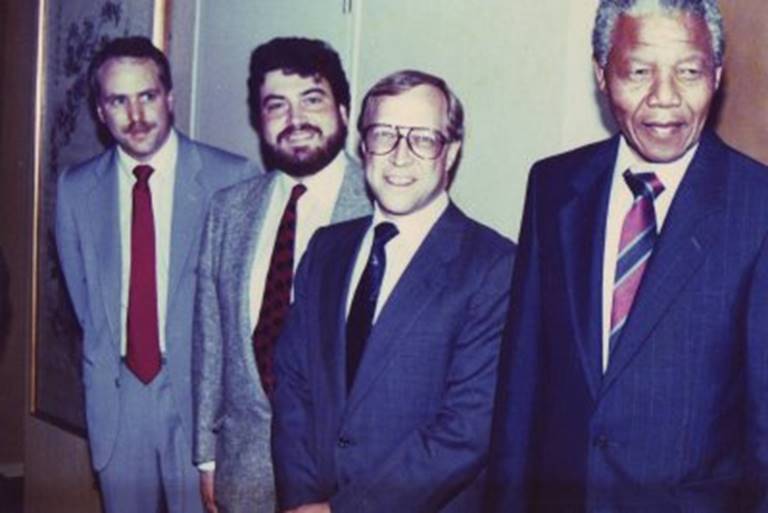
Bernie Farber, Moshe Ronen and Les Scheininger with Nelson Mandela. CJC was the only cultural community organization to meet with Mandela during his visit to Canada in 1990.Photo Credit : Alex Dworkin Canadian Jewish Archives -
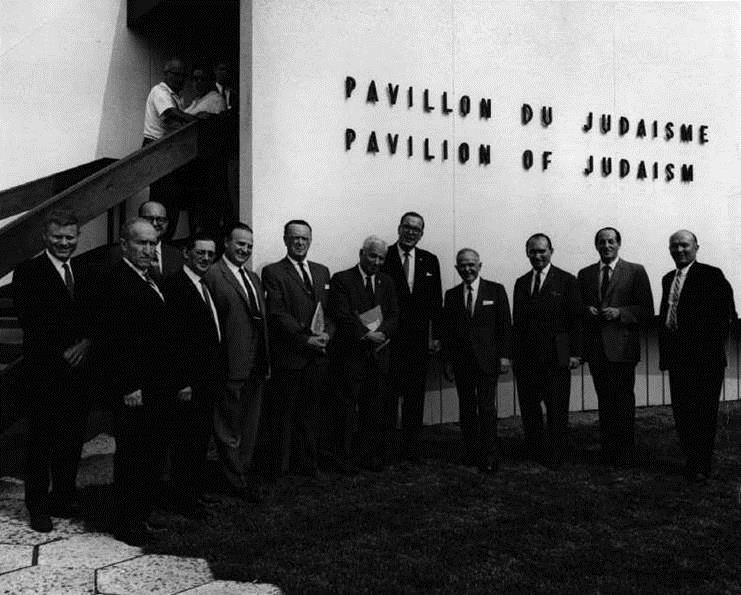
Having served as its consultants, CJC officers participated in the inauguration of the Pavilion of Judaism at Expo ’67 in Montreal, 1967.Photo Credit : Alex Dworkin Canadian Jewish Archives -
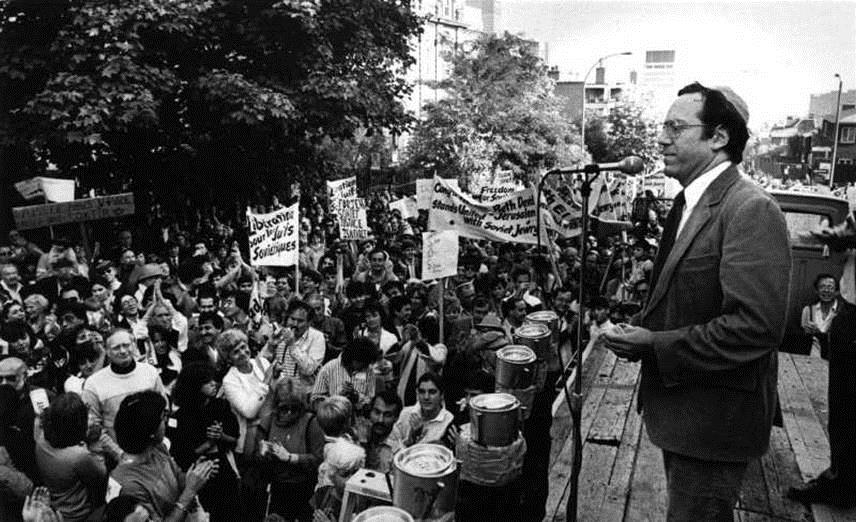
Irwin Cotler of CJC speaks outside the Montreal Soviet consulate during a rally organized in support of Soviet Jewry, 1985.Photo Credit : Alex Dworkin Canadian Jewish Archives -
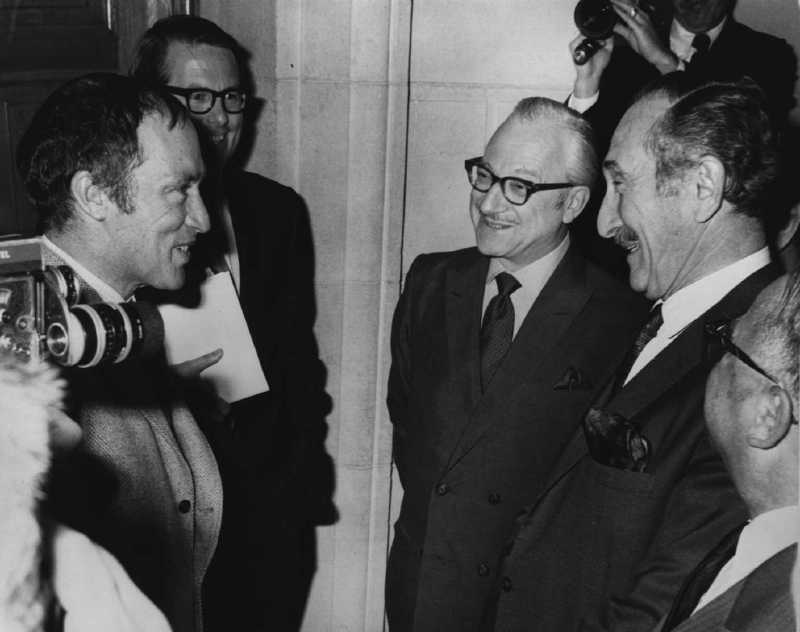
Prime Minister Pierre E. Trudeau with Sol Kanee and Saul Hayes at a CJC Plenary Assembly, 1971.Photo Credit : Alex Dworkin Canadian Jewish Archives -
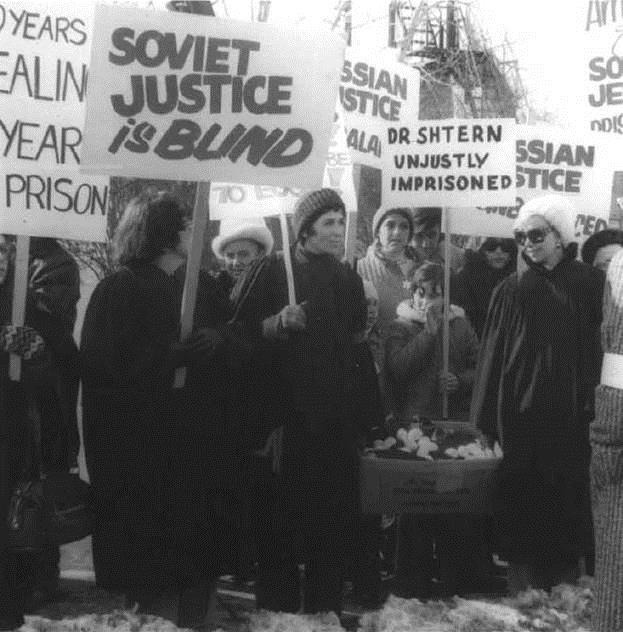
National Committee for Soviet Jewry activists in Montreal, 1970.Photo Credit : Alex Dworkin Canadian Jewish Archives -
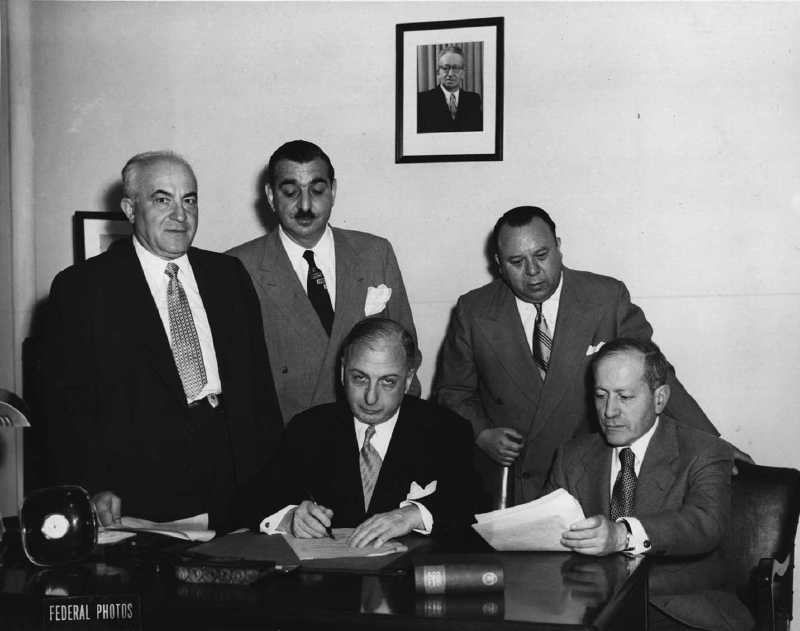
Sam Bronfman (centre)at the establishment of the Canada-Israel Corporation, 1951.Photo Credit : Alex Dworkin Canadian Jewish Archives -
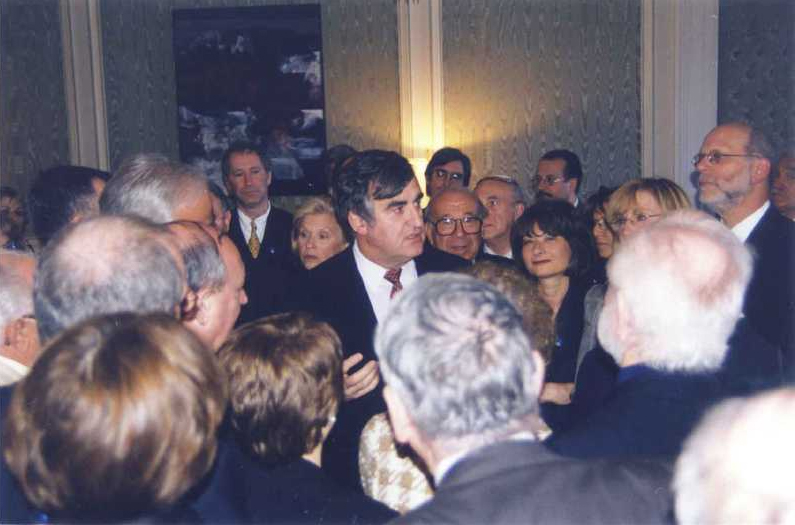
A CJC delegation of community leaders and Holocaust survivors met with Premier Lucien Bouchard the day Yom Hashoah was legislated in Quebec, May 2000.Photo Credit : Alex Dworkin Canadian Jewish Archives -
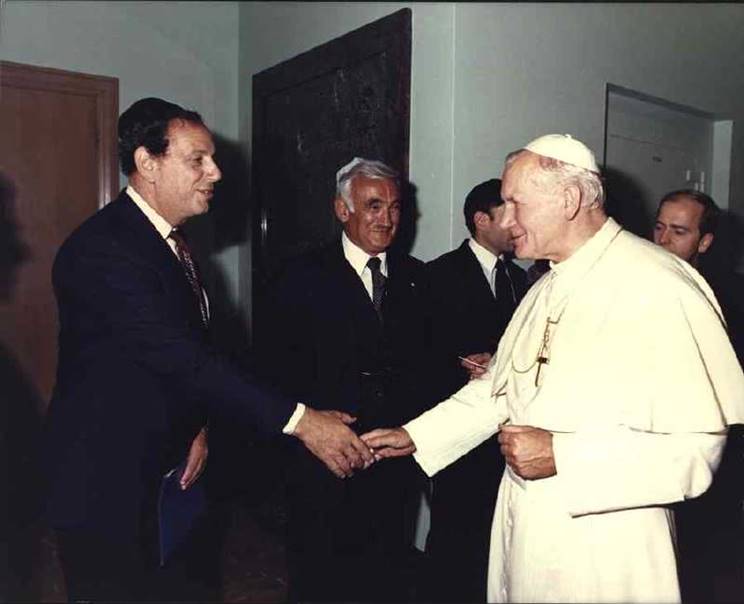
A CJC delegation led by Alan Rose met with Pope John Paul II in Montreal, 1984.Photo Credit : Alex Dworkin Canadian Jewish Archives
Canadian Jewish Congress
The Canadian Jewish Congress, the first democratically-elected representative body for Canadian Jewry, was founded in Montreal in 1919.
Initially, the breadth of the Canadian nation made national organization of the Jewish community difficult. For years, the only national body was the Federation of Canadian Zionists, whose leaders were nominated in the Central European fashion. But World War I, the devastation in Europe, the vast refugee problem and the increasing arrival of Eastern European Jews to Canada spurred the creation of a new national body. To reflect the growing democracy of the new immigrants, the Canadian Jewish Congress, composed of elected officials, set out to represent all of Canadian Jewry on its major political, national and international affairs. As many of the founding organizers were part of the left-leaning Po’alei Zion (Labour Zionism), CJC attempted to satisfy all the different elements of the community. Its first general secretary was Hannaniah Meir Caiserman, a Romanian-born tailor and labour organizer, who held that position until his death in 1950.
Among the longest serving Executive Directors was Saul Hayes, who held the position from 1940 to 1959. Hayes transformed the CJC umbrella organization into a formative lobby group. Working alongside Congress President Samuel Bronfman, he had political connections and public speaking skills that made him invaluable to the CJC Committee for Refugees in the 1930s. The plight of Jews under Nazi rule drew him to a career in which he would fight tirelessly on behalf of the Jewish community. Hayes was active in many lobbying efforts during his campaign to challenge Canada’s restrictive wartime immigration policies. One such delegation appealed to F. C. Blair, Ottawa’s seemingly obscure, but powerful, director of the Immigration Branch of the Department of Mines and Resources, to reverse policies preventing German Jewish refugees from coming to Canada. With the assistance of community leaders Hirsch Wolofsky, editor of the Keneder Adler (Montreal’s Yiddish daily), Peter Bercovitch, honorary President of the Federation of Polish Jews and a Member of Parliament, and fellow CJC leader Michael Garber, the delegation gained admission for 130 Jews. Unfortunately, the group was unable to shift federal policy further: Canada accepted fewer than 5,000 Jewish refugees from 1933 to 1948 – less than any other Western country.
Known as “Mr. Canadian Jewish Congress,” Hayes was an important ambassador for Canadian Jews to Ottawa. Under the leadership of the Bronfman-Hayes team, the CJC became the unchallenged parliament of Canadian Jewry, working to persuade the government to permit greater integration of Jewish refugees. Hayes was instrumental in Congress’s anti-defamation work, particularly concerning the Social Credit political party, which not only disseminated the Protocols of the Elders of Zion, a work of anti-Semitic propaganda, but whose leaders periodically injected allusions to Nazi discourse into their 1940s political campaigns.
Hayes represented Canadian Jewry at meetings of the World Jewish Congress, the San Francisco Conference on International Security in 1945, the Paris Conference on Peace Treaties in 1946, and at the United Nations Relief and Rehabilitation Agency, where he advocated for victims of war-torn Europe. In the latter capacity, Hayes became the first delegate to represent world Jewry before an international body since the 1919 Versailles Conference. The Saul Hayes Human Rights Award, established by the Canadian Jewish Congress, recognized individuals making significant contributions in the field of human rights.
Other notable members of the CJC include Presidents Lyon Cohen; Samuel William Jacobs; Monroe Abbey; Irwin Cotler; Dorothy Reitman; Irving Abella; Reuven Bulka; Sylvain Abitbol; and Samuel Bronfman, who sat from 1939 to 1962, making him the longest-serving President in its history.
CJC remained the national organization of Canadian Jews for many years – lobbying for, and defending, their rights. For instance, it launched pressure campaigns in an effort to allow Jewish emigration from the Soviet Union. In 2007, it became an organ of the Canadian Council for Israel and Jewish Affairs, and in 2011, it was officially disbanded.
Learn more:
http://imjm.ca/location/2328
http://www.cjhn.ca/en/permalink/cjhn189
http://archives.concordia.ca/hayes
-
Photo Credit : Andy Nulman -
Photo Credit : Andy Nulman
Andy Nulman
Starting his career at the age of 16 as a journalist, Andy is best known for co-founding the Just For Laughs Comedy Festival in Montreal with Gilbert Rozon, and turning it into the world’s largest and most prestigious event of its kind.
At Just For Laughs, Nulman produced over 150 Festival TV shows, in a host of languages around the world. In 1997, he wrote, produced and even hosted The Worst of Just For Laughs for CBC and won a Gemini Award in 1993 for The Best of Just For Laughs. He is still working on The Average of Just For Laughs.
Following his success with Just For Laughs, in 1999 he went on to co-found mobile media pioneer Airborne Entertainment with Garner Bornstein, which he eventually sold for enough money to be able to hire people to write bios such as this one.
In 2010, he rejoined Just For Laughs as President, Festivals and Television until he left once again to embark on more world-changing digital ventures, including his most recent, the predictive gaming platform Play the Future. He’s also written three books, and is renowned as a risk-taking, trouble-making public speaker. Andy possesses a unique skill set of media, management and marketing expertise over a career spanning more than four decades. And that’s nothing to laugh at. Unless he slips on a banana peel…then you can crack up.
-
Aldo Bensadoun.Photo Credit : Jewish Public Library - Archives -
Photo Credit : Aldo
Aldo Bensadoun
In 1972, working out of a corner in a Le Chateau store, Aldo Bensadoun set up a small retail space selling clogs. In 1993, this visionary businessman opened his first store in the US. By 2016, Aldo was at the helm of an eponymous global footwear and accessories empire with over 3,000 points of sale, employing over 20,000 men and women and serving over 20 million customers annually.
From his humble beginnings, Aldo’s vision incorporated an ethos of style, quality and affordability which has remained unchanged to this day. But more than anything, Aldo set out to build a brand with a conscience. In fact, the Aldo brand is one of the most iconic brands deeply committed to being an unparalleled corporate citizen and giving something back to the community. As the chain grew and prospered, ALDO has supported a host of major causes both locally and globally. It has made repeated donations to institutions including the Jewish General Hospital, the Montreal Children’s Hospital, Mount Sinai Hospital, the Montreal Heart Institute, McGill University, the Canadian Cancer Society, the Montreal Symphony Orchestra, the Montreal Museum of Fine Arts, War Child, Dans la Rue and, of course, the CURE Foundation for breast cancer.
One cause in particular has become synonymous with the ALDO brand. Since the mid-80s, when very few companies had the courage to take a stand, ALDO has been deeply committed to the fight against AIDS. It has been involved with raising awareness, education, prevention, protection and to finding a definitive cure. It has pioneered and collaborated in numerous initiatives such as friendship bracelets, VFILES, Partners in Health and HIV Equity, all of which continue to make a real difference. For those living with HIV/AIDS, and many others around the world, the ALDO group remains a shining example of a brand with a true conscience.
-
Kalmen Kaplansky.Photo Credit : Hershey Warshawsky -
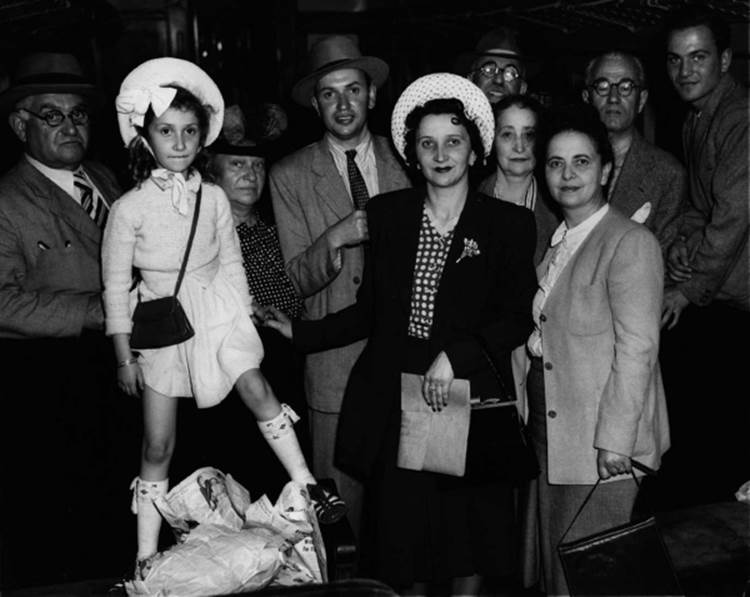
Jewish immigrants arriving in Montreal after WWII. Many of these immigrants were brought to Canada through the initiative of the Tailors Project.Photo Credit : Alex Dworkin Canadian Jewish Archives -
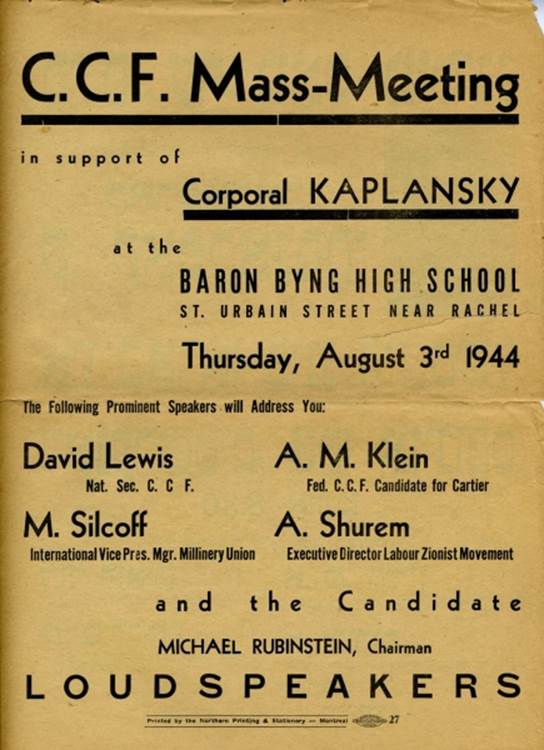
From 1943 to 1946 Kalmen Kaplansky fought for the Canadian army. This flyer advertises a mass meeting in his honour sponsored by the political party he was a member of, the C.C.F., (predecessor to the N.D.P), in Aug. 1944.Photo Credit : Jewish Public Library - Archives -
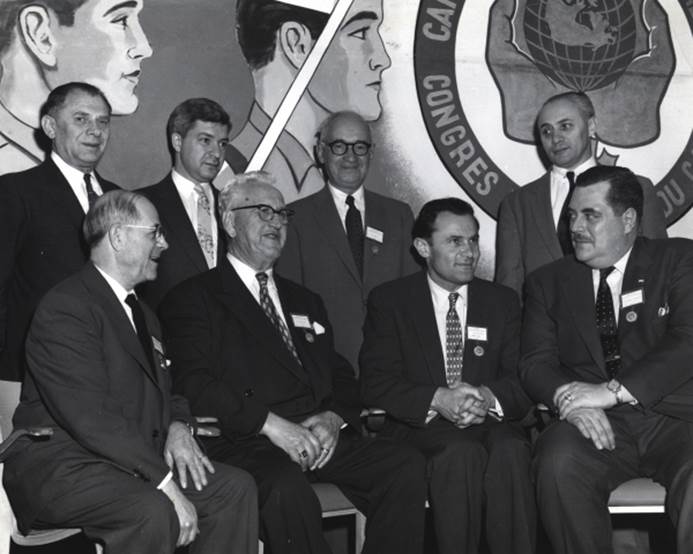
Kalman Kaplansky (top row, second from left), and other leaders at Canadian Labour Congress, ca. 1950s.Photo Credit : Alex Dworkin Canadian Jewish Archives
Kalmen Kaplansky
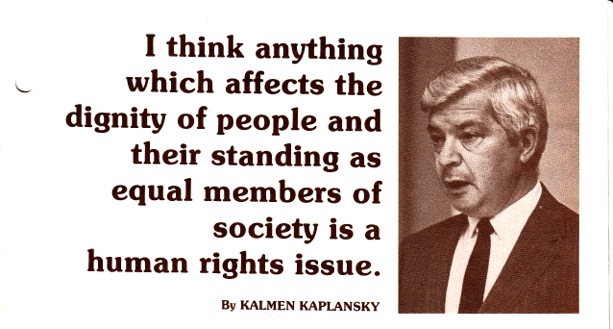
Kalman Kaplansky is known as the zayde (grandfather) of the human rights movement in Canada.
Kaplansky was born in Bialystok, in present-day Poland. In 1929, following his high school graduation, he immigrated to Canada by himself. There, he intended to enroll at McGill University, but his efforts were thwarted by the institution’s rigid anti-Semitic quota system. Instead, Kaplansky became a tradesman, working as a typesetter and linotype operator from 1932-43. During the Great Depression, he quickly rose to prominence in the Labour movement as a trade union executive. He was a delegate of the Montreal Typographical Union 176 to the Trades and Labour Congress of Canada, and then to the merged Canadian Labour Congress. To support the war effort, he enlisted as a sergeant in the Canadian Army from 1943-46.
In 1939, Kaplansky helped to form the Jewish Labour Committee (JLC) in Canada – which was an offshoot of the American Labour organization, founded six years earlier. He served as the JLC’s secretary from 1936-38, and was its national director from 1946-57. Sitting at the organization’s helm, he steered the JLC movement towards a human rights focus, not just directed at combating anti-Semitism but at discrimination against all racial and ethnic minorities, including Black Canadians, French Canadians and First Nations. His efforts were instrumental in passing the Ontario Fair Employment Practices Act of 1951, which banned racial discrimination in hiring, and had a positive ripple effect all across Canada. He went on to play an important role in the International Labour Organization and the Canadian Labour Congress, as well. He also had close ties to the Cooperative Commonwealth Federation (CCF) – the NDP’s predecessor – and was a candidate in two elections: provincially in 1944 and federally in 1950.
In 1947, Kaplansky, along with Moishe Lewis, famously spearheaded the “Tailor’s Project” – a joint effort of the JLC and the Workmen’s Circle to circumvent Canada’s stringent quota system for Jewish immigration and bring in hundreds of refugees from DP camps as garment industry workers after WWII. He was later awarded the Order of Canada.
Special thanks to the Museum of Jewish Montreal.
Learn more:
http://historyofrights.ca/encyclopaedia/biographies/kalmen-kaplansky/
https://web.archive.org/web/20101122041255/http://cjccc.ca///national_archives/archives/arcguideK.htm
http://imjm.ca/location/1341
http://www.jewishpubliclibrary.org/blog/?page_id=25
-
Jack Tietolman.Photo Credit : Radioville
Jack Tietolman
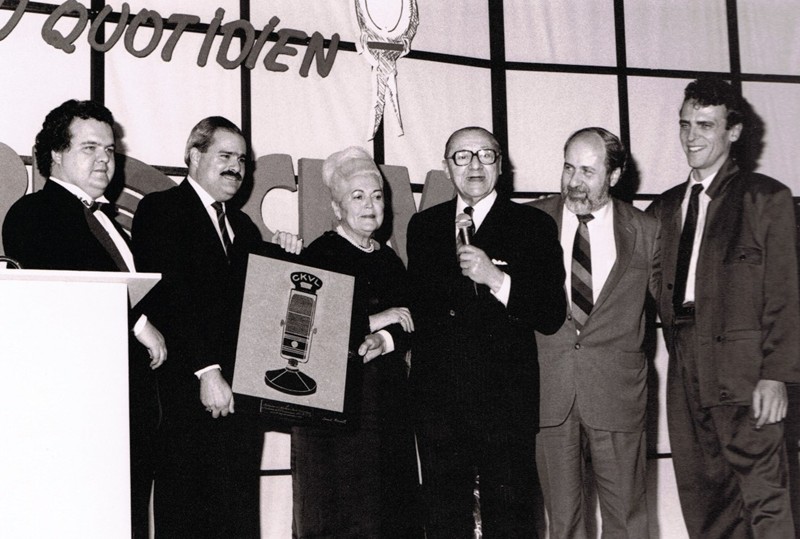
Jack Tietolman was a community-oriented Montrealer who worked in broadcasting and co-founded the French-language radio station CKVL.
Tietolman’s broadcasting career spanned 40 years. He created the General Broadcasting Company in 1934 and, in 1946, he and Corey Thomson co-founded the bilingual (but predominantly French-language) radio station CKVL. CKVL, which stood for “Canadian Kilocycle Verdun Lakeshore,” aired a variety of programs, including many radio dramas. Tietolman was one of the first broadcasters in Canada to hire female announcers; one of the most popular was Reine Charrier (aka “Madame X”), who hosted Quebec’s first open-line talk show, starting in 1959.
Tietolman was president and principal shareholder of several companies, including Verdun Radio Centre Inc., Radiomonde Limitée, Radio Futura Limited, Radio and Television Sales Inc., Verdun Import Sales Corporation, all of which were connected to promoting radio stations.
Tietolman was an active member of many community organizations. He was a director of Notre-Dame Hospital, the Douglas Hospital, the Montreal YMCA, the Montreal YMHA, the Canadian Cancer Society and the Jewish Hospital of Hope. He was President of the Montreal West End Lodge of B’nai Brith. He was also a member of the Canadian Council of Christians and Jews, the Montreal Board of Trade, the Canadian Chamber of Commerce and the Quebec Chamber of Commerce.
Tietolman was awarded L’Ordre de mérite de la culture française, as well as the Outstanding Citizen Award from the Montreal Citizenship Council.
-
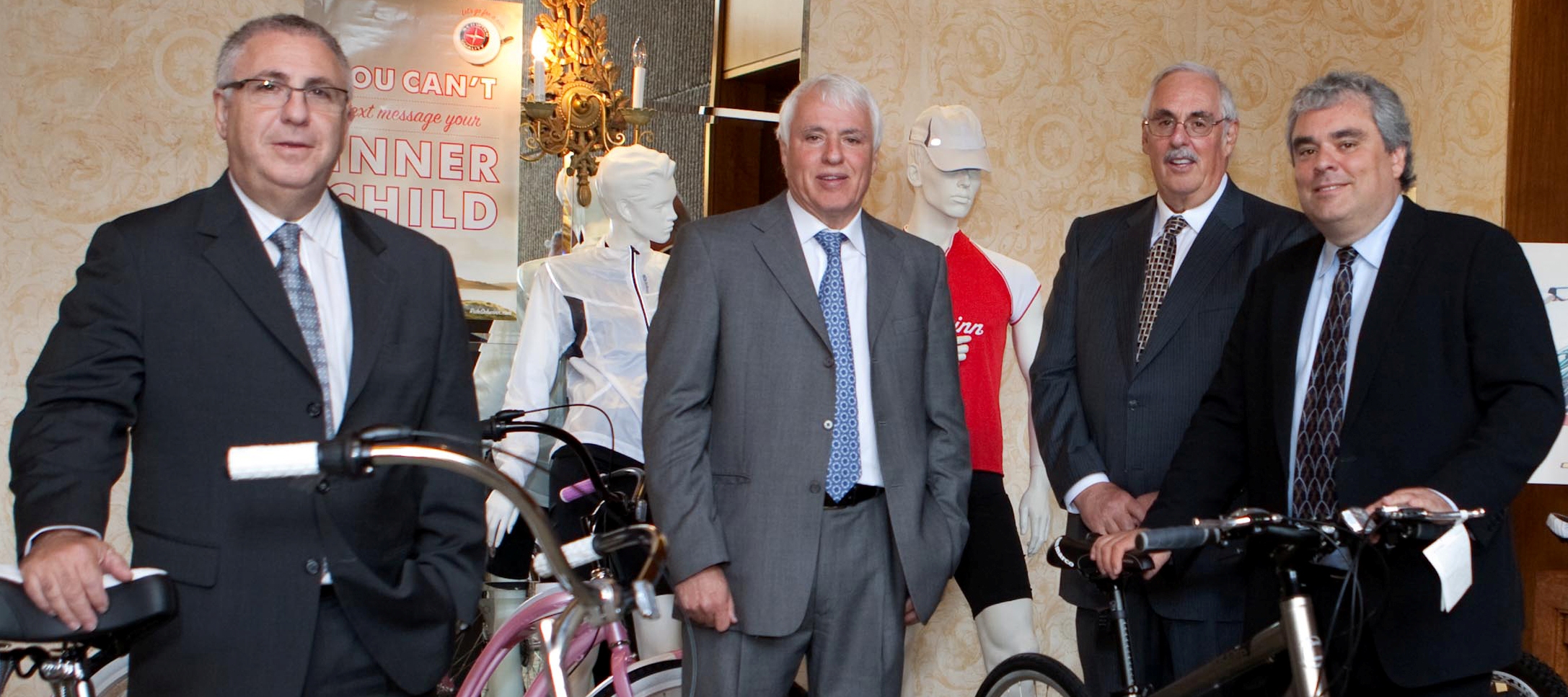
Jeff Segel, Alan, Martin and Jeffrey Schwartz.Photo Credit : Jewish General Hospital -
Photo Credit : Dorel Industries
Dorel Industries
If you’ve ever pushed a baby stroller or buckled a child’s car seat, ridden a bike down a street or furnished a living room, there’s a pretty good chance you’ve enjoyed a Dorel product along the way.
Based in Montreal – with Martin Schwartz, Alan Schwartz, Jeffrey Schwartz and Jeff Segel at the helm – Dorel Industries currently boasts annual sales of over US $2.7 billion, employing over 10,000 people in some 25 countries worldwide.
Dorel is an epic success story that started back in 1962, when Leo Schwartz began selling juvenile products in Montreal under the Dorel name. A few years later, in 1969, Martin Schwartz, Jeff Segel, Jeffrey Schwartz and Alan Schwartz founded a company selling ready-to-assemble furniture to Canadian customers. And so, Dorel Industries was born.
Today, the company operates via three core divisions: Juvenile, Sports and Home Furnishings. Its Juvenile division is known throughout the world for its safety, comfort and innovative design, and comprises powerful brands including Safety 1st, Quinny, Cosco, Mother’s Choice and Maxi-Cosi.
Dorel Sports has turned the cycling world on its ear via iconic brands like Cannondale, Schwinn, GT, Mongoose and Sugoi. Lastly, Dorel Home Furnishings boasts an incredible brand roster such as Ameriwood Home, Dorel Living, Signature Sleep and DHP.
Dorel Industries’ strength is based on the diversity, superior quality and innovative style of its brands and products. But just as important is Dorel’s profound commitment to giving back to the community. In fact, Dorel has made major gifts to Federation CJA, to changing the face of Jewish camping, Yaldei school and the Jewish General Hospital, even donating vital products to needy families affected by Hurricane Katrina.
Moe Nadler
Montreal native Moses “Moe” Nadler was the founder and majority owner of the Canadian Lady Corset Company, which developed the iconic push-up underwire brassiere, Wonderbra.
Nadler opened the Canadian Lady Corset Company, a small sewing shop in Montreal, in 1939. Between 1939 and 1955, the lingerie company produced girdles, swimsuits, slips, panties and bras. By the 60s, the entire company had been rebranded “Wonderbra, the company.” And by the mid-60s, it was exporting and licensing the Wonderbra line to Western Europe, Israel, Australia, South Africa and the West Indies.
Israel Pilot, the New Yorker from whom Nadler initially licensed the “Wonder-Bra trademark” and diagonal slash patent, cut the revolutionary bra cup on the bias to give women added comfort and freedom of movement in a time when elastics weren’t available for clothing, due to WWII rationing. The American Wonder-Bra was trademarked in 1955. Nadler subsequently bought the rights, developing and redesigning the brand as Wonderbra in Canada.
The Wonderbra’s development coincided with the Feminist movement. While women were still wearing girdles in the late 50s and early 60s, the sexual revolution caused a seismic shift in women’s fashion. Hemlines rose and highly structured undergarments were rendered obsolete. The Wonderbra – created by Quebec designer Louise Poirier, under Nadler’s direction – was made to fit a confident modern woman’s lifestyle.
The 1963 Dream Lift Model 1300, which is nearly identical to today’s Wonderbra, came to define the company. The plunge push-up bra was one of the best-selling styles in Canada, and in the 90s, it became an international sensation. Wonderbra was already a $27-million business in the 70s; by 1996, the 1300 design had broken the Guinness Book of World Record in sales.