
-
Photo Credit : tolerance.ca
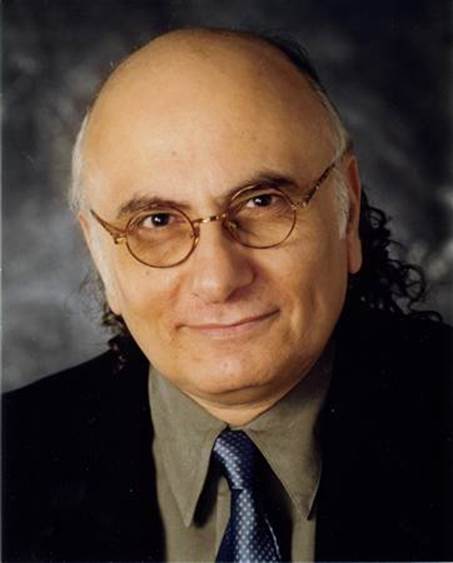
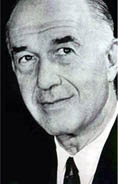
Victor Teboul
Francophone Canadian writer and educator Victor Teboul, Ph.D., was born in Alexandria, Egypt. A longtime resident of Montreal, his work focuses on Jewish and Quebecois identity, the Egyptian Jewish community, and his own experiences as a Jewish individual exiled from Arab lands. He is the founding editor of the Tolerance.ca webzine, which he created in 2002 to promote a critical approach to issues of tolerance and diversity. He has also been a tireless promoter of Québécois-Jewish relations.
Teboul’s family immigrated to Quebec when he was a child, after a brief stay in France. He earned his Master’s degree in literature from McGill University and a Doctorate in French Studies from Université de Montréal. He went on to teach history at Université du Québec à Montréal and Quebec literature at a French-language college near Montreal. Teboul has been a member of the non-fiction jury for Canada’s Governor General’s Literary Awards. In addition to his success as a professor and writer, he has written, hosted and produced several radio series for Radio-Canada.
Teboul is very prolific, with several books and numerous articles to his name. His semiautobiographical novel La Lente Découverte de l’étrangeté centered around the expulsion of Egypt’s Jewish community during the Suez Canal crisis in the late 1950s, and his 1985 book, Mythe et images du Juif au Québec, uncovered and explored anti-Semitic tropes prevalent in Quebec’s literary canon and history books. Bienvenue chez Monsieur B.! is another of his most popular novels. Teboul’s books and essays have been widely read, giving voice to Montreal’s Egyptian Jewish community even as they have occasionally created a stir among Quebec’s francophone intellectual elite.
In addition to his success in academic and artistic circles, Teboul has done extensive outreach between Montreal’s mostly Anglophone Jewish community and Francophone Quebecers. In 1981, he became Quebec’s Executive Director of the Canada-Israel Committee, and set up exchanges between Israeli and Quebecois political and academic leaders. He also led a writer’s delegation to Israel on an official visit.
-
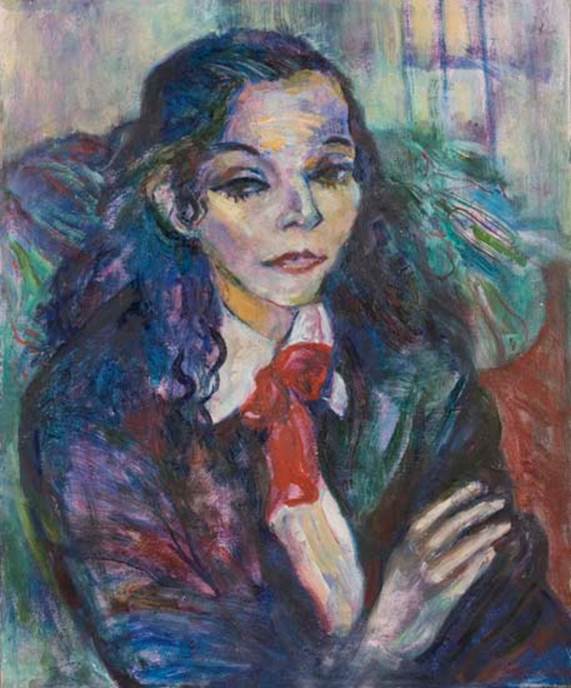
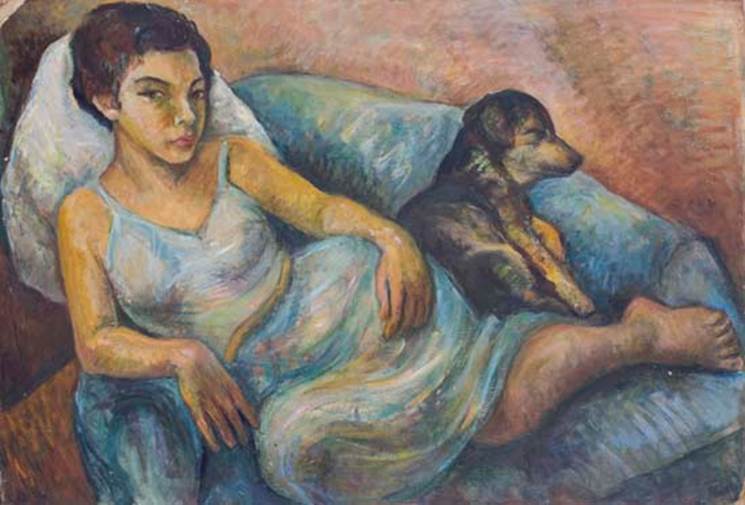
Rachel and Princie (1959), Sylvia Ary.Photo Credit : Sylvia Ary -
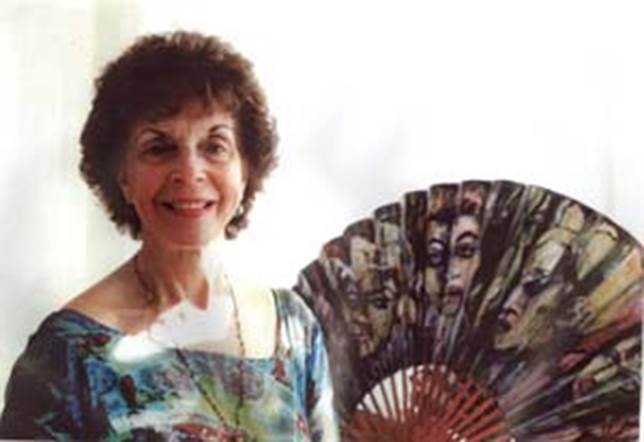
Sylvia Ary (2000s).Photo Credit : Sylvia Ary -
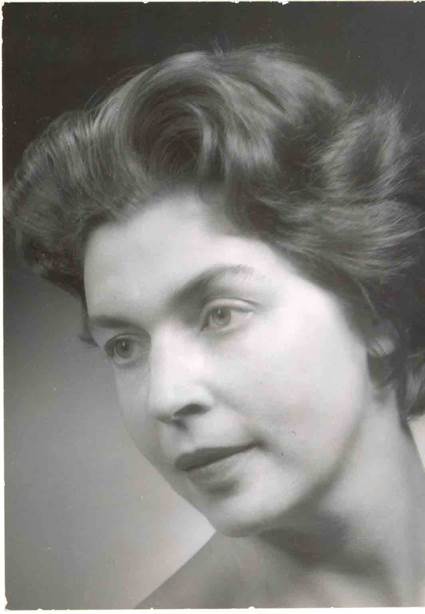
Portrait of Sylvia Ary ca. 1950s.Photo Credit : Alex Dworkin Canadian Jewish Archives -
Model. 1991.Photo Credit : Sylvia Ary
Sylvia Ary
Sylvia Ary was a prominent artist in the Montreal cultural milieu and a member of the Jewish Painters of Montreal.
Born in Moscow, Ary was the eldest child of Alexander Bercovitch, a painter, and Bryna Avrutick, a drama student and revolutionary who went on to become a journalist. Her family fled poverty and persecution in Russia, arriving in Montreal in 1926. Avrutick found employment in a Jewish school managed by one of her brothers, while Ary, only four years old at the time, took care of her younger sister. The family lived hand-to-mouth, staying in one of the schoolrooms, which meant that they had to move several times, in order to follow the school as it changed locations.
Ary began drawing classes at a young age, with Fritz Brandtner, a world-class artist credited with introducing German expressionism to Canada. At 14, she won a Canada-wide children’s competition (1937). Then, while at Baron Byng High School, she met Ann Savage, an art teacher who encouraged her to continue her artistic development at the Montreal Fine Arts Museum.
Ary studied etching at the Montreal Institute of Graphic Arts, under Albert Dumouchel, as well as lithography. She would later combine many of these techniques and begin to use acrylic, in addition to charcoal, pastel, ink, watercolours and oils. She also tried her hand at sculpture and experimented with painting on a variety of materials: paper, canvas, Masonite and Plexiglas, as well as less traditional materials such as fans. Ary’s outstanding skill as a portrait painter, however, is what she is best known for.
Her vibrant portraits and cityscapes established her as an artistic visionary uniquely skilled at depicting immigrant life in Montreal, and resonated deeply with residents of all backgrounds. She produced a large number of portraits of people from all walks of life, from unknown models to well-known stage and literary personalities.
Her paintings can be viewed at public institutions and private collections, including: Laval, Moncton, Montreal, Quebec, Toronto and Vancouver (in Canada), Austin, Boston, Cambridge, New York and San Francisco (in the US), Paris and London (in Europe), and at the Hebrew University in Jerusalem, Israel. Her work is on display at the National Museum of Fine Arts of Quebec as well as at galleries, museums and libraries around the world.
Learn more:
http://www.sylviaary.com/
https://fr.wikipedia.org/wiki/Sylvia_Ary
http://www.mccord-museum.qc.ca/en/exhibitions/jewish-painters-of-montreal/
-
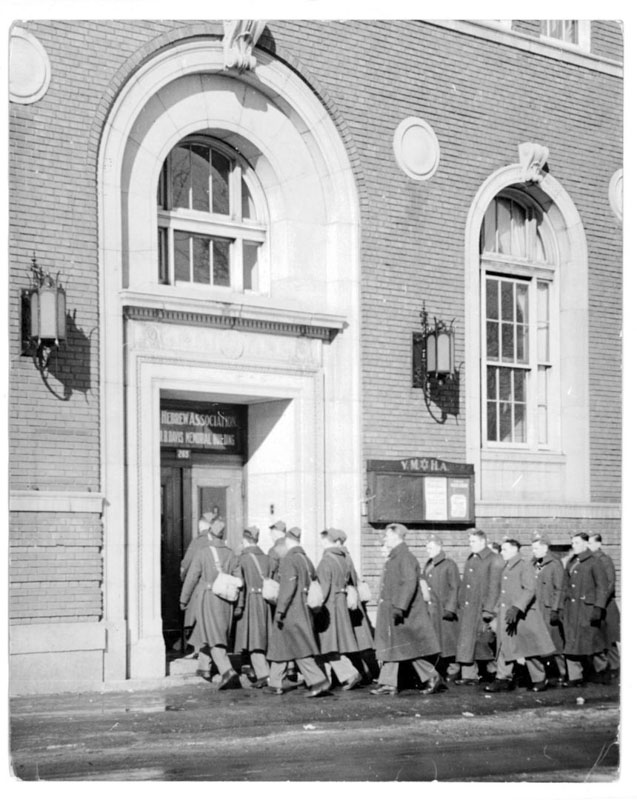
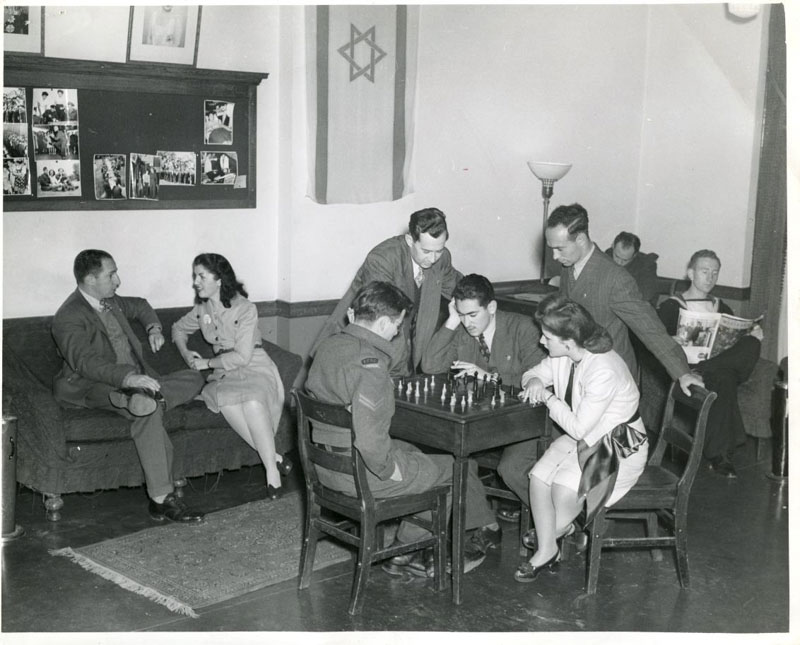
New recruits entering the YMHA during WWII. During the War, 17,000 Canadian Jews joined the Canadian Armed Forces.Photo Credit : Jewish Public Library - Archives -
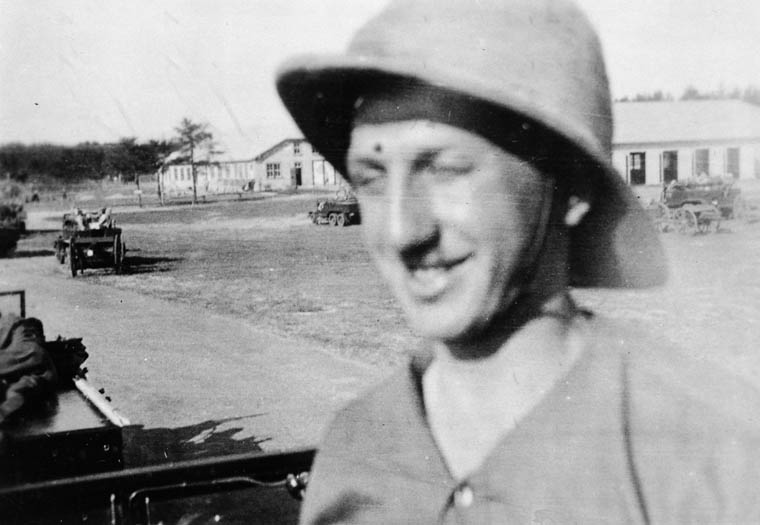
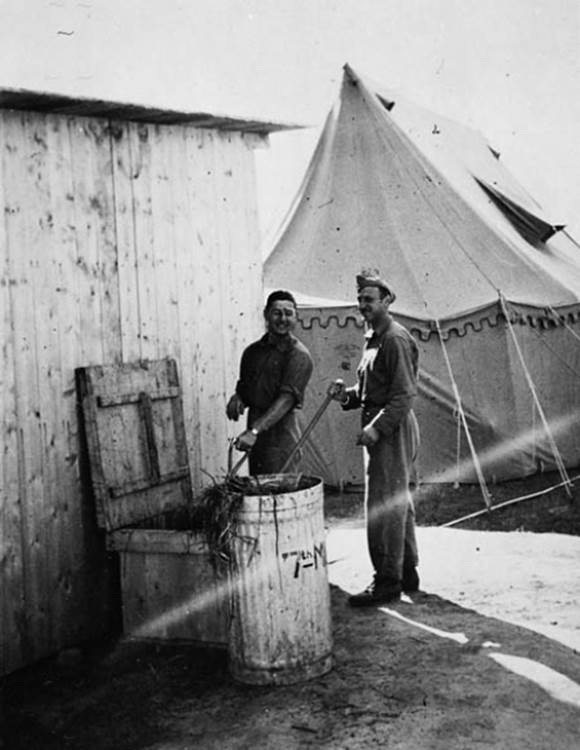
Sydney S. Shulemson, 7th (Montreal) Field Battery, R.C.A.Photo Credit : Library and Archives Canada -
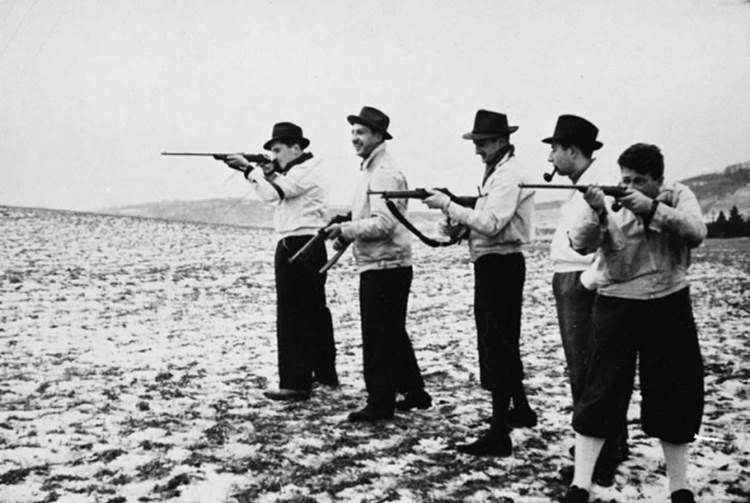
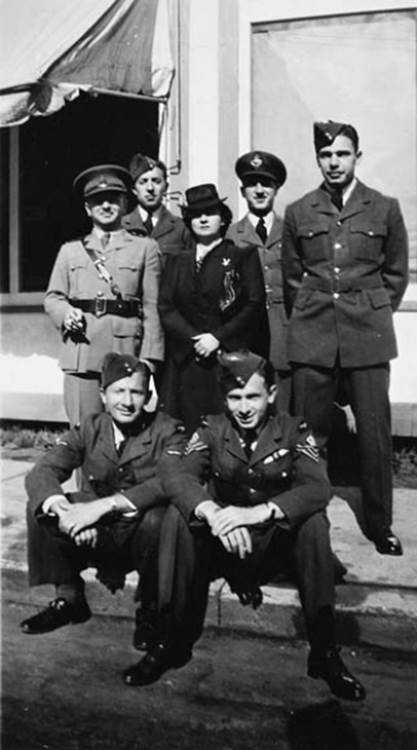
Sydney S. Shulemson (2nd from left) in Saint-Sauveur, Quebec, 1938.Photo Credit : Library and Archives Canada -
The YMHA Active Service Centre Room during WWII.Photo Credit : Jewish Public Library - Archives -
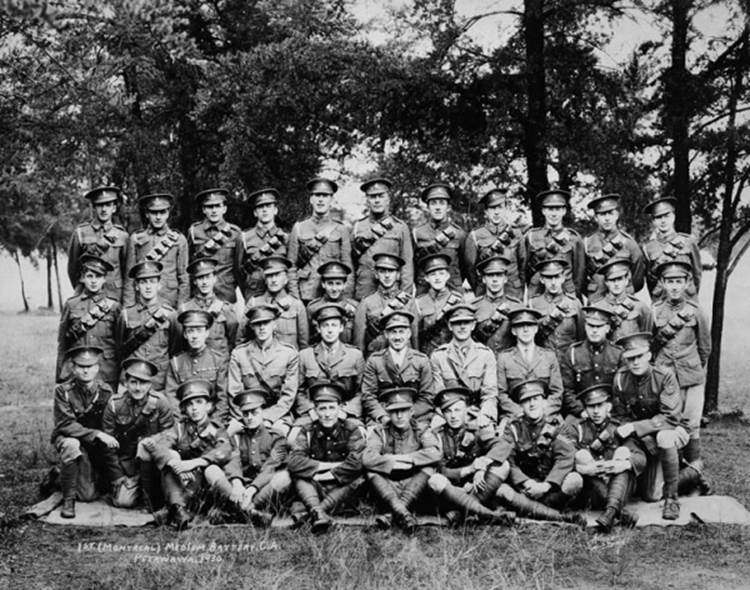
Sydney S. Shulemson, 6th from left in the 3rd row, Petawawa, Ontario, 1930.Photo Credit : Library and Archives Canada -
Sydney S. Shulemson (4th from left) and a group of soldiers in Monction, N.B., 1942.Photo Credit : Library and Archives Canada -
Sydney S. Shulemson (right), 1940.Photo Credit : Library and Archives Canada -
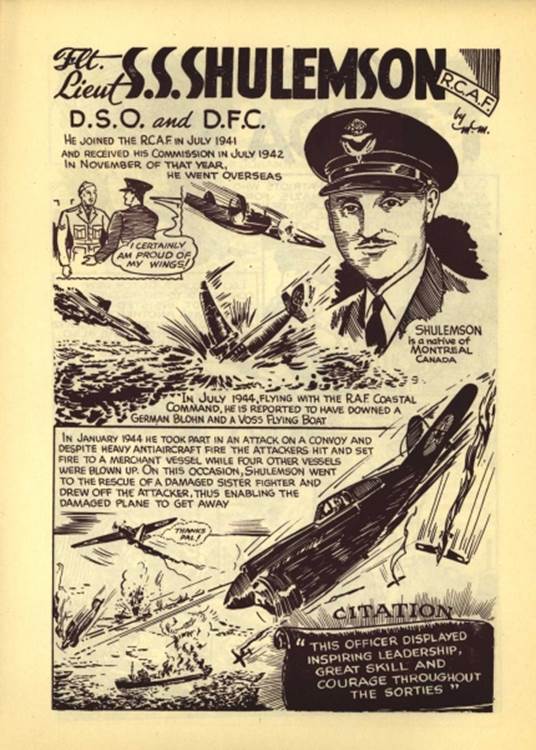
Shulemson's biography, published by the CJC in 1944 in their comic strip series Jewish War Heroes.Photo Credit : Alex Dworkin Canadian Jewish Archives
Sydney Simon Shulemson
In the modern era, Jews have served their countries bravely in all branches of the armed forces.
The Second World War and the Holocaust, in particular, demanded Jewish involvement in the war effort. Over 1.5 million Jews served in the Allied Forces (Canada, UK, US, USSR) and, of those, 16,441 men and 279 women served in Canada’s Armed Forces. While Jews made up 1.5% of the 1940 population of Canada, they composed 2.6% of the RCAF, 1.4% of its soldiers and 0.7% of its sailors. 39% of eligible Jewish men in Canada served their country.
17,000 Canadian Jews fought against Nazism. Montreal-born Wing Commander Harry Shapiro, for instance, received his first Distinguished Flying Cross in 1942 from King George VI for missions over Cologne and Berlin. He received his second Distinguished Flying Cross after completing 49 stories. Several Canadian Jews were captured by the Germans and kept as Prisoners of War, and slightly over 400 Canadian Jewish military personnel were killed in the service of their country.
Squadron Leader Sydney Simon Shulemson was Canada’s most decorated, and best known, Jewish fighter/bomber pilot, responsible for inflicting heavy damages on German ships in the North Atlantic. He was a graduate of Baron Byng High School and McGill. After enlisting in the Canadian Armed Forces in 1939, he flew some 50 missions with the 404th Battalion, including several victorious ones against German forces. He received the Distinguished Service Order and the Distinguished Flying Cross for his services with the Royal Canadian Air Force. His exemplary achievements illustrate the commitment of all those in Montreal’s Jewish community who served with the Canadian army.
In 1947, Shulemson attended a clandestine meeting in New York City to discuss the defense of the future state of Israel. He made a case for the importance of air power, a recommendation that appears to have contributed to the creation of the Israeli Air Force. Back in Montreal, his birth city, he recruited pilots and procured weapons and planes for the defense of the emerging Israeli state. In 1947, Shulemson and his brother-in-law, Morris “Two Gun” Cohen, engaged in backroom diplomacy to persuade China not to vote against the UN Partition Plan for the creation of the State of Israel. Shulemson was honoured with a citation as a Fighter for the State of Israel.
Special thanks to the Museum of Jewish Montreal.
Learn more:
http://www.imjm.ca/location/2545
https://www.thestar.com/news/2007/02/05/ace_aviator_honed_technique_for_rocket_attacks.html
http://www.canada.com/story.html?id=6223c001-4925-41b1-bcb9-08283aa1e550
http://www.ctvnews.ca/canadian-war-hero-syd-shulemson-has-died-1.227540
http://www.cija.ca/canadian-wwii-fighter-pilot/
J.L. Granatstein, “Ethnic and Religious Enlistment in Canada During the Second World War,” Canadian Jewish Studies, vol. 21, 2013 [2014].
Gerald Tulchinsky, Canada’s Jews: A People’s Journey.
http://www.canadaveteranshallofvalour.com/ShapiroH.htm
-
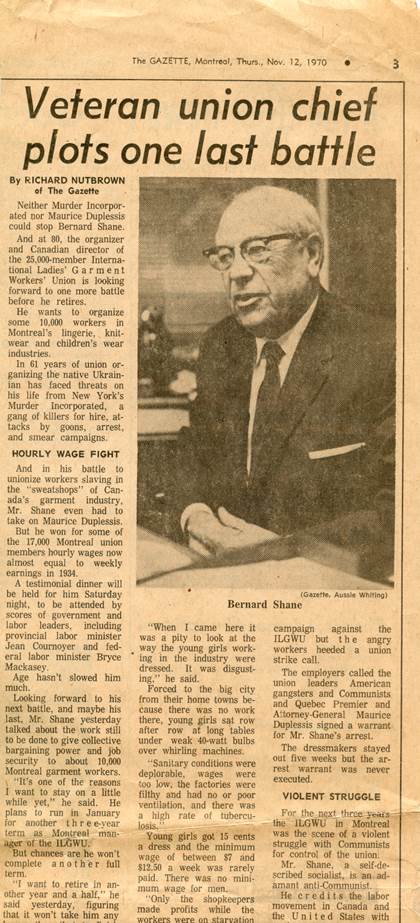
Newsclipping about Bernard Shane in the Montreal Gazette (1970).Photo Credit : Jewish Public Library - Archives -
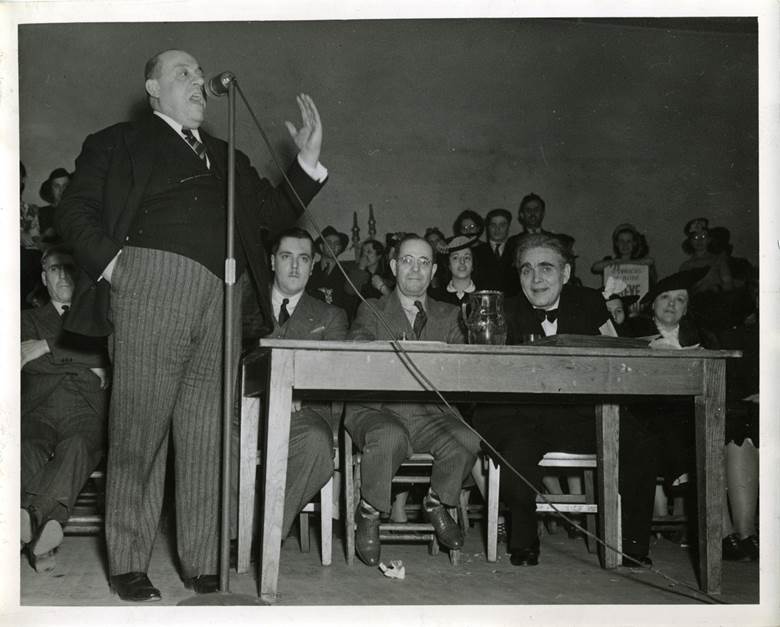
Bernard Shane speaking at a CCF Convention (1950s).Photo Credit : Jewish Public Library - Archives -
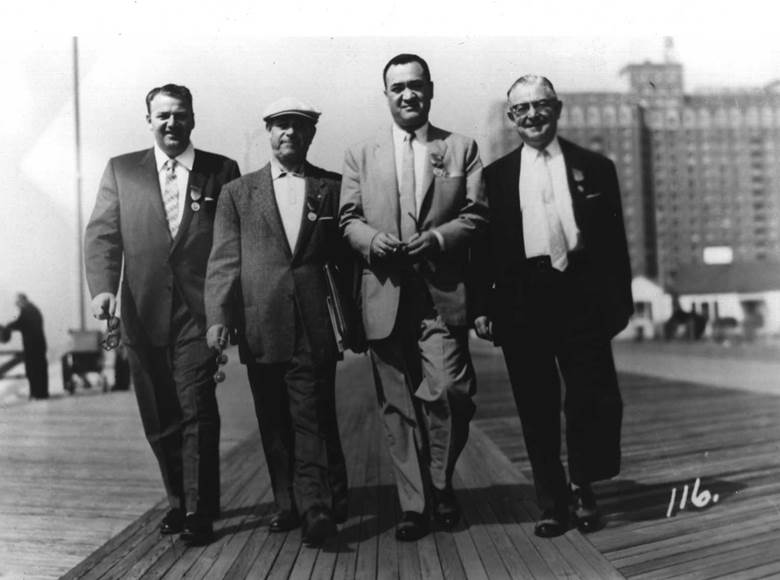
Bernard Shane walking down the Atlantic City Boardwalk with other members of the Jewish Labour Committee.Photo Credit : Alex Dworkin Canadian Jewish Archives -
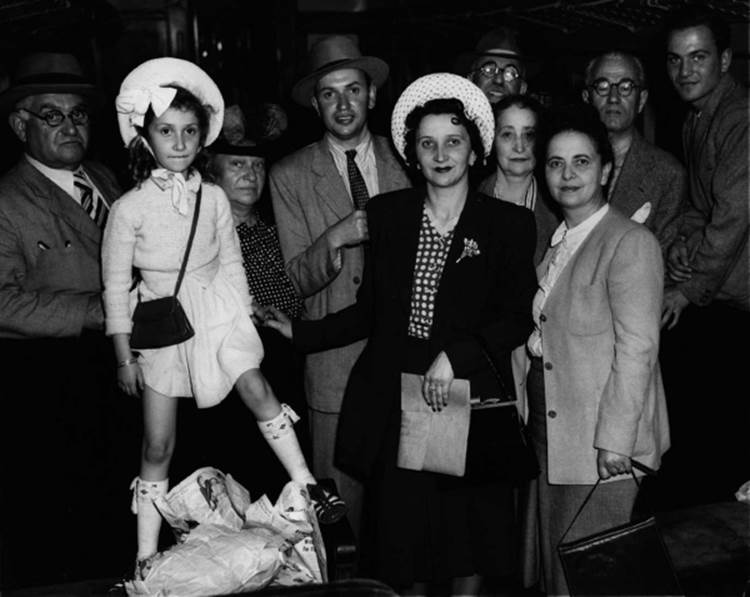
Jewish immigrants arriving in Montreal after WWII. Many of these immigrants were brought to Canada through the initiative of the Tailor's Project.Photo Credit : Alex Dworkin Canadian Jewish Archives
Bernard Shane and Maurice Silcoff
Bernard Shane was a labour organizer active in the Tailor’s Project. Maurice Silcoff was a union founder and president for decades in Montreal.
Bernard Shane was born in Russia and came to the US in 1906. An organizer for the International Ladies’ Garment Workers’ Union (ILGWU), he moved to Toronto in 1934. After the war, he moved again, this time to Montreal, where he found the working standards for women in dressmaking abysmal. The so-called midinettes – from midi (noon) and dinette (short lunch), i.e. the “short-lunches” – were not permitted proper breaks or lunch hours. They might work as much as 80 hours per week in season for as little as $5 – $10 per week, and were then laid off in the quiet season.
In 1947, Shane was active in the Tailor’s Project, as described below. Later on, he served as President of the Jewish Labour Committee.
Born in Dublin, Maurice Silcoff immigrated to Canada in 1910. His parents died soon thereafter of tuberculosis. Raised by distant cousins, Silcoff and his brother went to work at the Acme Hat Company at the age of 12, for about 20 cents per hour. This sensitized the young boy to the tribulations of child labourers and unfair standards. 13 years later, he returned to the Acme Hat Company, but this time as the President of the local Canadian United Hatters, Cap and Millinery Workers Union. He also served as President of the International Leather Goods, Plastics and Novelty Workers’ Union until his retirement at age 80.
Silcoff’s son, Joel, sits on Quebec’s Superior Court.
Tailor’s Project
Silcoff and Shane, along with David Lewis, were active in the Tailor’s Project, a program designed to overcome Canada’s anti-Semitic immigration laws by bringing desperate Holocaust survivors into Canada as much-needed garment workers. Silcoff and Shane were given army positions and authorized to go to the Displaced Persons Camps and choose potential refugees. Although ostensibly a Tailor’s Project, Silcoff and Shane maintained an open definition of “garment worker,” bringing in a good number of musicians, artists, rabbis and intellectuals.
Special thanks to the Museum of Jewish Montreal.
Learn more:
http://imjm.ca/location/1250
http://imjm.ca/location/1412
Franklin Bialystok, Delayed Impact: The Holocaust and the Canadian Jewish Community.
Gerald Tulchinsky, Branching Out: The Transformation of the Canadian Jewish Community
http://www.theglobeandmail.com/news/national/montreal-labour-leader-maurice-silcoff-took-the-high-road/article10763343/
-
1967 Liquor Ad, Seagram's 7 Crown Whiskey, "After 5".Photo Credit : Classic Film -
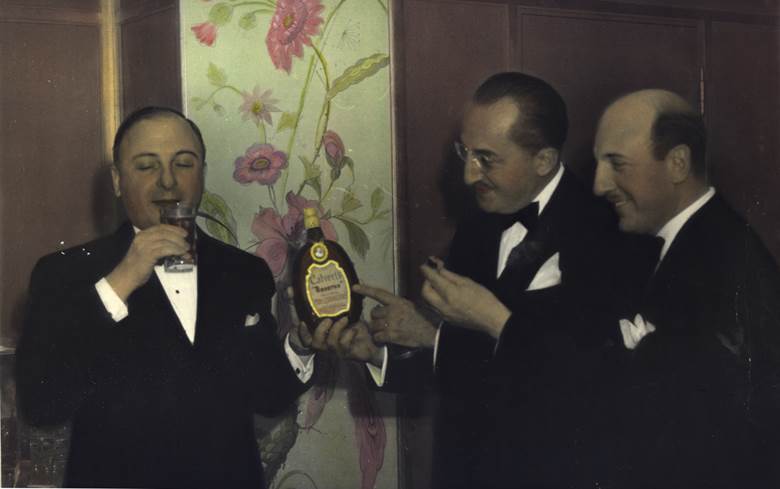
Samuel Bronfman sampling a bottle of his reserve liquor from 1937.Photo Credit : Alex Dworkin Canadian Jewish Archives -
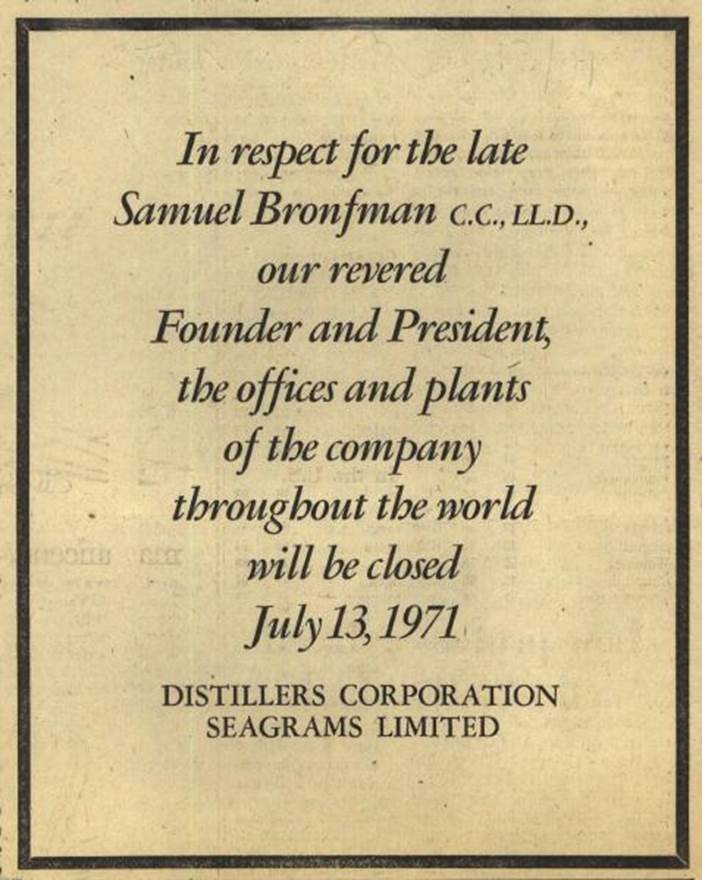
Memo sent out to all of Seagrams Limited on the day of Samuel Bronfman’s death on July 13th 1971.Photo Credit : Alex Dworkin Canadian Jewish Archives -
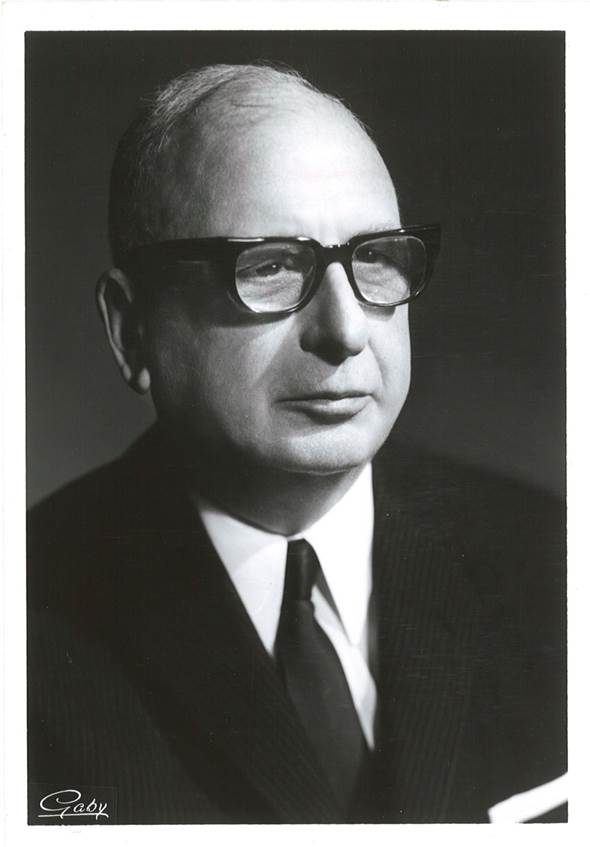
Sam Bronfman.Photo Credit : Jewish Public Library - Archives -
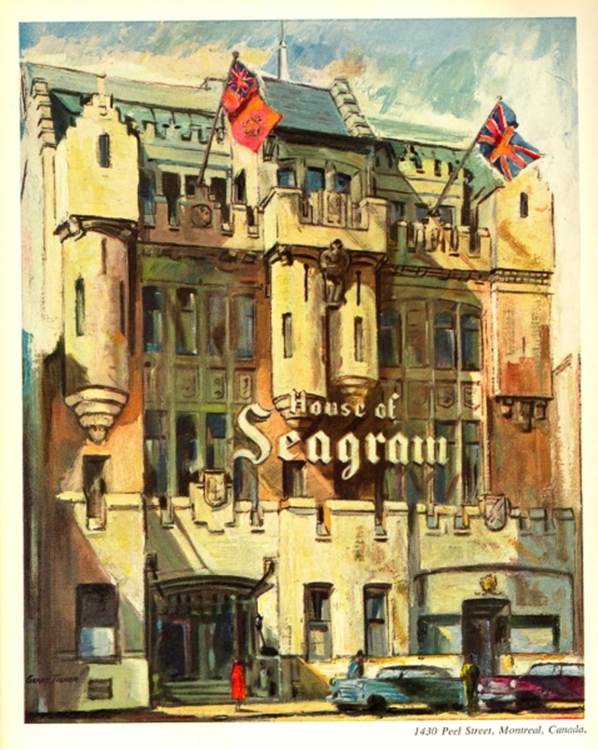
Cover of Seagram 1958 annual report with image of House of Seagram building on Peel Street.Photo Credit : Alex Dworkin Canadian Jewish Archives -
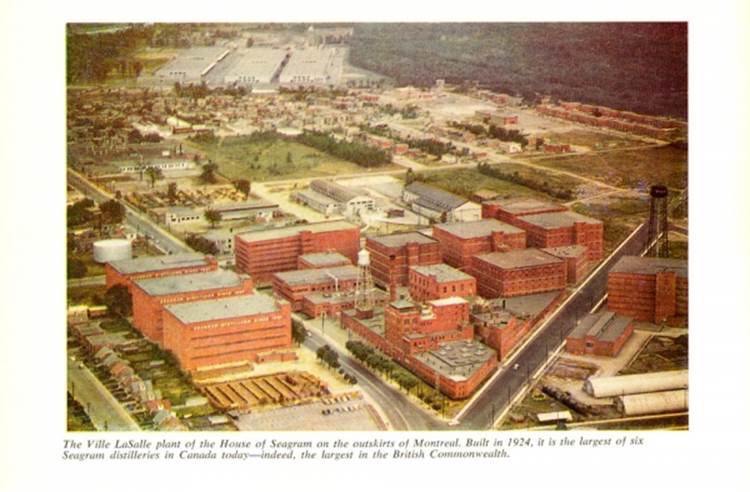
Picture of the Seagram factory in Lasalle from the Seagram 1957 annual report.Photo Credit : Alex Dworkin Canadian Jewish Archives -
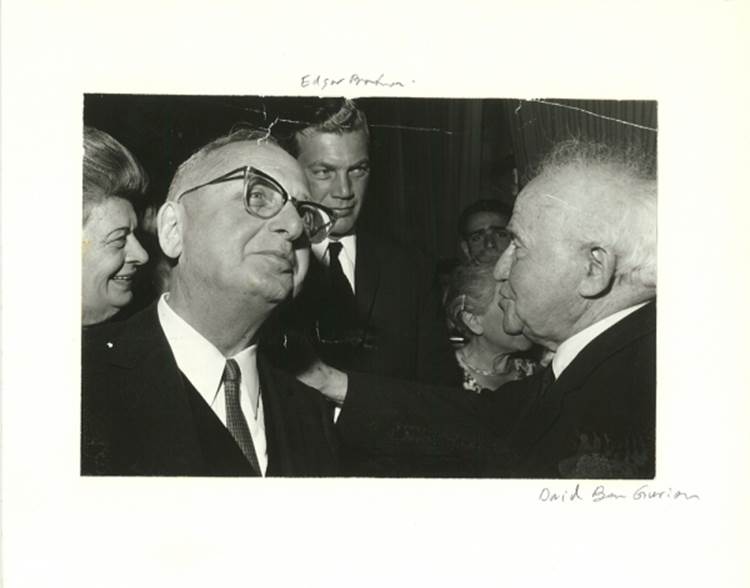
Saidye Bronfman, Samuel Bronfman, Edgar Bronfman Sr., and David Ben Gurion, Montreal, ca. 1961.Photo Credit : Jewish Public Library - Archives
Seagram’s
Seagram Company Ltd. is a distillery and alcoholic beverage company — once the largest distiller of alcoholic beverages in the world.
Joseph E. Seagram, the company’s namesake, opened his distillery in Montreal in 1857. In 1928, Seagram’s was bought out by the Distillers Corporation, a company that had been founded by Samuel Bronfman and his brothers in 1924. The Bronfmans (whose name means Liquor man in Yiddish) were new to the liquor business; their initial fortune, in Russia, had come from farming tobacco – a venture that proved unsustainable in Canada’s harsh climate.
With patriarch Sam Bronfman at the helm, and Prohibition going into effect across North America, Seagram’s quickly grew into a liquor giant. The Bronfmans were able to take advantage of Canada’s imprecise laws to maximize their bootlegging profits. For instance, alcohol intended for medical purposes was still legal during this period, so Seagram’s began selling straight liquor through drugstores. They also opened markets in the US, where prohibition laws were stricter, by selling mail-order liquor distributions. In 1933, when Prohibition ended, Seagram’s was perfectly positioned to begin selling to the newly opened American market, because they had the largest private stock of aged whisky in the world. Seagram’s also cleverly marketed their product in bottles instead of barrels, replacing the dubious view of whisky-drinking that had developed during Prohibition with a respectable, sophisticated image. Selling whiskey in bottles soon became an industry standard.
By 1965, total sales exceeded $1 billion. The three most popular Seagram’s products were VO, Crown Royal and Seven Crown, which inspired the name of the enormously popular 70s drink, ͞7 and 7. Later, in the 80s, a memorable television commercial featuring rising star Bruce Willis contributed to the company rising from fifth to first place among distillers in just two years.
Sam Bronfman, the Whisky king of America, was also a noted philanthropist and leader in the Jewish community, inspiring others to support causes ranging from Israel to the Jewish General Hospital. He was President of the Canadian Jewish Congress during its most critical years – 1939 to 1961 – as the organization was becoming the official voice of Canadian Jewry. At the outbreak of World War II, Bronfman, along with Congress Executive Director Saul Hayes, created the CJC Committee for Refugees. The group challenged Canadian immigration laws, which were some of the most restrictive in the world, in order to save Jews trapped in Europe. While they had little success during the war, in 1947, the committee persuaded the government to allow the settlement of 1,200 war orphans from Nazi Germany. Bronfman personally employed many Jewish refugees at his LaSalle distillery.
Seagram’s has been led by many different members of the Bronfman family, including Charles Bronfman, Edgar Bronfman and Edgar Bronfman Jr. Over the years, Seagram’s began to diversify and enter into new industries, including oil and coal and entertainment, buying into Universal Pictures, MGM studios (which Edgar Bronfman became Chair of in 1969), Time Warner and Tropicana. In 2000, Edgar Bronfman Jr. sold Seagram’s.
Today, Seagram’s remains a major international liquor company, carrying brands including Captain Morgan and Absolut Vodka.
Learn more:
https://en.wikipedia.org/wiki/Seagram
http://www.thecanadianencyclopedia.ca/en/article/seagram-company-limited/
http://www.theglobeandmail.com/report-on-business/careers/careers-leadership/charles-bronfman-opens-up-about-seagrams-demise-it-is-a-disaster/article10816816/?page=all
http://www.fundinguniverse.com/company-histories/the-seagram-company-ltd-history/
http://www.ft.com/cms/s/0/2cc6277a-fd5f-11df-b83c-00144feab49a.html#axzz4KRGxBtj7
http://www.imjm.ca/location/1677
http://www.cjhn.ca/en/permalink/cjhn137
http://cbhf.ca/samuel-bronfman
http://cve.grics.ca/fr/2349/3461
-
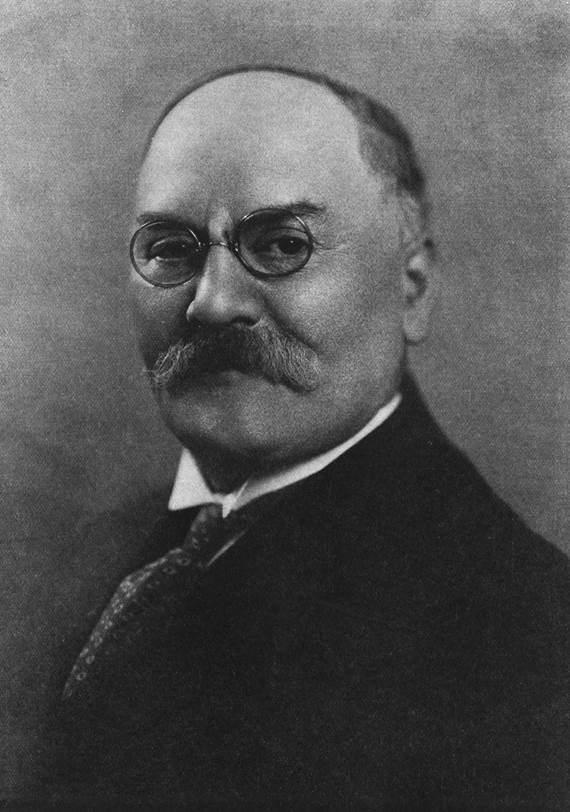
Louis Rubenstein.Photo Credit : Alex Dworkin Canadian Jewish Archives -
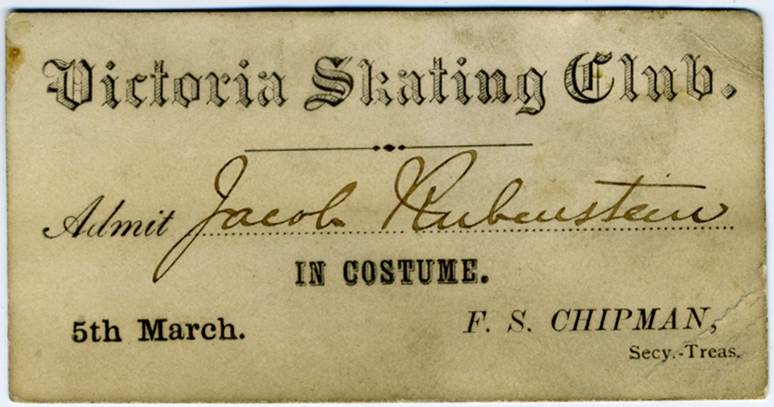
Photograph of a ticket for one of Louis Rubenstein’s ice skating shows (1890s).Photo Credit : Jewish Public Library - Archives -
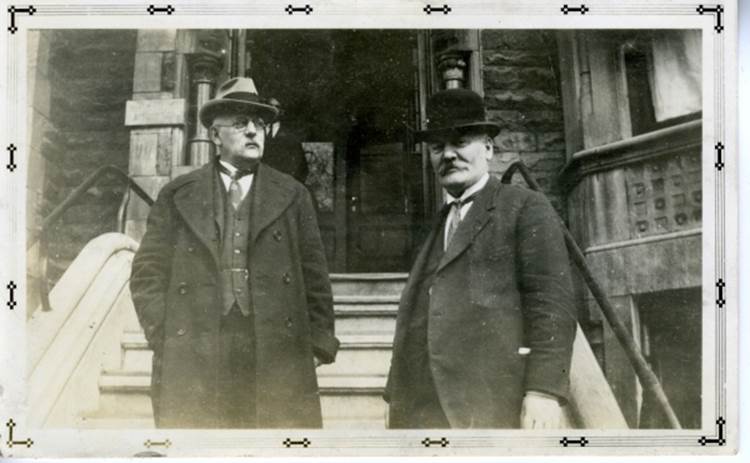
Lazarus and Louis Rubenstein standing on the stone steps of a Montreal building, ca. 1920.Photo Credit : Jewish Public Library - Archives -
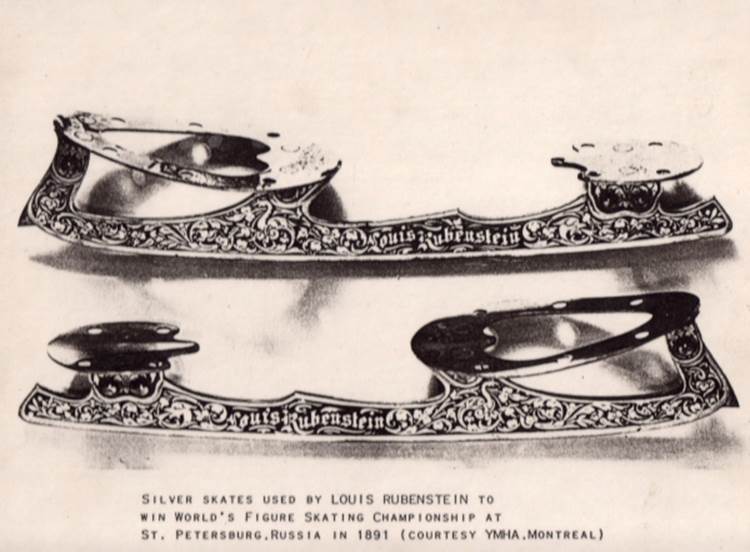
Ice skates of Louis Rubenstein, 1891 figure skating champion.Photo Credit : Jewish Public Library - Archives -
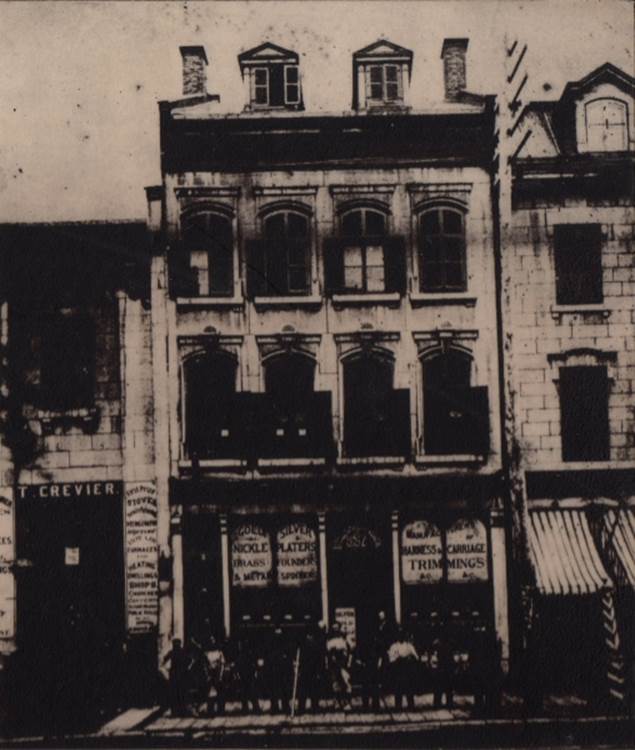
Rubenstein Bros. Co. with childhood home of Louis above on Craig Street (now St. Antoine). Unknown year. From an article by Marven Selicson in Canadian Clothing Journal.Photo Credit : Jewish Public Library - Archives -
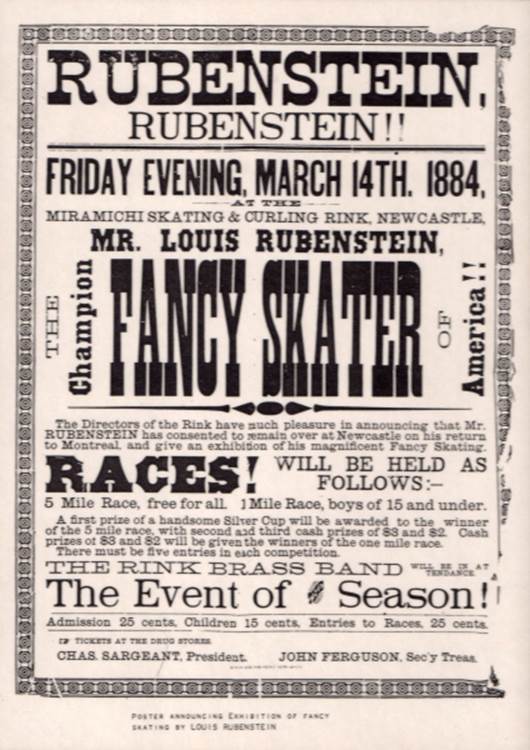
Poster for Louis Rubenstein fancy skating event in 1884.Photo Credit : Jewish Public Library - Archives -
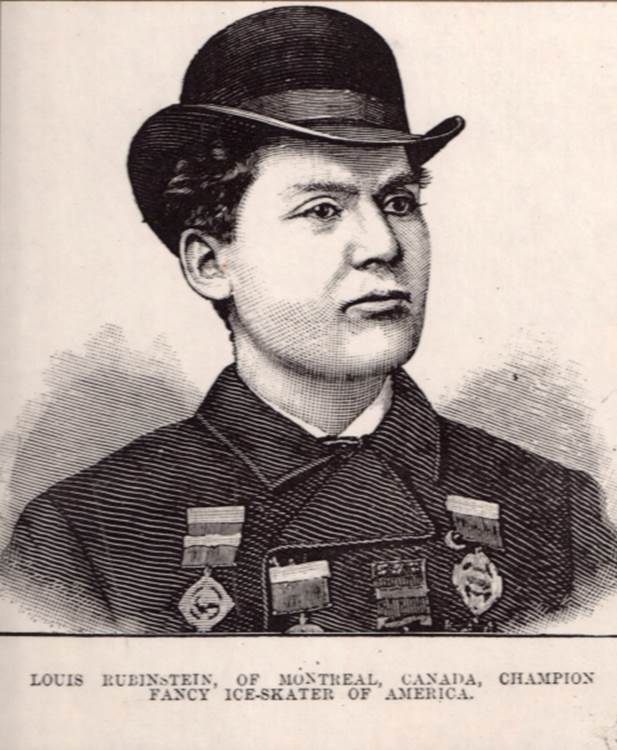
Portrait of younger Louis Rubenstein as ice skater.Photo Credit : Jewish Public Library - Archives
Louis Rubenstein
Louis Rubenstein was Canada’s first international figure skating champion.
Rubenstein was born and raised in Montreal, by a family that owned Rubenstein Bros. Co. Inc. – a successful machinery business. The company’s success gave them the financial means to allow Rubinstein to devote his time to skating. He won the Championship of Montreal in 1878, but it was his performance in 1890 in St. Petersburg, Russia, for which he is most remembered. There, he was confronted with anti-Semitic police harassment and pressure to leave the competition. Despite this discrimination, he won the gold medal and became the first world champion of figure skating, as no other North American figure skater had competed overseas until this time.
In 1887, to remedy worldwide inconsistencies in judges and rules for figure skating competitions, Rubenstein formed the Amateur Skating Association of Canada (ASAC). He remained President of the organization until 1930. Figure skating was not Rubenstein’s only sporting interest; he also enjoyed hockey, curling, bowling and bicycling. He was later named the “Father of Bowling in Canada” by the Montreal Star. He was also referred to as the “Father of North American Figure Skating.” And as a cycling enthusiast, he founded the Canadian Wheelmans’ Association and served as President for 18 years.
Rubenstein eventually retired from professional sports and became involved in city politics, serving as an alderman from 1914 to 1931. During his time in office, the Rubenstein Public Bath was built in his name on Jeanne-Mance Street (now the site of Complexe Desjardins). It served Montreal’s poor, who often lacked running or hot water. Rubenstein was also active in the Jewish community, presiding over the Young Men’s Hebrew Association from 1917 until his death in 1931.
Rubenstein is remembered fondly in Montreal for his athletic career, as well as for his support of labour, and his commitment to the city. He was inducted into the International Jewish Sports Hall of Fame in 1981 and the World Figure Skating Hall of Fame in 1984. There is a memorial dedicated to him in Fletcher’s Field (now Parc Jeanne-Mance).
Special thanks to the Museum of Jewish Montreal
Learn more:
Skate Canada
Hines, James R. Figure Skating: A History. Urbana: University of Illinois Press, 2006.
Inspiring Figure: The Louis Rubenstein Story
International Jewish Sports Hall of Fame
http://www.jewishsports.net/BioPages/LouisRubenstein.htm.
The Unforgettable Louis Rubenstein
Rubenstein Bros. Co. Inc
-
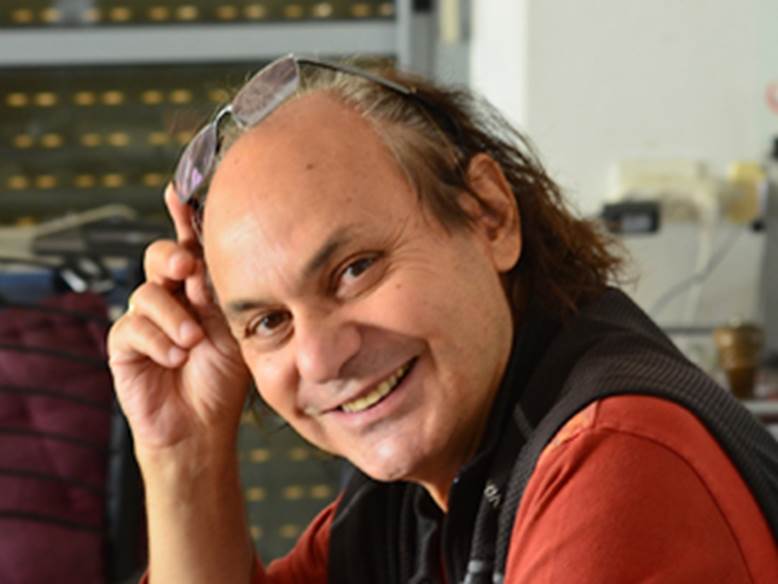
Serge Ouaknine.Photo Credit : http://www.editionsxyz.com/auteur/362.html -
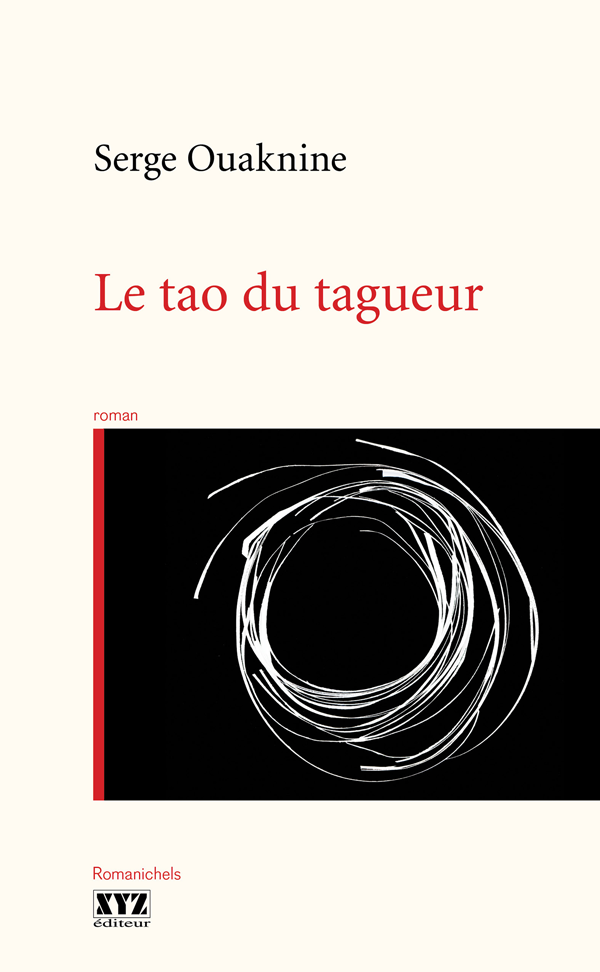
Le tao du tagueur.Photo Credit : http://www.editionsxyz.com/auteur/362.html
Serge Ouaknine
Serge Ouaknine is a director, writer and visual designer in Montreal.
Born in Rabat, Morocco, Ouaknine studied in Paris at the National School of Decorative Arts in 1961. He then moved to Warsaw, and later Wroclaw (Breslau), to study with experimental Polish director Jerzy Grotowski.
Ouaknine earned his doctorate in liberal arts and social studies. He directs the Doctoral program in the Study and Practice of Visual Art at UQAM, and teaches theatre there, as well. Since the 2000s, Ouaknine has been involved with the National School of Theatre Arts in Montpellier, France, creating experimental theatre programs for oncologists to help them communicate and interact with their patients.
Ouaknine has written over 40 scripts and more than 250 publications on theatre, acting and poetry. He is also the author of the novel, Le tao du tagueur.
Learn more:
http://clicnet.swarthmore.edu/litterature/moderne/ouaknine/grotowski.html
http://www.editionsxyz.com/auteur/362.html
http://ici.radio-canada.ca/emissions/plus_on_est_de_fous_plus_on_lit/2013-2014/chronique.asp?idChronique=361517
-
Dr. Arthur Vineberg.Photo Credit : McGill University
Dr. Arthur Vineberg
Dr. Arthur Vineberg, a third-generation Montrealer, was a cardiac surgeon, university lecturer and author, known for developing the “Vineberg Procedure,” a predecessor of modern coronary bypass surgery.
Vineberg received his MS and PhD in Physiology from McGill University. He studied in Paris and then New York City, where he did his internship at Bellevue Hospital. In 1933, he joined the staff of the Royal Victoria Hospital, where he worked as a heart surgeon for the next 55 years; he was also a lecturer in the Faculty of Medicine at McGill. During World War II, he served in the Canadian Army Medical Corps. He was named Head of the Department of Cardiac Surgery at the Royal Victoria Hospital in 1957.
At a time when surgeons were still largely cautious about performing heart surgery, the Vineberg Procedure involved direct implantation of the internal mammary artery into the left ventricle, providing an alternate flow of blood to offset dangerous blockages. Although the medical and surgical establishments never broadly endorsed the artery transplant operation, thousands of patients benefited from it and, years later, supporting evidence proved the procedure was successful in increasing perfusion in a diseased heart. Furthermore, the Vineberg Operation inspired many subsequent developments in the field of heart surgery, and adaptations of his method are still widely used today.
Vineberg published two books: How to Live with your Heart; the Family Guide to Heart Health (1975) and Myocardial Revascularization by Arterial/Ventricular Implants (1982). He was writing his third book, The Complete Guide to Heart Health, at the time of his death. In 1986, he was made an Officer of the Order of Canada.
-
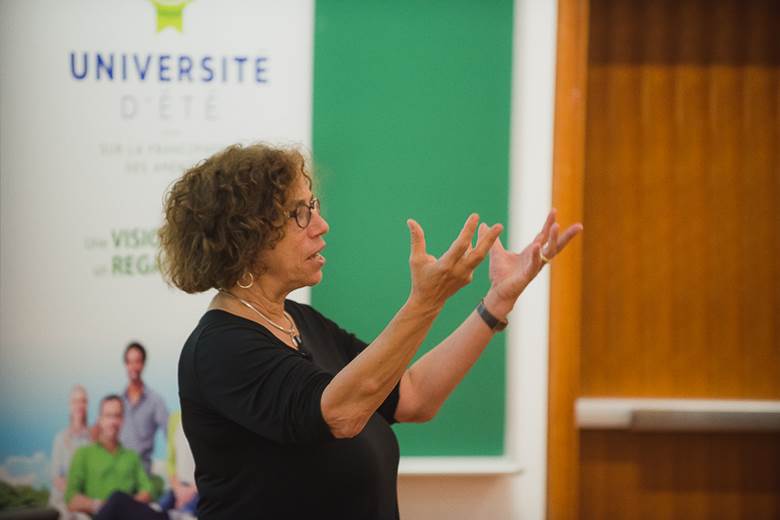
Nancy Neamtan at the Summer School on the Americas Francophonie (2015).Photo Credit : Francophonie Des Ameriques -
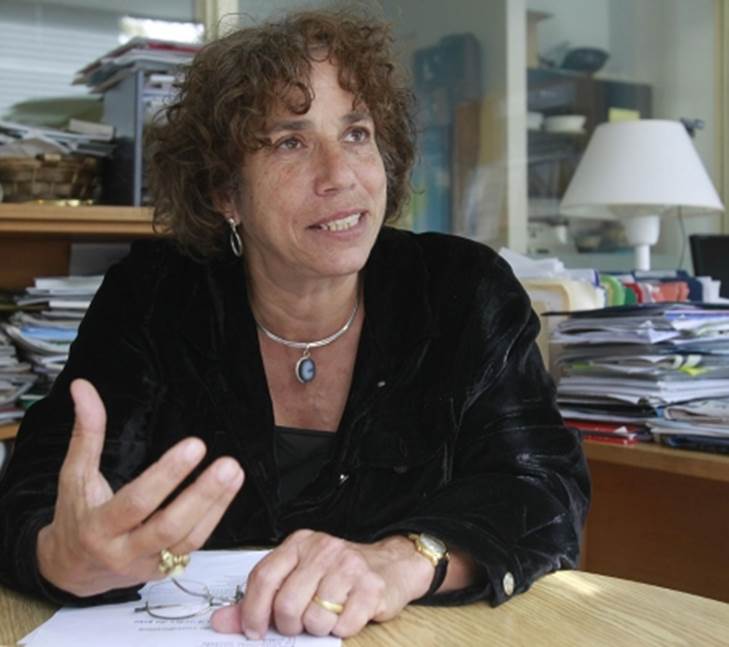
Nancy NeamtanPhoto Credit : Photos Jacques Grenier
Nancy Neamtan
Nancy Neamtan, co-founder and long-time CEO of the groundbreaking Chantier d'économie Sociale – a non-partisan autonomous organization that promotes and develops Quebec’s social economy – is an international leader in social justice and community-oriented economic development.
Neamtan was born in Montreal, and did her undergraduate work at McGill University, graduating in 1972. From 1972-1998, she participated in the founding and management of various community organizations around Montreal. Among these groups was the economic program for Pointe-Saint-Charles, the Training Institute in Community Economic Development and Coalition for Economic Recovery social and southwest of Montreal (RESO).
Neamtan served as CEO of Chantier d’économie Sociale for 20 years, President of the Quebec Social Investment Network for 10 years, and the President of the Board of Trustees of the Trust Site. She has also been an important force within the International Labour Organization (ILO).
Neamtan’s honours include being appointed an Officer of the National Order of Quebec (2012), being awarded the title of Doctor Honoris Causa by the University of Quebec in Outaouais (2013), and being given an honorary doctorate by Concordia University (2015) for her efforts in promoting social justice.
Learn more:
http://www.chantier.qc.ca/?module=document&uid=2243
http://transformermontreal.com/fr/speaker/nancy-neamtan/
https://www.ordre-national.gouv.qc.ca/membres/video.asp?id=1105&nom=neamtan-nancy&annee=2012&grade=officier&persiste=1
https://www.youtube.com/watch?v=6BrgHsmaSqM
http://ici.radio-canada.ca/emissions/le_21e/2013-2014/chronique.asp?idChronique=132938