Born in Montreal, Emmanuel Kattan is one of the most promising writers of the Quebec literary scene.
He holds a PhD from Université de Montréal and the prestigious title of Rhodes Scholar, which led him to pursue his postdoctoral studies at Oxford University, in Great Britain. He is the author of three critically-acclaimed novels published by Éditions Boréal, one of Quebec’s most renowned publishing houses. He has also written a remarkable essay on the Shoah entitled Penser le devoir de mémoire, published in 2002 by the Presses universitaires de France. In 2012, he published a phenomenal novel entitled Les Lignes de désir, (Éditions Boréal) whose theme explores the age-old Arab-Israeli conflict.
Previously, Kattan lived in London for almost 15 years. During this period, he worked as Director of University Affairs and Communications for the Quebec Delegation in London and as Royal Speechwriter for the office of the Commonwealth Secretary-General. Since 2010, he has been living in New York with his wife and their two children. He is presently Director of the British Council, a British government institution.
While working at the British Council in New York, he launched a project entitled “Our Shared Future.” It aimed at improving views on interculural relationships taking place on both sides of the Atlantic. Before joining the British Council, he was Head of Communications at the UN Alliance of Civilizations in New York, an ambitious project sponsored by the UN which focuses on intercultural dialogue.
Kattan is also the son of Naïm Kattan, the great Quebec author of Iraqi origin.
Arts & Culture | Women
Share
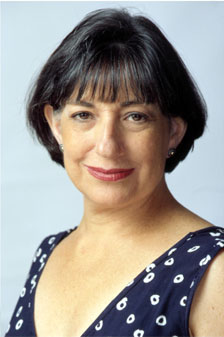
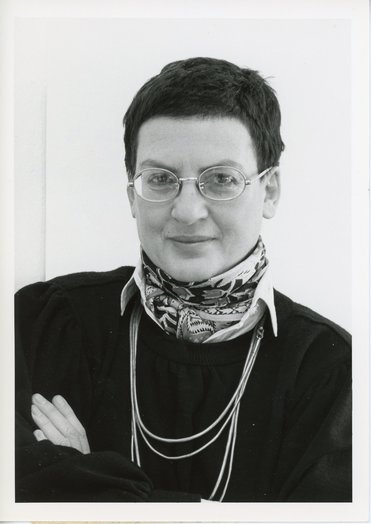
Beverly Shaffer.
Photo Credit : http://www.beverlyshaffer.com/
1945 -
Beverly Shaffer
Beverly Shaffer is an internationally-renowned filmmaker based out of Montreal, whose empathetic and uplifting documentary work focuses on stories of resolve.
Born in Montreal, Shaffer graduated from McGill University in 1967 with a bachelor’s degree in comparative religion. After a short stint teaching high school, she received a master’s degree in film from Boston University in 1971. She began her television career as a production assistant, researcher and associate producer at WGBH, a PBS-affiliate in Boston.
In 1975, Shaffer joined the National Film Board’s famed Studio D, which was dedicated to supporting the work of women filmmakers. It was during this time that Shaffer directed I’ll Find a Way, a documentary about a young girl with spina bifida, which won the 1977 Academy Award for Best Live Action Short Film, one of three Oscars won by Studio D. I’ll Find a Way chronicles the challenges and victories of nine-year-old Nadia who, despite the potential for teasing and taunting at a regular school, is determined to “find a way” to attend.
Shaffer is credited with the Children in Canada series and the Children of Jerusalem series, as well as films like To a Safer Place, which profiles an incest survivor, and was named one of the best films of the decade by the American Film Librarians Association. She has also worked on dramas, including the half-hour drama, The Way It Is, about a young girl dealing with her parents’ divorce.
During her 25 years at the NFB, Shaffer was the recipient of more than 30 awards.
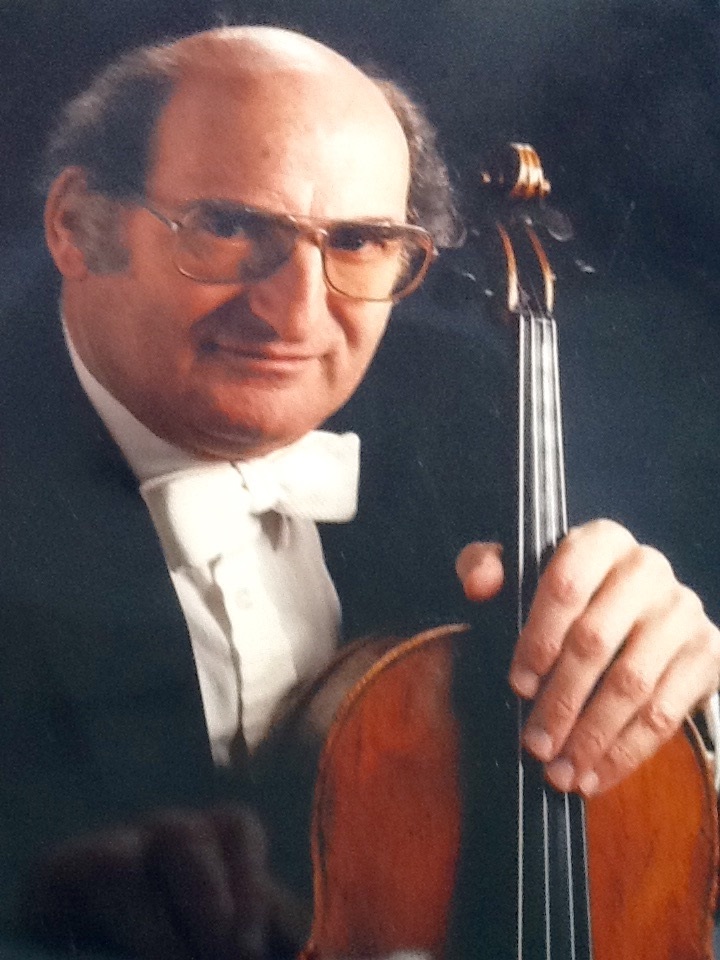
Robert Verebes was an award-winning Hungarian violist who was based out of Montreal for much of his life, and performed all over the world.
Born in Budapest, Verebes began violin lessons at age 7. At 15, he was accepted to the Franz Liszt Academy of Music. He initially studied violin under Desző Rados, and later took up the viola with Professor Paul Lukacs. When he was 19, Verebes became a founding member of the Bela Bartok String Quartet of Budapest. With this ensemble, he performed in several European cities, recording Bartok’s 3rd and 6th quartet in Paris in 1956.
After the Hungarian Revolution, Verebes immigrated to Canada and almost immediately received a scholarship to the Marlborough Music Festival (Vermont, USA) and an invitation to join the Ottawa Philharmonic Orchestra as first violist. During his two years in Ottawa, he founded the New Chamber Music Ensemble and performed numerous recitals and chamber music concerts.
Verebes joined the Montreal Symphony Orchestra in 1959. For the next 40 years, he was alternately second solo violist or first violist. He was well known to audiences through his solo recitals in Canada, the US, Paris, London, Oxford, Budapest, Tokyo, Shanghai, Buenos Aires and Damascus.
As a soloist, Verebes has been featured with several orchestras in Canada, the US and China. In addition to the standard solo viola repertoire, he inspired a number of composers to write for him, or dedicate their compositions to him, including Lothar Klein (“Concerto Sacro”) and Jean Coulthard (“Symphonic Ode.”) As a chamber musician, he founded and performed with several ensembles. He recorded over 100 programs for the CBC and won the prestigious Anik Award with the Classical Quartet of Montreal. He was a founding member of Musica Camerata, and the concert series Robert Verebes et ses Amis.
Verebes was a professor of viola and chamber music at the Conservatoire de Musique de Montreal for 23 years. He also taught at several summer music camps and gave master classes in Canada, the US, China and the Middle East. He has recorded 3 LPs and 8 CDs of his solo viola repertoire, and his CDs were uploaded to YouTube in 2016.
Special thanks to Eva Verebes.
Food
Share
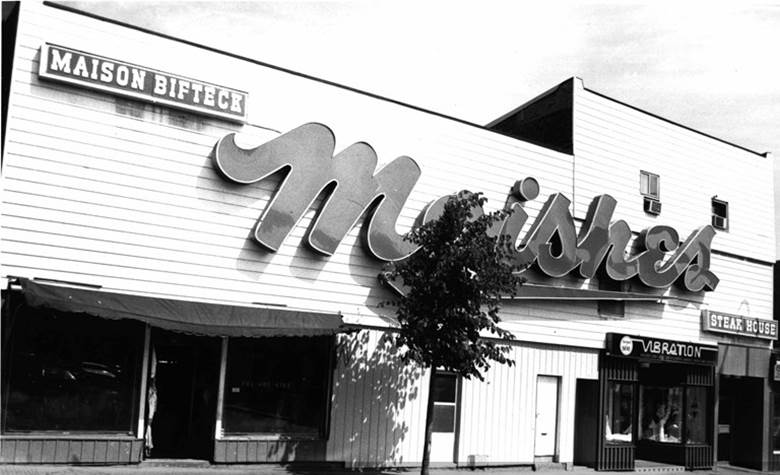
Moishes Steakhouse is located on St. Lawrence Blvd., its original location.
Photo Credit : Alex Dworkin Canadian Jewish Archives
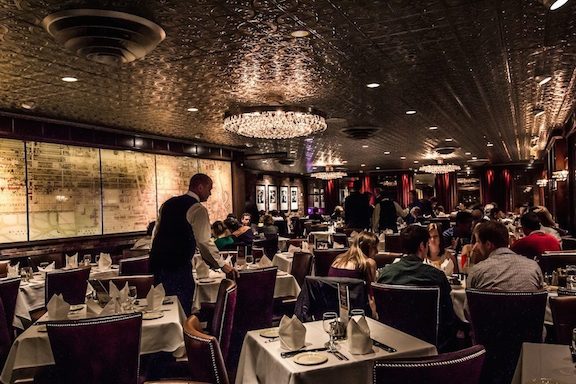
The Moishes dining room in 2014.
Photo Credit : Moishes Steakhouse
Moishe Lighter, founder of Moishes Steakhouse.
Photo Credit : Moishes Steakhouse
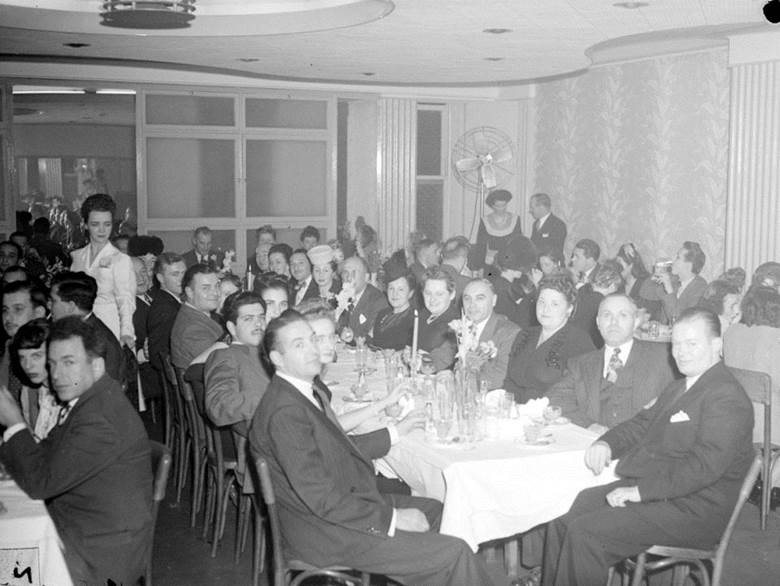
A celebratory reception held at Moishes in 1946.
Photo Credit : Conrad Poirier
1938 -
Moishes Steakhouse
Moishes Steakhouse is an iconic restaurant that sits along The Main in Montreal, Canada.
The restaurant was founded in 1938 by Moishe Lighter, a Romanian Jewish immigrant to Montreal. He started off working at a smaller restaurant, Yankowitz and Julis, and then poured his savings of $300 into the steakhouse that would bear his name. Known to many as “Romanian Paradise,” the restaurant features Kosher-style Old World classics that would have nourished the hearts and stomachs of the Polish and Romanian Jewish immigrants that lived and worked along St. Laurent Boulevard.
A notorious gambler, legend has it that Lighter became the owner of the restaurant over a card game. What began as just a small-scale meat house is now a staple of “The Main” neighborhood. Culturally, Moishes Steakhouse has also been very influential on the development of broader Montreal cuisine, its steak spice becoming eponymous within the kitchens of not just Montrealers, but Canadians at large.
The steakhouse was also famously featured in the writings of Mordechai Richler, who frequented the restaurant throughout his life. It continues to be the go-to spot for celebrities and locals looking for an authentic taste of The Main.
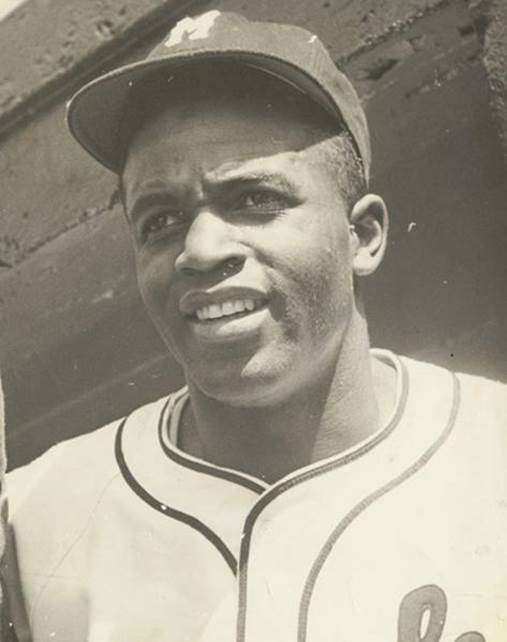
Photograph of Jackie Robinson playing for the Montreal Royals (1946).
Photo Credit : Jewish Public Library - Archives
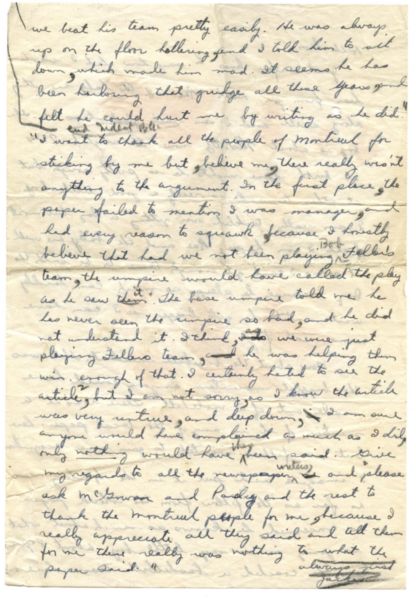
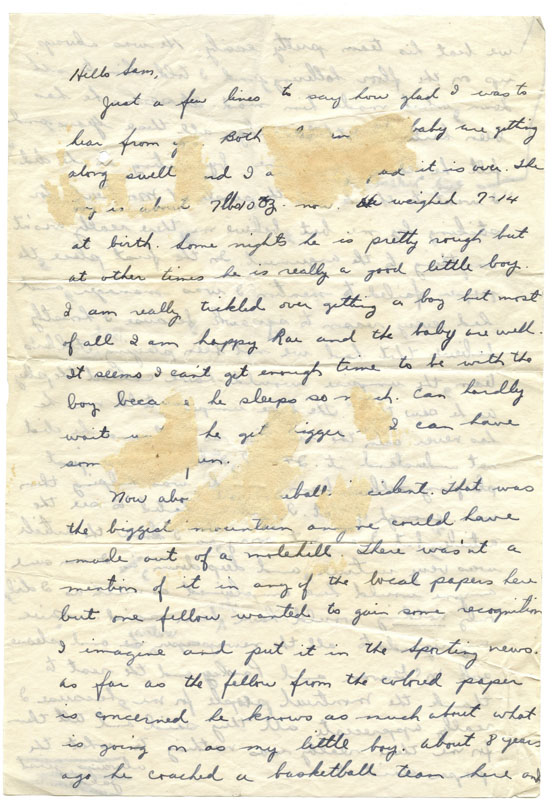
A letter written by Jackie Robinson sent to Sam Maltin.
Photo Credit : Jewish Public Library - Archives
A letter written by Jackie Robinson sent to Sam Maltin.
Photo Credit : Jewish Public Library - Archives
1917 - 1957
Sam Maltin
Sam Maltin was a sports journalist for the Montreal Star and Herald newspapers, whose articles not only tackled athletics, but progressive social issues of the day.
Inspired by the predominantly leftist social consciousness of his Montreal Jewish community, Maltin espoused a “radical idealism” in his opinion pieces. Baseball in the 1940s was at a crossroads with race relations. When Jackie Robinson was signed to the Brooklyn Dodgers, he broke the colour barrier, making international news. This momentous event was greeted by American fans with both elation and hostility.
In Montreal, Robinson’s reception was enthusiastic, and Maltin was there to document the story. Robinson’s first home game in the city was on May 1st, 1946, in Delorimier Stadium. He was the biggest sports celebrity Montreal had ever seen. Later that year, Robinson led the Montreal Royals to the Junior World Series title in Montreal. After the win, tens of thousands of fans chased Robinson through the streets. As Maltin famously wrote, “it was probably the only day in history that a black man ran from a mob with love instead of lynching on his mind.”
In addition to writing flattering articles about Robinson’s massive success, Maltin and his wife, Belle, developed a personal relationship with the baseball player and his wife, Rachel. The couples went on to write letters to each other for many years. Robinson maintained a deep appreciation for Maltin’s friendship, and referred to Montreal as “the city that enabled me to go to the major leagues.”
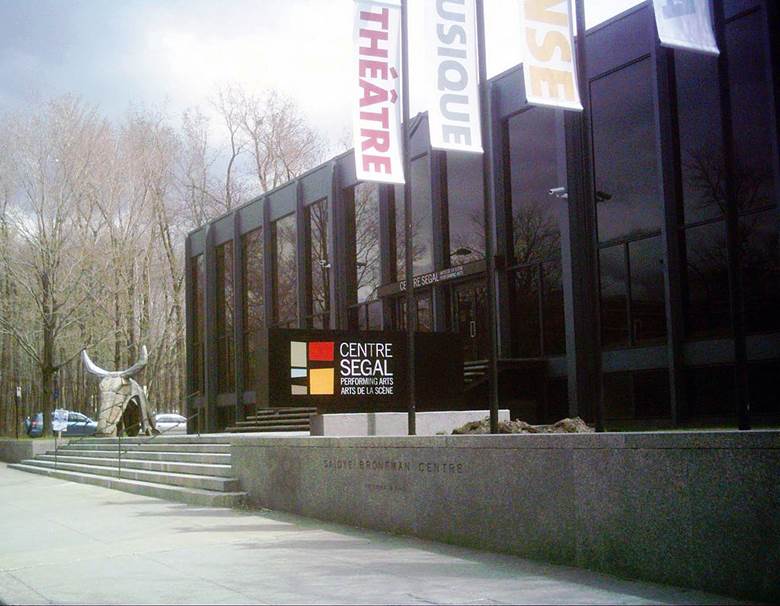
The Segal Centre for Performing Arts, formerly known as the Saidye Bronfman Centre for Arts, was designed by Phyllis Lambert in honour of her mother with Ludwig Mies van der Rohe.
Photo Credit : Jean Gagnon
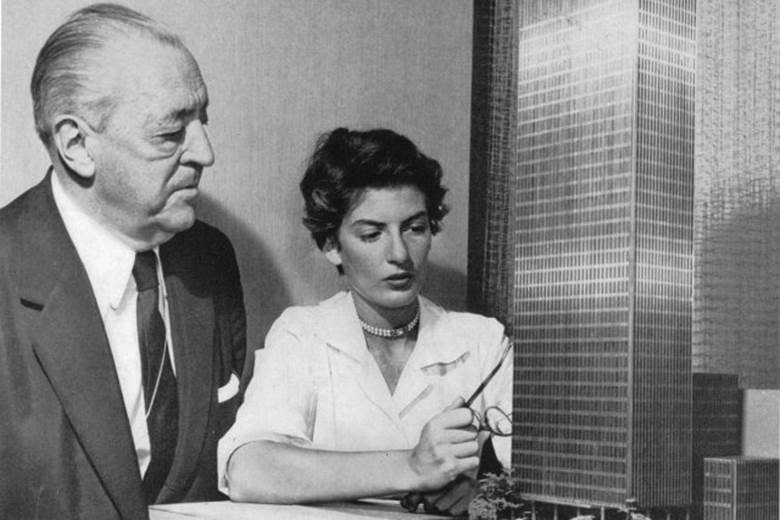
Ludwig Mies van der Rohe and Phyllis Lambert with the model for the Seagram Building, New York, (1955).
Photo Credit : Phyllis Lambert Fonds
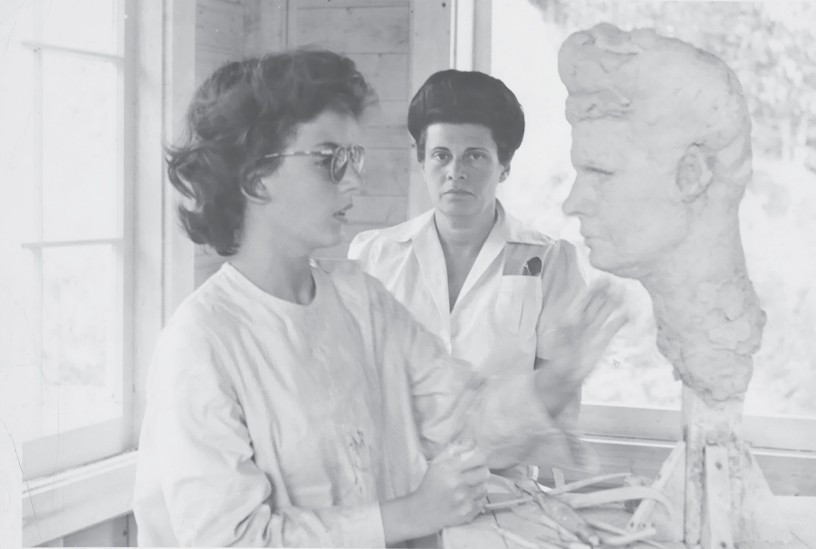
Phyllis Lambert working on a sculpture portrait of her mother Saidye Bronfman, ca. 1950s.
Photo Credit : Phyllis Lambert Fonds
1927 -
Phyllis Lambert
Phyllis Lambert is an award-winning Canadian architect, social activist and philanthropist, who founded and directs the Canadian Centre for Architecture in Montreal.
The second daughter of Samuel Bronfman and Saidye Rosner, Lambert grew up in Montreal. She graduated from Vassar College in 1948. While sculpting in Paris, Lambert’s father began construction of his distilling headquarters building in midtown Manhattan, and Lambert worked as the planning director. Following a master’s degree in architecture at Chicago’s Illinois Institute of Technology, she returned to Montreal to design the Saidye Bronfman Centre.
In 1975, Lambert founded the heritage preservation group Heritage Montreal. Four years later, she founded the Canadian Centre for Architecture, a museum and research centre in downtown Montreal. She retired as CCA’s director in 1999, but remains chair of the board of trustees, and an active member of the acquisitions committee.
As an activist, Lambert is deeply interested in preservation-related projects and publications. She has donated money, time and effort to revitalize Shaughnessy Village, along with protesting bad urban construction plans. She has also published books including Court House: A Photographic Document; Photography and Architecture: 1839-1939; Opening the Gates of Eighteenth-Century Montréal; and Fortifications and the Synagogue: The Fortress of Babylon and the Ben Ezra Synagogue, Cairo.
Lambert holds honourary degrees from more than 25 universities and has been made an Officer of France’s Order of Arts and Letters (1992), Companion to the Order of Canada (2001), Grand Officer of the National Order of Quebec (2005). She received an honorary DFA in Architecture from the Pratt Institute in 1990 and was awarded the Vincent Scully Prize in 2006 for a lifetime of outstanding architectural achievements in 2006. She was the 2014 recipient of the Golden Lion at the 14th Venice Architecture Biennale and was awarded the 2016 Wolf Prize in Arts. She was the subject of a 2007 documentary called Citizen Lambert: Joan of architecture.
Learn more:
Roderick McLeod & Eric John Abrahamson, Spirited Commitment: The Samuel and Saidye Bronfman Family Foundation, 1952 – 2007. (Montreal: McGill-Queens University Press, 2010).
Arts & Culture
Share
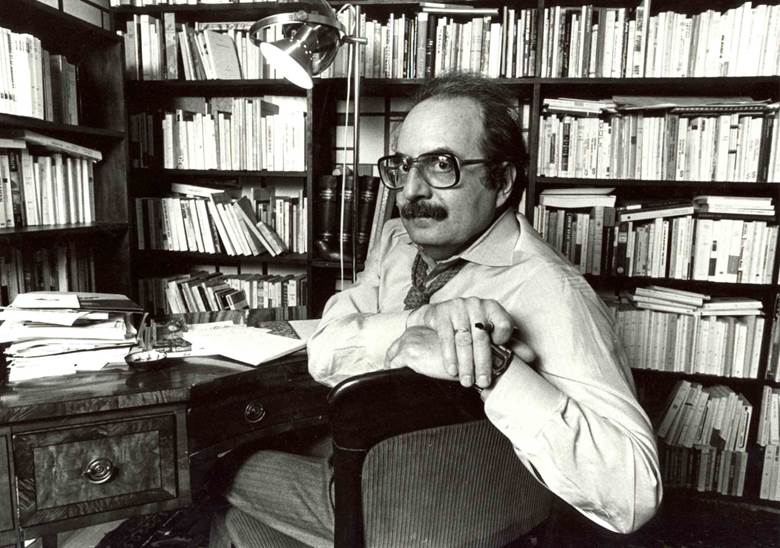
Naïm Kattan.
Photo Credit : Alex Dworkin Canadian Jewish Archives
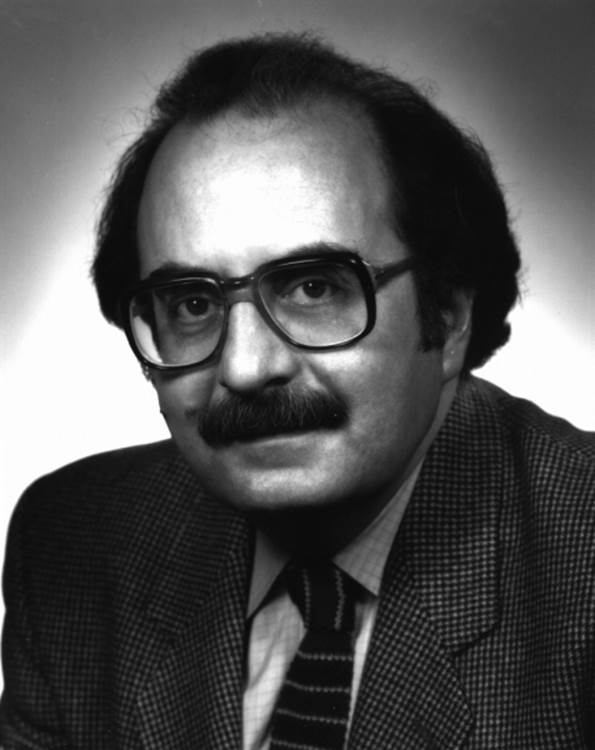
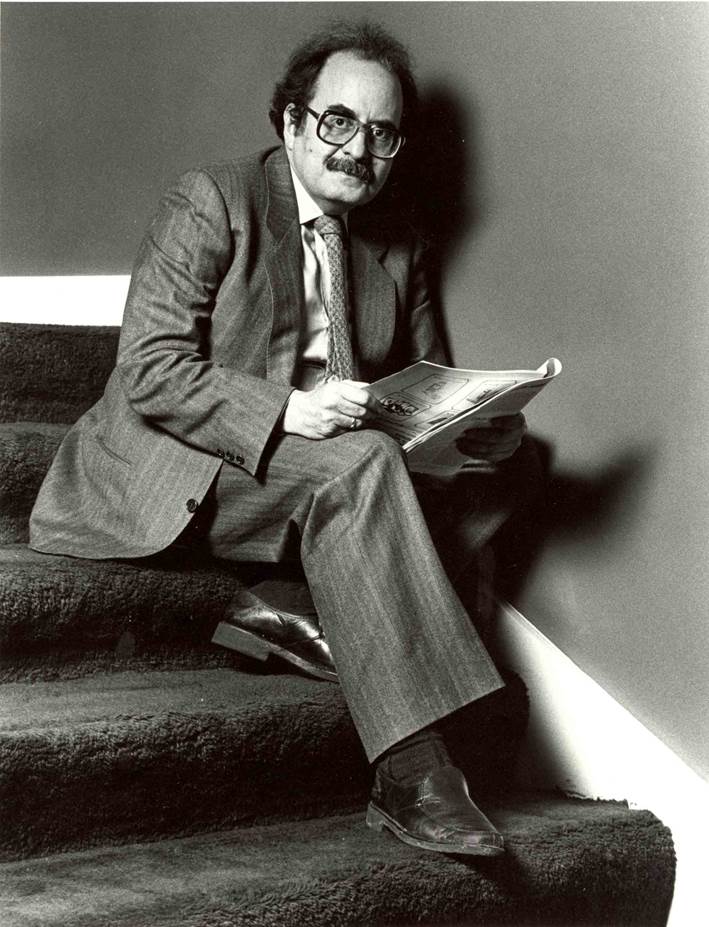
Naïm Kattan, ca. 1960s.
Photo Credit : Alex Dworkin Canadian Jewish Archives
Naïm Kattan, ca. 1960s
Photo Credit : Alex Dworkin Canadian Jewish Archives
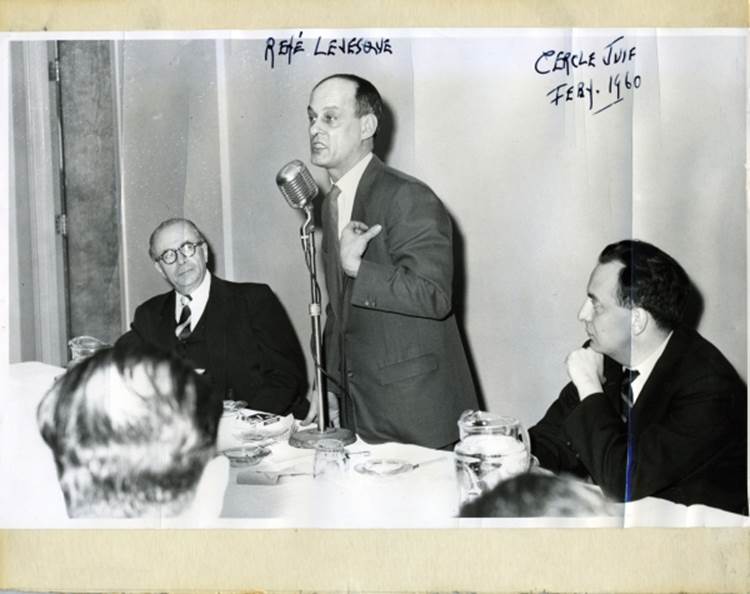
Speakers at the Cercle Juif de langue française meeting, including Réné Lévesque (middle) and Naïm Kattan (right), February 1960.
Photo Credit : Jewish Public Library - Archives
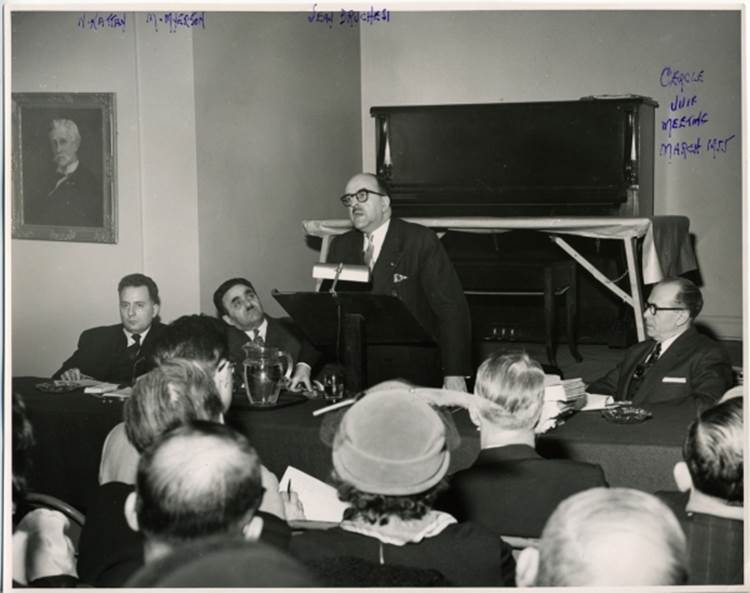
Speakers at the Cercle Juif de langue française meeting, including N. Kattan, M. Myerson, and Jean Bruchesi, March 1955.
Photo Credit : Jewish Public Library - Archives
1928 -
Naïm Kattan
Writer, literary critic and professor, Naïm Kattan, is an iconic figure in Montreal’s Sephardic community, who has published over 30 books and has used his internationalist perspective to build bridges between Quebec’s English and French-speaking communities.
Kattan was born in Baghdad, Iraq, at a time when the life of the city was marked by a strong Jewish presence. After studying law at the University of Baghdad, he received a scholarship from the French government in 1947 to study literature at Université Paris I – La Sorbonne. In 1954, he decided, like many Jews living in the Middle East, to immigrate to Canada, to escape the rising tide of Arab nationalism and anti-Semitism.
In the 1950s, Montreal’s Jewish community was predominantly English-speaking, and Kattan observed the difficulty it had in integrating the new French-language immigrants. (It should be noted that the linguistic situation began to shift in the 1970s, with the community now solidly bilingual.) As a writer, Kattan has published some 30 books in French, including the semi-autobiographical novels Adieu, Babylone (1975; translated as Farewell, Babylon, 1976), Les Fruits arrachés (1977; translated as Paris Interlude, 1979) and La Fiancée promise (1983). Widely translated, his works examine such issues as cultural difference, exile, belonging and nostalgia for lost origins.
Kattan was an active member of the Cercle juif de langue française, created in the early 1950s by the Canadian Jewish Congress as the first French-language Jewish cultural association in Canada. He also founded, through the CJC, the Bulletin du Cercle juif, a newspaper for the French-speaking Jewish community. Kattan went on to write a literary column in Le Devoir, and for close to 25 years he headed the writing and publishing division of the Canada Council for the Arts. Over the course of his career, he has been awarded numerous distinctions, including the Order of Canada, the Ordre du Québec and the J. I. Segal Award for Literature.
Special thanks to the Museum of Jewish Montreal.
Logo for L’Ecole De Cinema – School of Cinema Mel Hoppenheim at Concordia University in 2014.
Photo Credit : Concordia University
Mel Hoppenheim at Mel's Cité du Cinéma studio, in Montreal, December 8, 2010.
Photo Credit : Dave Sidaway for the Montreal Gazette
Mel Hoppenheim
Mel Hoppenheim is a filmmaker, cinematographer, philanthropist and entrepreneur who significantly contributed to the development of the arts through his visionary contribution to the Quebec and Canadian film industry.
Hoppenheim was born in Montreal, and graduated from the famed Baron Byng High School in 1954. He got his start in the film industry by renting cameras and equipment to local cinematographers. In 1965, he founded Panavision Canada, which was so successful that, six years later, he expanded with technical installations in Toronto (1972) and then Vancouver (1977).
In 1988, Hoppenheim made a major investment in the future of moviemaking by purchasing the historic Theatre Expo, which was baptized Cité du Havre as part of the construction of Expo 67. He expanded by building five additional state-of-the-art studios within the new complex.
In 1990 he built eight additional studios under the banner Cite du Cinema Mel’s – making these installations the largest privately owned film studios in North America. These studios were designed to be the most cutting-edge production facilities in the world film and television industry, turning Montreal into a center for the production industry that rivaled Hollywood, attracted renowned film makers and boosted employment in Montreal.
Forward thinking and pre-occupied with encouraging future talent in the film industry, Hoppenheim prioritized Education. He founded the Mel Hoppenheim School of Cinema at Concordia University in 1997, which now counts over 900 students. He was also instrumental in supporting the National Institute of Image and Sound (INIS), a private school specializing in writing, directing and film/television producing.
He is a major philanthropist in healthcare specifically at the Montreal Heart Institute, where he funded the most sophisticated diagnostic and imaging technology in Canada and the Montreal Children’s Hospital where he funded the Chair in Pediatric Neurology. His philanthropy activity has touched numerous other charities.
Hoppenheim’s tremendous contributions to Canadian moviemaking and culture were honoured in 2010 with the honorary Genie Award; in 2012 by the Montreal World Film Festival with the Special Grand Prize of the Americas. He received an Honorary Doctorate from Concordia University in 2008 and was bestowed the Order of Canada, in 2015.
Sheila Fischman is considered one of Canada’s finest translators of Quebecois literature, and has brought over 150 contemporary Quebecois novels from French into English.
Born to a Jewish family in Moose Jaw Saskatchewan, Fischman was raised in Ontario. She received a BA in Chemistry and Anthropology, and an MA in Anthropology, from the University of Toronto. After marrying Canadian poet D.G. Jones in 1969, the couple settled in North Hatley, in Quebec’s eastern townships, where she was able to learn living French. At the time, North Hatley had two distinct groups of artists: English and French. Fischman saw that with two languages, she could bring these two groups together, and began hosting mixed gatherings of writers and poets in her home.
Fischman continued this work of bridging language communities after moving to Montreal. She was an editor for The Montreal Star’s book section, as well as a columnist for The Globe & Mail and The Montreal Gazette. She was also a founding member of the Literary Translators’ Association of Canada, and a founding co-editor of Ellipse: Œuvres en traduction/Writers in Translation. Her work as a translator and editor have made Quebecois literature accessible to Anglophone Canada, allowing for the appreciation and celebration of Quebecois culture abroad, including top novelists like Michel Tremblay, Anne Hébert, Kim Thúy and François Gravel.
Fischman’s translations have been honoured with a Governor General’s Award for Translation, and received an astounding 14 nominations. She has won the Molson Prize for the Arts and been a finalist for the Scotiabank Giller Prize. She holds honorary doctorates from the University of Ottawa and the University of Waterloo. She was invested into the Order of Canada (2001) and the National Order of Quebec (2008).