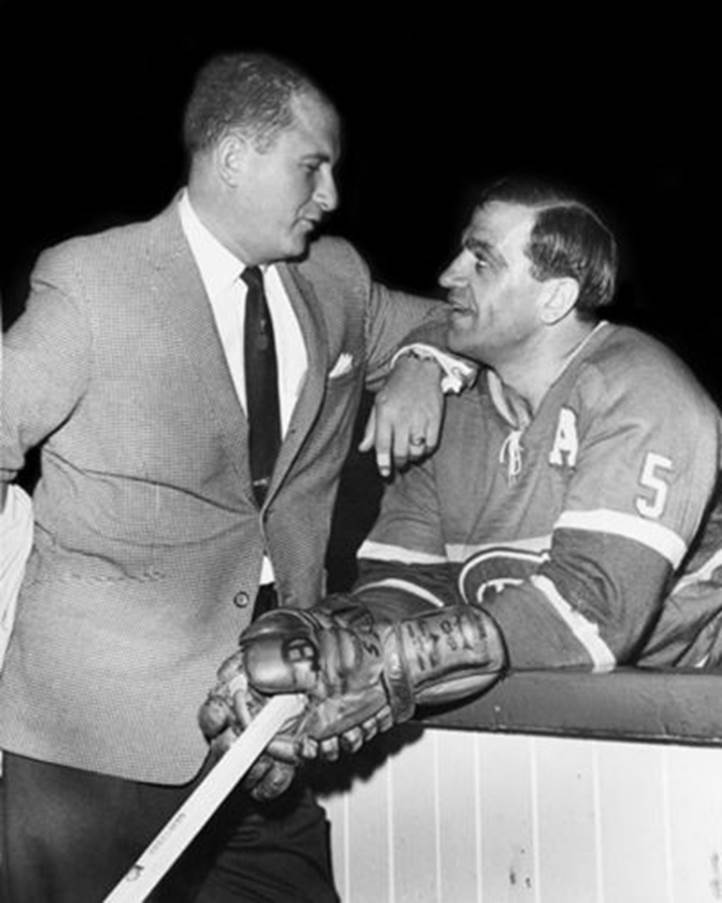
Red Fisher with Boom Boom Geoffrion from the Montreal Canadiens.
Photo Credit : Dennis Kane
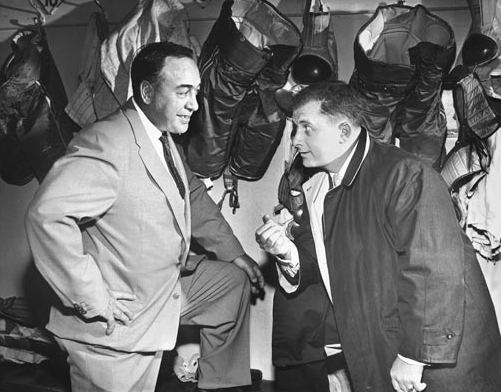
Red Fisher interviewing Toe Blake, often considered the best coach in NHL history.
Photo Credit : Montreal Gazette photo files
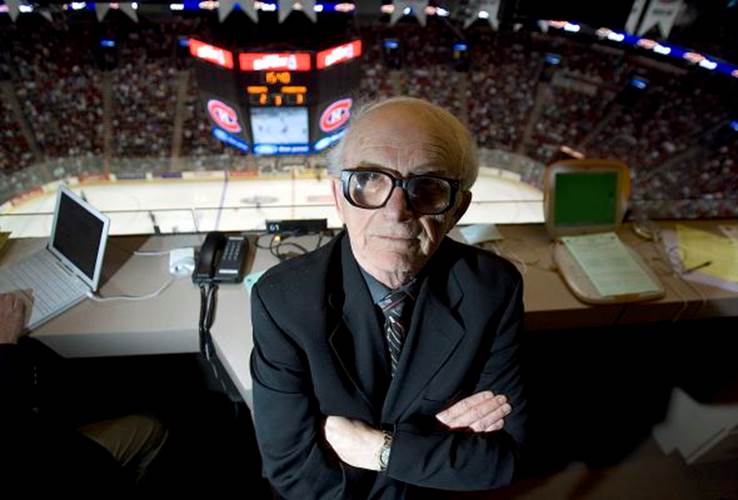
Red Fisher watches the third period of the Montreal Canadiens and the Toronto Maple Leafs at the Bell Centre in Montreal, September 24, 2005.
Photo Credit : Montreal Gazette
1926 - 2018
Red Fisher
Red Fisher was a Montreal sports reporter famous for his coverage and thorough knowledge of the Montreal Canadiens.
Born in Montreal, Fisher was nicknamed “Red” because of his hair colour. He began writing about hockey for the Montreal Star in 1954 and remained there until the paper’s closure in 1979, when he moved over to the Montreal Gazette. He quickly became known for his “tell it like it is” writing, and won the Canadian National Newspaper Award three times before officially retired in 2012. He was the longest-serving beat writer on record for an NHL team, having reported on the Canadians for 57 years (through 17 Stanley Cups!).
Fisher had a significant influence over the entire NHL community – Don Cherry claims that Fisher is responsible for getting him fired as Head Coach of the Boston Bruins. Upon his retirement as dean of the Montreal Canadiens reporters, Fisher’s integrity, engagement and fairness were celebrated by Gary Bettman, NHL Commissioner, Geoff Molson, George Gillett Jr., Jacques Demers, Jean Beliveau, Henri Richard, Yvan Cournoyer, Guy Carbonneau and the legendary Dickie Moore, Fisher’s close friend.
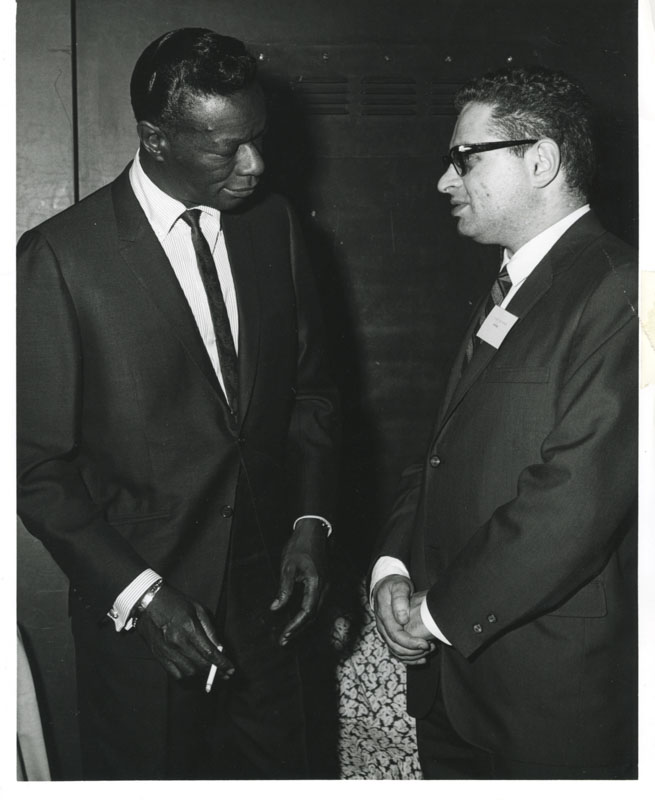
Sam Gesser at his 50th birthday with Nat King Cole (1980).
Photo Credit : Jewish Public Library Archives
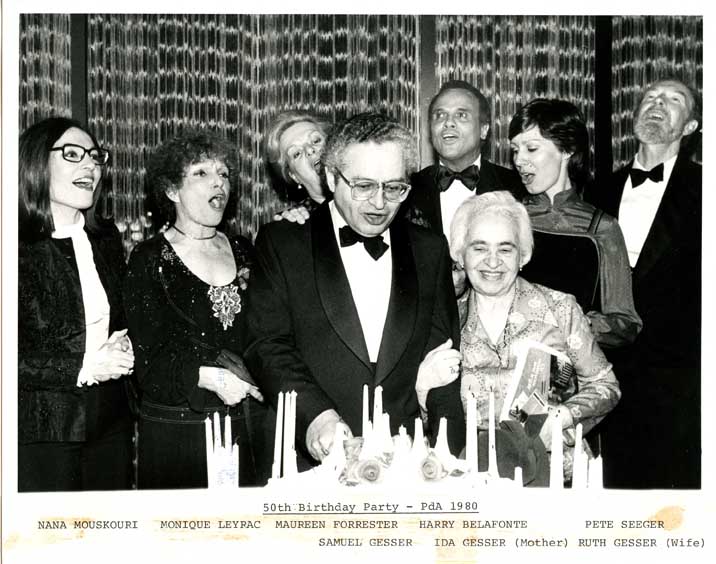
Sam Gesser at his 50th birthday (1980).
Photo Credit : Jewish Public Library Archives
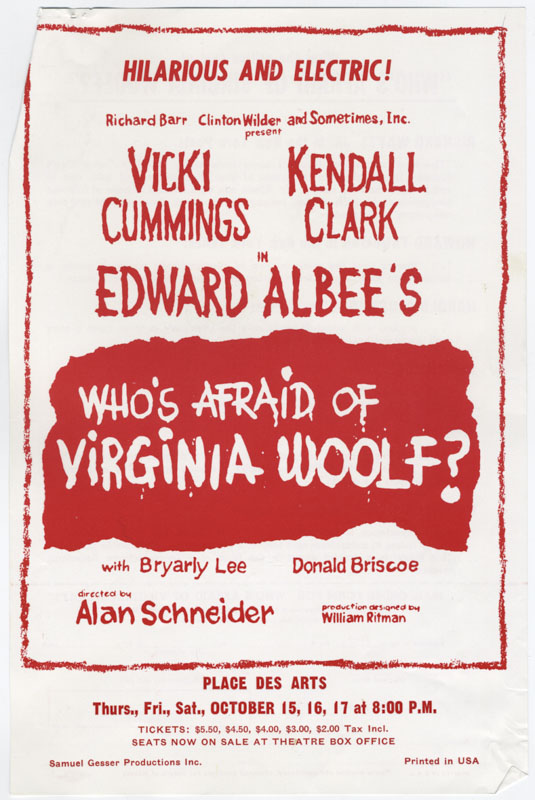
Poster of Who's Afraid of Virginia Woolf? promoted by Sam Gesser.
Photo Credit : Jewish Public Library Archives
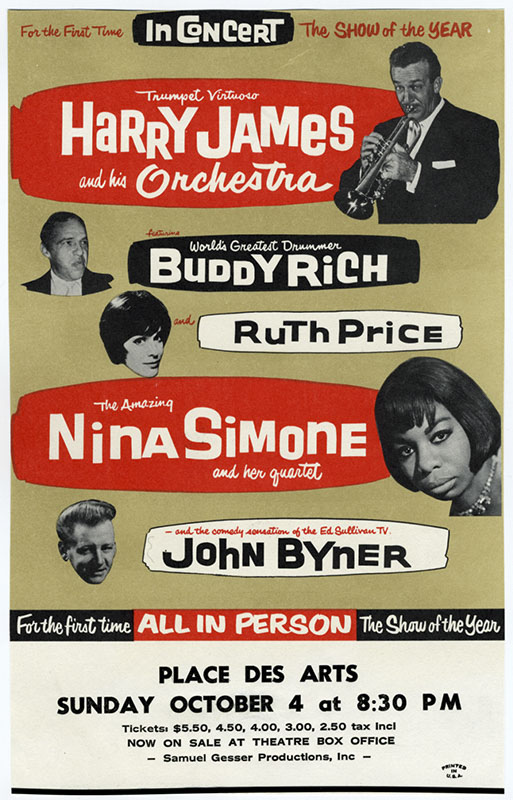
Poster of a concert featuring Harry James, Buddy Rich, Ruth Prince, Nina Simone and John Byner, promoted by Sam Gesser.
Photo Credit : Jewish Public Library Archives
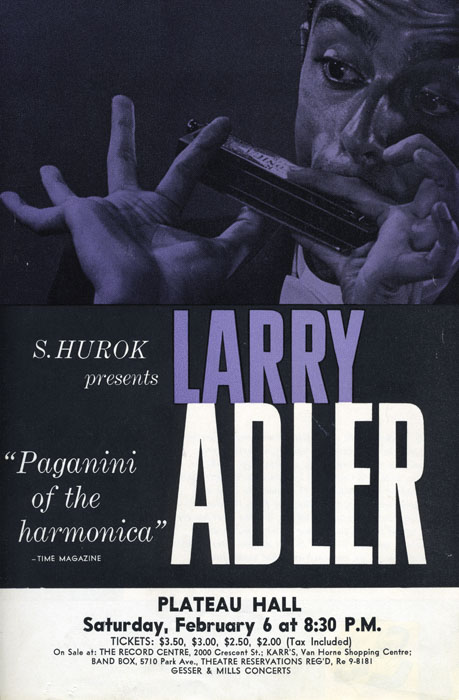
Larry Adler concert poster promoted by Sam Gesser (1950s).
Photo Credit : Jewish Public Library Archives
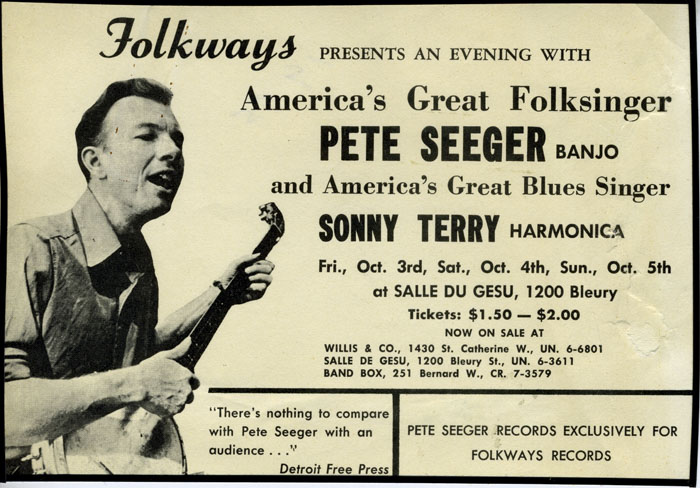
Pete Seeger concert poster, managed and promoted by Sam Gesser (1950).
Photo Credit : Jewish Public Library Archives
1930 - 2008
Sam Gesser
Sam Gesser was a visionary writer, record producer, and impresario who played a foundational role in jump-starting Canada’s music scene.
Gesser was born in Montreal on January 7, 1930, and grew up in the colourful Plateau Mont-Royal neighbourhood. Growing up, he would sneak into His Majesty’s Theatre to watch the shows and to study the intricacies of scriptwriting. As an adult, his true vocation, in the impresario field, developed almost by chance. While in Chicago in the late 1940s, Gesser happened to purchase a Folkways recording of celebrated blues guitarist Leadbelly. On the back of the album was a listing of other records available from Folkways, none of which were available in Canada, as the record company had no distributor north of the border at that point.
After a meeting in New York with Folkways founder Moses Asch, Gesser signed on as the Canadian representative, and also took on the challenge of tracking down and producing Canadian folk music for the label. From 1950-1964, Gesser produced more than 100 original records for Folkways from songs of First Nations to the music of notable musicians such as Alan Mills, Jean Carignan and Hélène Baillargeon. In addition to this work, Gesser produced records for the Pye, Vox and Premier record labels, as well as writing countless radio and television scripts for CFCF and CBC. While producing records, Gesser got the idea that presenting the artists to live audiences was an excellent way to promote the music.
In 1950, Gesser arranged a concert date for Folkways artist Pete Seeger in Montreal at the L’Érmitage Hall located on Côte-des- Neiges Road, and impresario history was born. Over the ensuing years, Gesser presented over 3,000 performances to local, national and international audiences. His productions brought an immense range of artistry to Montreal; from folk to popular, classical to jazz, international music and dance to Broadway musicals and plays. The success of the Seeger show launched a 50+ year odyssey of showcasing Canadian and international talent to Montreal audiences. In addition to his local shows, Gesser also took on touring challenges for artists such as Harry Belafonte, Tony Bennett and Nana Mouskouri, bringing the live experience to Western Canada, regions of the United States, the Maritimes and small-town Quebec. Gesser helped to found Les Feux-Follets, a music and dance troupe that put Canadian heritage and artistry centre stage.
Gesser also contributed to arts and entertainment through writing. His play “Fineman’s Dictionary,” starring Fyvush Finkel, was presented in 2000 at the Saidye Bronfman Centre, in addition to a staged reading at the Jewish Public Library. “Dancing to Beethoven,” a play written for and acted by blind actors, was presented in 2003 at Place des Arts. In 2006, the cast and the play itself were also the subject of a National Film Board documentary.
Gesser’s dedication to his craft included making a donation of his substantial album collection to the Marvin Duchow Music Library, McGill University. In 2005, he donated his professional archives to the Jewish Public Library Archives. These archives not only document Gesser’s long career and his achievements, but also the history of Canadian culture and entertainment. For making major contributions to the field of arts and entertainment, Gesser was awarded the Order of Canada.
Special thank you to the Jewish Public Library Archives.
Innovation & Science
Share
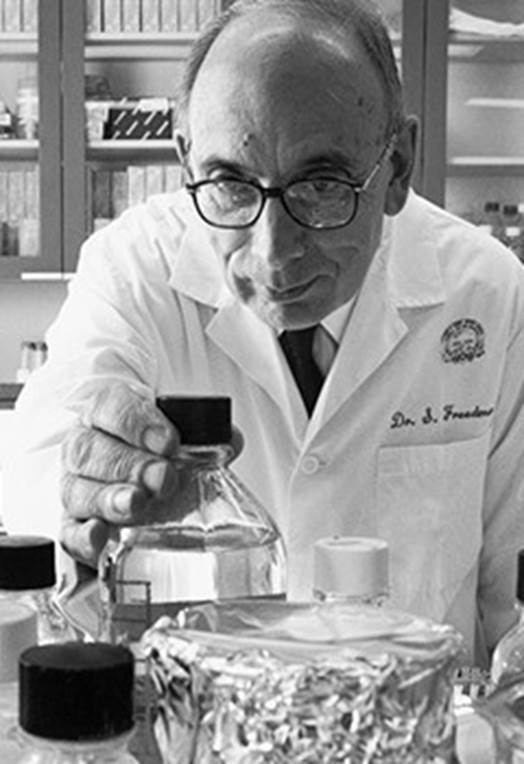
Dr. Samuel O. Freedman.
Photo Credit : Fonds de Recherche Santé
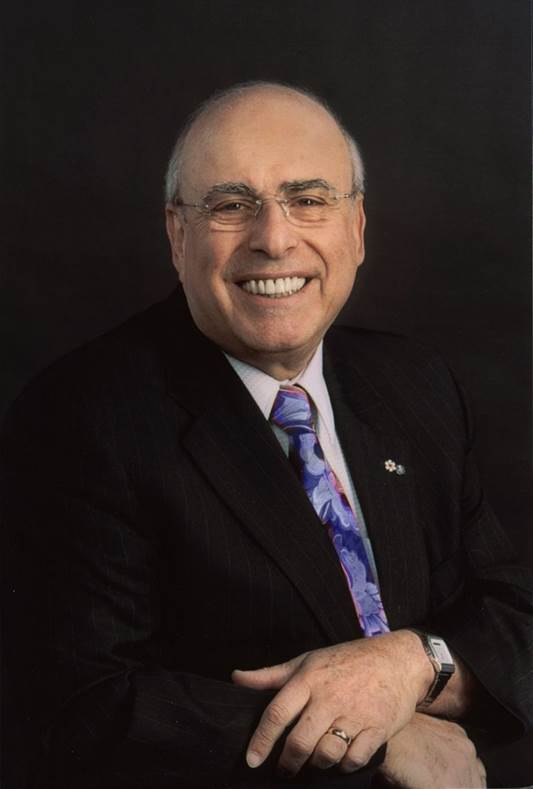
Dr. Phil Gold.
Photo Credit : Jewish Public Library - Archives
Dr. Samuel Freedman & Dr. Phil Gold
Dr. Samuel Freedman and Dr. Phil Gold are award-winning scientists, researchers, physicians and administrators from Montreal.
Freedman graduated from Westmount High School while Gold is a graduate of Montreal’s famed Baron Byng High School. Both went on to receive their medical degrees from McGill University. In 1965, they co-discovered the first human cancer tumor marker to achieve clinical use – carcinoembryonic antigen (CEA). The presence of this antigen, measurable in blood, was first discovered in patients with colorectal cancer, and can detect the presence of other cancers, as well. It has since become a routine medical test in hospitals around the world.
Freedman and Gold have both been named to the Order of Canada and the National Order of Quebec. They are both Fellows of the Royal Society of Canada, and recipients of the Prix Armand Frappier from the government of Quebec as well as the prestigious Gairdner Foundation International Award, seen as second only to the Nobel Prize. They have both received Queen Elizabeth II Jubilee medals. Gold has received the 125th Anniversary of the Confederation of Canada Medal, and has been inducted into the Canadian Medical Hall of Fame.
Among their many senior positions, Freedman served as Dean of Medicine and then Vice-Principal, Academic (Provost) at McGill as well as Director of Research at the Lady Davis Institute at the Jewish General Hospital while Gold was the Douglas G. Cameron Professor of Medicine at McGill and Physician-in-Chief at the Montreal General Hospital.
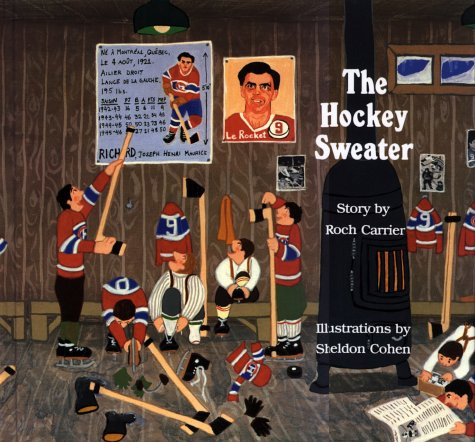
Sheldon Cohen is a beloved Montreal illustrator and filmmaker, best known for his collaboration with Roch Carrier on the classic short story, The Sweater.
Cohen was born to an immigrant Jewish family in 1949. He received a Bachelor of Science from McGill University in 1972 and went on to study art and animation at Sheridan College. In 1972, he became a trainee at the National Film Board of Canada. There, he began producing short animated films in a whimsical style. The stories reflected Quebecois culture as well as his experiences growing up in a Yiddish-speaking neighbourhood of Montreal.
Cohen’s adaptation of The Sweater became an instant classic and was shown at primary schools throughout Canada; the film received 15 international awards, including the BAFTA Award for Best Animation. Another of his most successful works is the short animation, The Three Wishes – the story of a poor junk peddler and his wife in Montreal. Cohen came out of retirement in 2015, after a near-death experience, to make his acclaimed animated film, My Heart Attack.
Cohen was awarded the Governor General’s Award for French-language children’s illustration and is considered one of Canada’s most prominent children’s animators.
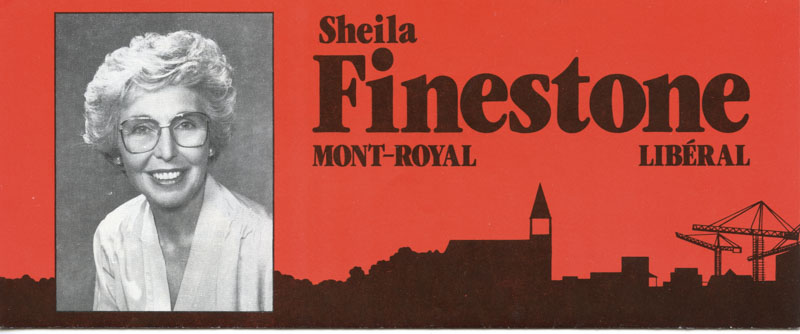
Pamphlet for Sheila Finestone, Liberal M.P for Mont Royal (1986).
Photo Credit : Jewish Public Library Archives
Pamphlet for Sheila Finestone, Liberal M.P for Mont Royal (1986).
Photo Credit : Jewish Public Library Archives
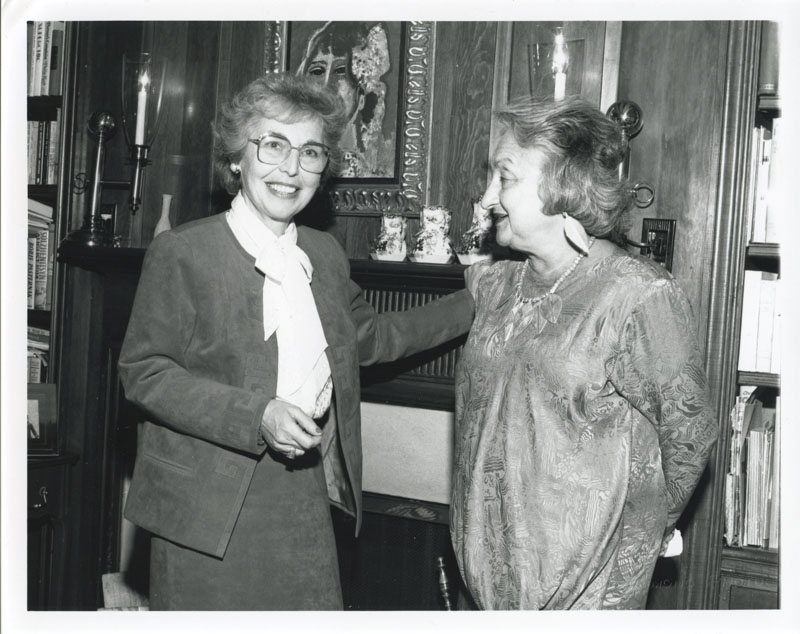
Sheila Finestone, M.P. [left], chats with feminist/author Betty Friedan during the latter's visit under the auspices of the Canadian Associates of Ben-Gurion University of the Negev.
Photo Credit : Jewish Public Library Archives
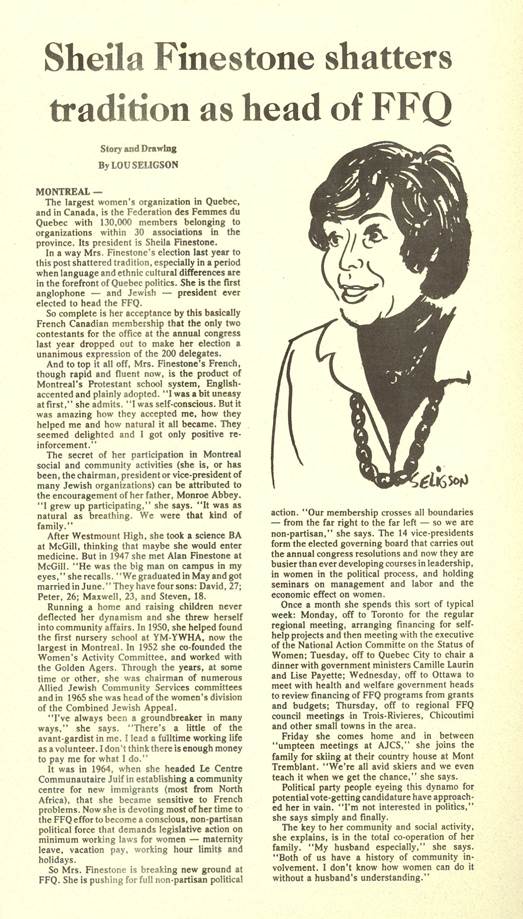
Article detailing Sheila Finestone’s leadership at the Fédération des femmes du Québec.
Photo Credit : Jewish Public Library Archives
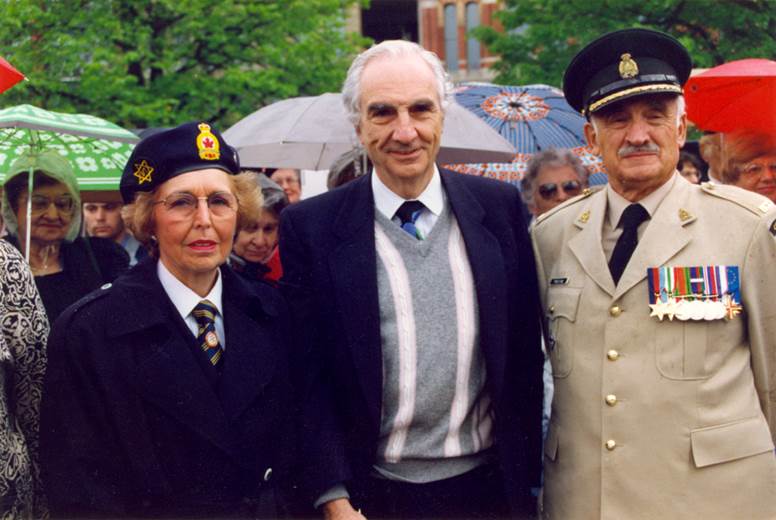
Sheila Finestone with BJ Finestone and her brother Stanley Abbey at a Veteran’s Memorial and Anniversary event in Ottawa (1994).
Photo Credit : Alex Dworkin Canadian Jewish Archives
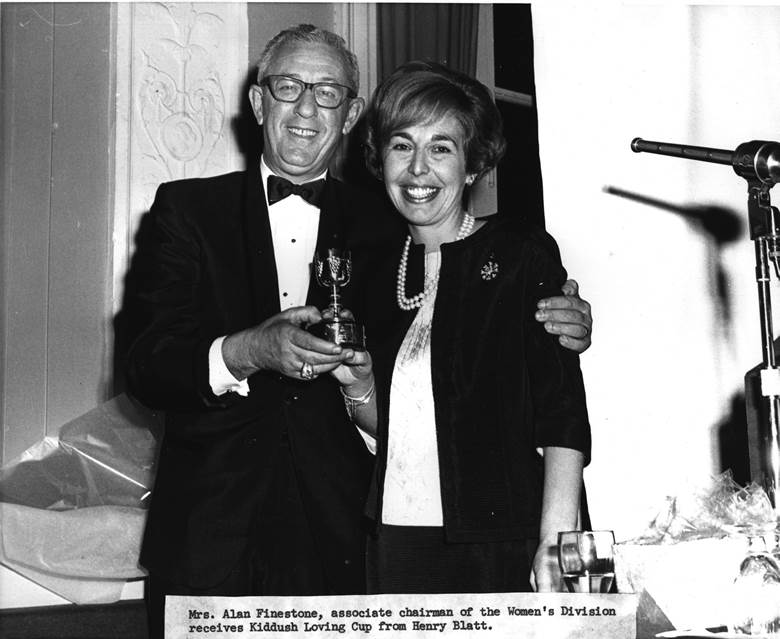
H. Blatt with Mrs. Sheila FInestone, associate chairman of the Women’s Division receives Kiddush Loving Cup from Henry Blatt.
Photo Credit : Alex Dworkin Canadian Jewish Archives
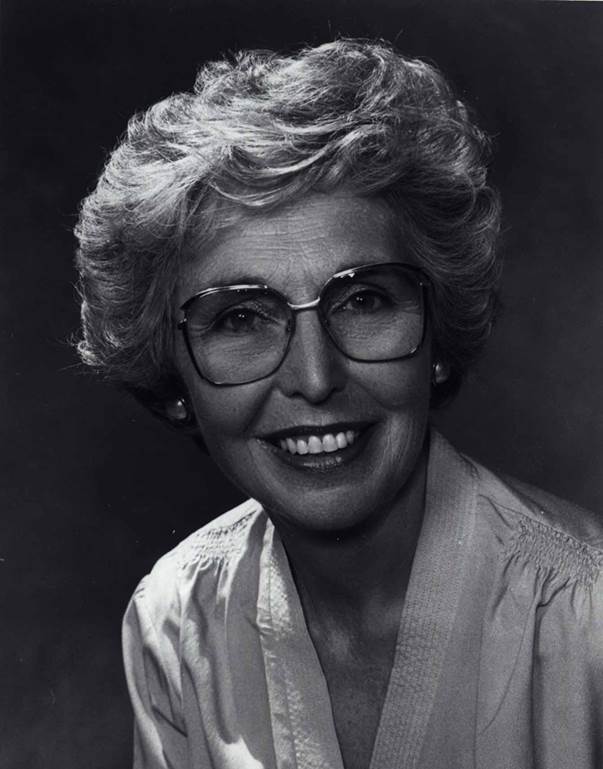
Sheila Finestone.
Photo Credit : Alex Dworkin Canadian Jewish Archives
1927 -
Sheila Finestone
Sheila Finestone was a notable politician from Montreal who dealt with a range of cultural and multicultural issues, from the protection of human rights to the promotion of equality for women and minorities.
Finestone was first elected in 1984 as a Member of Parliament for the Liberal Party for the Mount Royal riding, a riding she would hold for more than a decade. Between 1984 and her appointment to the Senate in 1999, Finestone held a wide range of critical positions in the public and philanthropic spheres.
In the 1990s, Finestone was appointed as Secretary of State for Multiculturalism and the Status of Women. She served as President of the Canadian Inter-Parliamentary Union, and was active in promoting human rights and women’s rights. She was a founding member of the Board of Alliance Quebec. She served as the first Anglophone President (1977-1980) of the 130,000 member coalition, “La Federation des Femmes du Quebec,” was Past President of the Women’s Federation of Allied Jewish Community Services and Combined Jewish Appeal, as well as Neighbourhood House Services of the YM-YWHA.
She was also the driving force behind the establishment of the Centre Communautaire Juif. Finestone was a member of the Board of Trustees of AJCS and the YM-YWHA. She was a member of the Board of Directors of the Montreal Heart Institute Foundation, the Quebec Heart Foundation, the Information and Referral Centre of Greater Montreal, La Fondation Therese-F. Casgrain, and the Shawbridge Youth Centres.
Finestone was Vice President of the Caldwell Residence for the Well Aged, and is currently a member of the Joint Committee on Ashkenazi-Sephardic Relations (CJC-AJCS). At CJC, Finestone is or was a member of the CJC Joint Public Relations Committee, the National Law and Social Action Committee, and an advisor to the Status of Women Committee of CJC; member of the Coalition for Pension Reform, the Coalition against Media Violence and the Interfaith Task Force for Soviet Jewry. She has chaired committees which have presented briefs to federal and provincial parliamentary commissions on a wide range of issues, including the Charter of Rights and Freedoms, Proposed Revisions to the Labour Code, the Civil Code, the Federal Criminal Code and the Youth Protection Act, the Royal Commission on the Status of Women and the Service de la Garde d’Enfance.
As political attaché to the Quebec Liberal Party leaders Claude Ryan, Gerald D. Levesque and Robert Bourassa, Finestone had the special responsibility of informing them of the concerns of the minority communities. She served on the Quebec Liberal Party Policy Commission and is/was Chairman of the Commission on Aging. Prior to this, she was the first Director of Youth Protection for Jewish Family Services. Finestone retired from politics in 2001.
Special thank you to the Jewish Public Library Archives.
Arts & Culture
Share
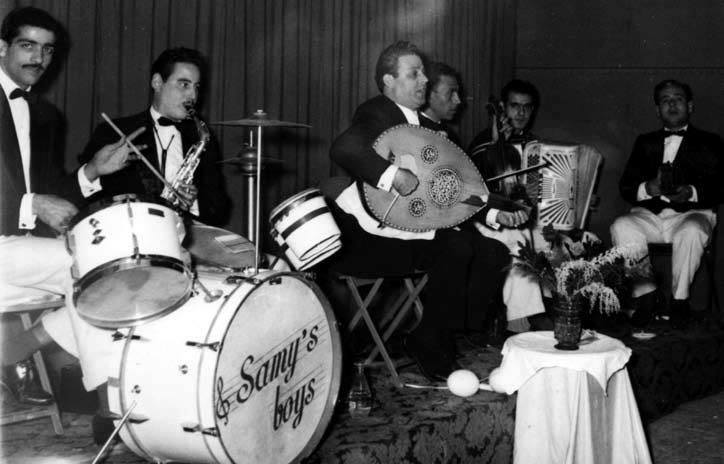
Samy's Boys.
Photo Credit : Samy Elmaghribi Foundation
Samy Elmaghribi.
Photo Credit : Samy Elmaghribi Foundation
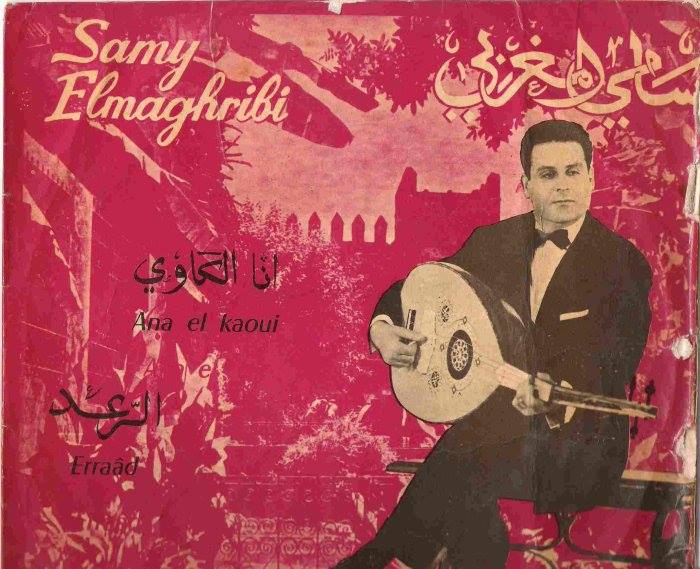
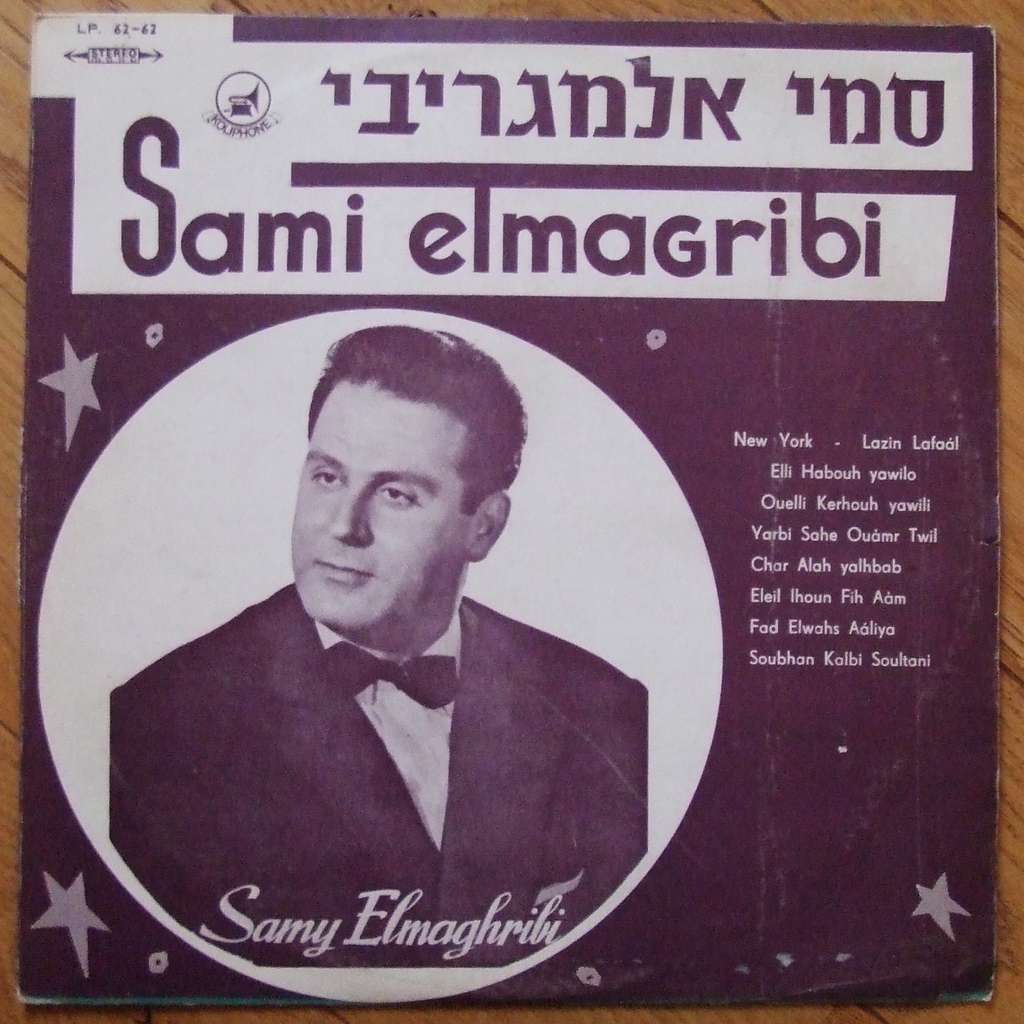
Samy Elmaghribi album cover.
Photo Credit : Samy Elmaghribi Foundation
Samy Elmaghribi album cover.
Photo Credit : Samy Elmaghribi Foundation
1922 - 2008
Samy Elmaghribi
Samy Elmaghribi was a beloved 1950s radio star in Morocco and Algeria, cantor in Montreal, and music director in Israel.
Salomon Amzallag was known in the Montreal Jewish community both as a long-standing first cantor of the Spanish & Portuguese Synagogue (1967-1984), and as Samy Elmaghribi, a world-renowned singer, songwriter and composer of Arab-Andalusian music.
Salomon Amzallag was born in Safi (Morocco), on April 19, 1922. From early childhood, he cultivated his unique talent for music and song, starting at the synagogue with his father, and later learning the Andalusian repertoire with great masters in Rabat (Morocco). He soon became a star performer and composer of traditional and popular music with a fan following throughout North Africa and beyond, and founded his own recording company under the label “Samyphone.” Samy Elmaghribi was also a favourite singer of the late kings of Morocco Mohammed V and Hassan II. He composed a number of Moroccan patriotic songs and hailed the return from exile of King Mohammed V in 1955 with a special composition, “Alef hniya u hniya” (A thousand welcome greetings), that won public popularity.
Salomon Amzallag never renounced his initial love for Jewish liturgy. In addition to his own Sephardic ancient melodies and poems, he performed many other liturgical genres, including middle-eastern and Ashkenazi cantorial classics. He enjoyed a long and successful liturgical career, both at the Spanish & Portuguese Synagogue in Montreal, and as a guest cantor in various synagogues throughout the world. He performed in a number of cantorial concerts in Montreal, and taught Sephardic liturgy, namely at Yeshiva University in New York. Some of his students, including his suc’cessor Cantor Yehuda Abittan, became leading cantors in Canada, France and Israel. Salomon Amzallag struck the right balance between the sacred and the secular facets of his career, and even wrote a song about his response to this apparent dilemma, “Enghenni Wenselli. As Samy Elmaghribi, he followed the paths of exile of his audiences and reached out to them from Paris to other cities in France, from New York to Los Angeles and Caracas (Venezuela), and from Israel back to Morocco. In Montreal, he gave three major concerts at the Maisonneuve theatre hall of Place des Arts (1978, 1984, 2005) and one at Théâtre Outremont (2003).
In Israel, he founded the Merkaz Piyyut Veshira, a centre for Sephardic music where he taught as pedagogical director from 1988 to 1994. During those years, he led a student choir in a series of concerts accompanied by an orchestra largely comprised of newly arrived Russian musicians, which later became the Israel Andalusian Orchestra. On April 27, 2005, Samy Elmaghribi took part in a tribute concert at the Tel Aviv Opera Hall, honouring his long career as a singer and teacher and celebrating the Israel Andalusian Orchestra’s 10th anniversary.
After retiring in Montreal in 1996, he continued to travel the world, and the most noteworthy performances of his later years include the Festival de Chant Gharnati in Rabat and Oujda (1999), and the Festival arabo-andalou (Arab-Andalusian Festival) held at UNESCO in Paris (2000). In 2006, he was the guest of the famous Moroccan TV music show Shada al alhan, a recording that went viral on YouTube.
Throughout his life, Salomon Amzallag crossed geographic, religious and cultural boundaries to extoll universal values through his art and create communion among his diverse audiences. He was acclaimed by both Jews and Muslims as one of the most talented representatives of the Arab-Andalusian musical tradition.
Salomon Amzallag passed away in Montreal on March 9, 2008. That same year, his dear wife Messody received the National Merit medal posthumously bestowed on Samy Elmaghribi by King Mohammed VI. Messody Cohen-Amzallag passed away in Ashdod on April 5, 2015. Samy and Messody’s children created the Samy Elmaghribi Foundation to perpetuate their teachings of respect for tradition, openness to others and generosity through the love of music.
Special thanks to Yolande Amzallag.
Arts & Culture | Women
Share
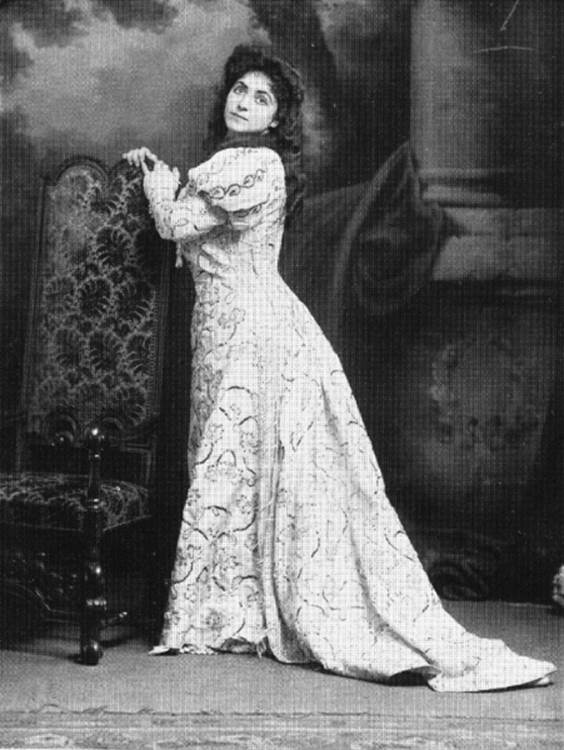
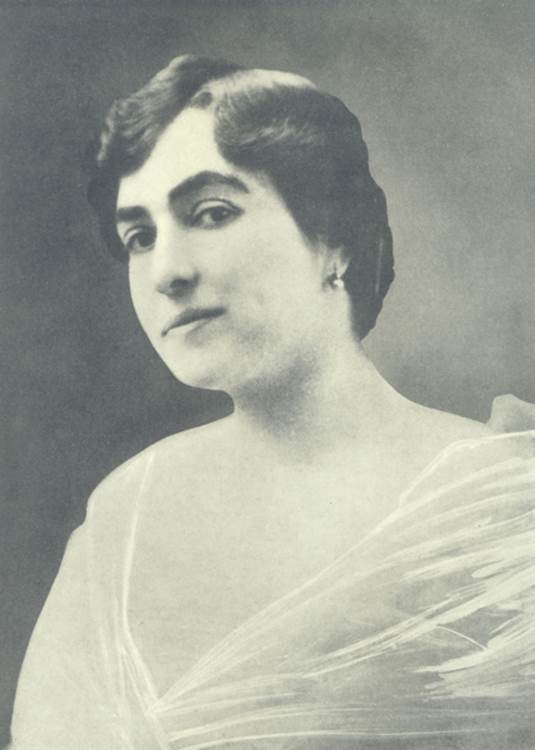
Pauline Donalda singing Juliette in Romeo and Juliette, at Covent Garden, London, in 1905.
Photo Credit : Alex Dworkin Canadian Jewish Archives
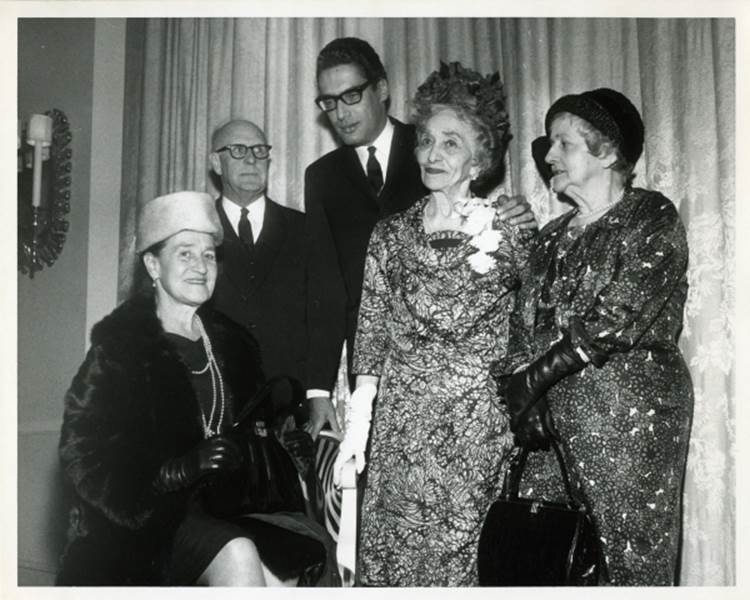
Donalda with friends and supporters, ca. mid-1960s
Photo Credit : Jewish Public Library Archives
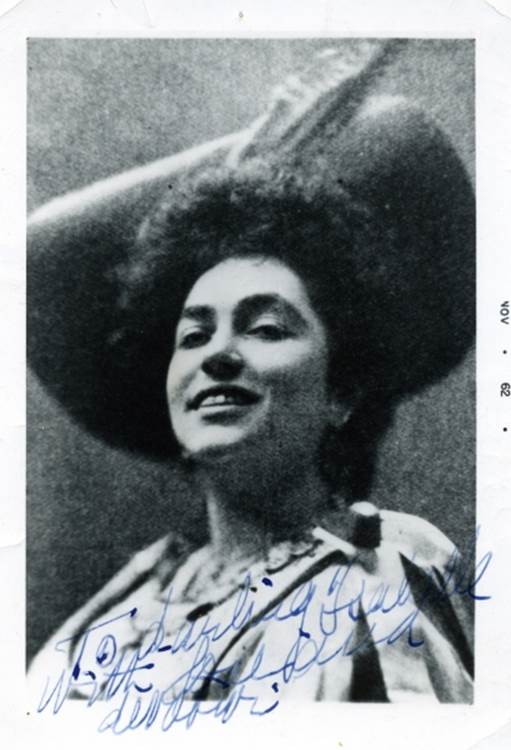
Autographed portrait of Donalda. Photo dated Nov. '62, though it was taken most likely circa 1905-1910.
Photo Credit : Jewish Public Library - Archives
Pauline Donalda portrait from The Jew in Canada, 1926.
Photo Credit : Alex Dworkin Canadian Jewish Archives
1882 - 1970
Pauline Donalda
Pauline Donalda (née Lightstone), was a Montreal-born opera singer of international renown who was made an Officer of the Order of Canada for her contributions to Canadian arts and culture.
Born into a family of Eastern European immigrants, Donalda studied opera at the Paris Conservatory with financial support from the influential politician Donald Smith (Lord Strathcona). In honor of his sponsorship, she later adopted the stage name “Donalda.” After a successful debut in Nice, France, in 1904, her artistic career quickly took off. In 1905, she sang at London’s Covent Garden for the Queen of England and at The Brussels Royal Opera House. In 1906, she sang alongside tenor Enrico Caruso in a Verdi opera. These performances earned her tremendous acclaim. In the same year, she joined the Manhattan Opera House, founded by the American musical comedy composer and producer Oscar Hammerstein. When World War I broke out, she suspended her career and organized benefit concerts to support the war effort.
From 1922 on, she devoted herself to teaching voice. Twenty years later, in 1942, she founded the Opera Guild of Montreal, which went on to stage the first Canadian performances of many operas.
Donalda was among the first women to promote opera. In so doing, she helped promote both Canada and the Jewish community worldwide.
Photo Credit : Alex Dworkin Canadian Jewish Archives
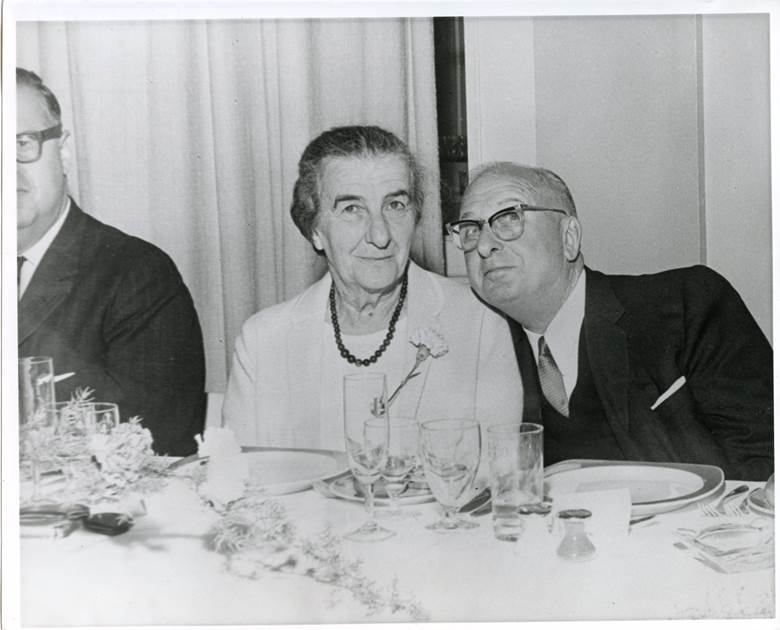
Sam Bronfman and Golda Meir.
Photo Credit : Alex Dworkin Canadian Jewish Archives
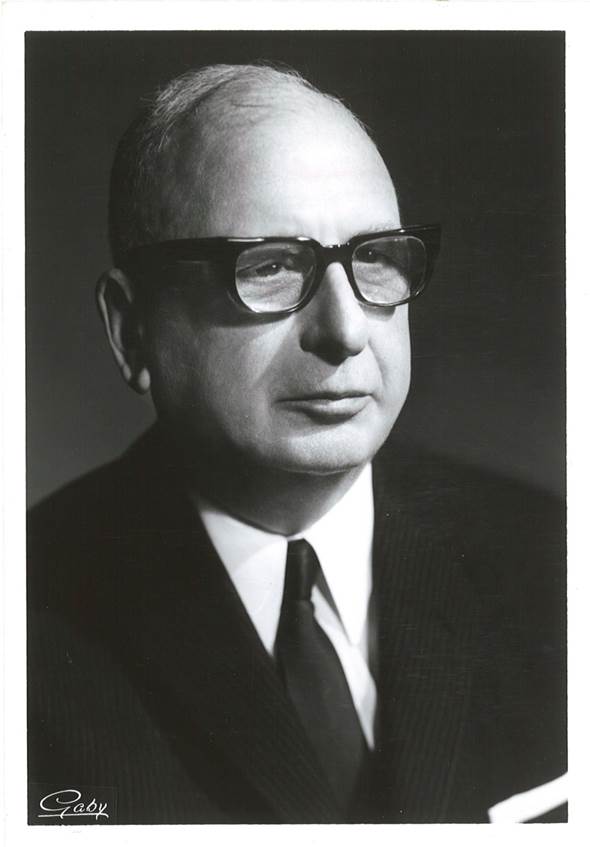
Sam Bronfman.
Photo Credit : Alex Dworkin Canadian Jewish Archives
Saidye Bronfman.
Photo Credit : Alex Dworkin Canadian Jewish Archives
The Bronfmans
Coming soon
Public life
Share
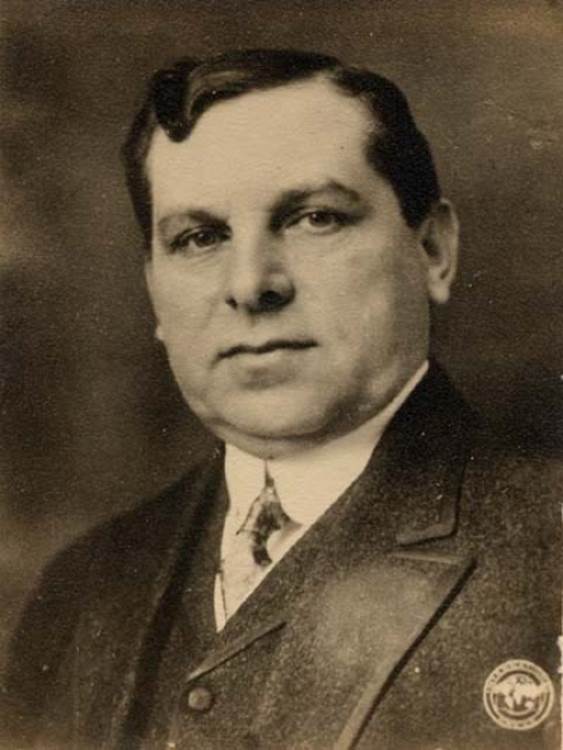
President of Congregation Shaar Hashomayim, 1904 - 1907, succeeded by his father, Lazarus Cohen, 1907 - 1914 and President again from 1914 - 1932.
Photo Credit : Congregation Shaar Hashomayim Museum and Archives
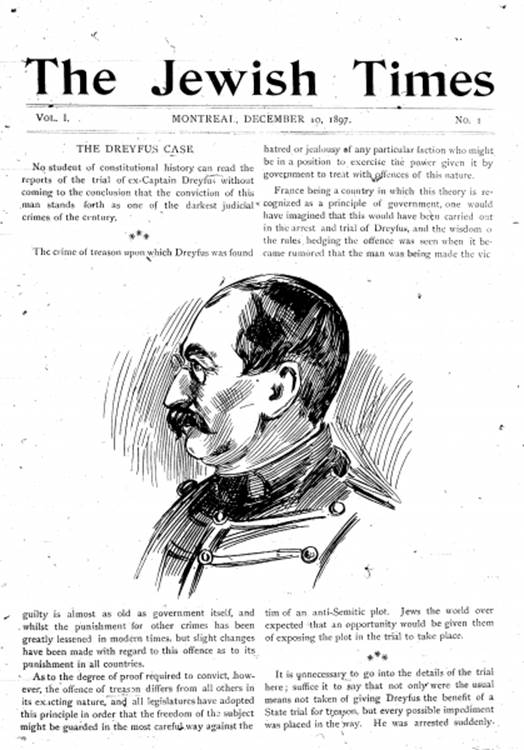
Founded in 1897, the Jewish Times was created to counter anti-semitism around the world, especially during the era of the Dreyfus trial in France.
Photo Credit : Jewish Public Library - Archives
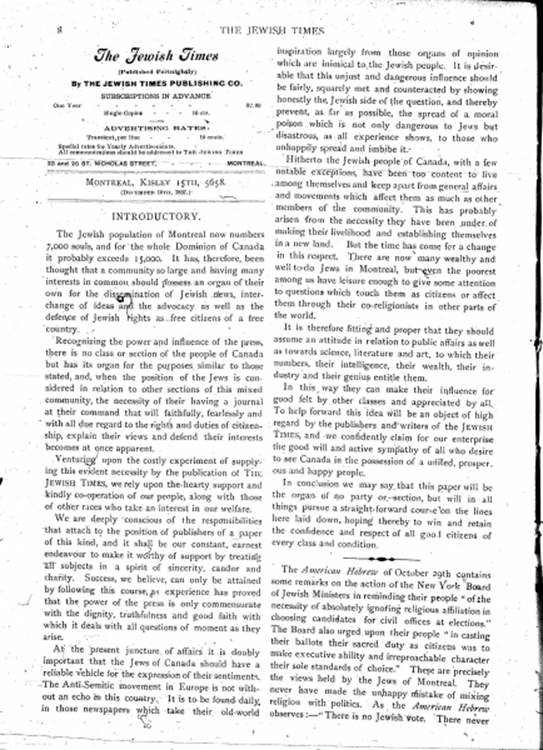
A sort of mission statement for the paper from the December 15, 1897 issue. As the first Canadian Jewish newspaper to publish in English, the Jewish Times kept the growing Montreal Jewish community informed of goings-on and guided readers as to the proper ways of living and thriving in the New World.
Photo Credit : Jewish Public Library - Archives
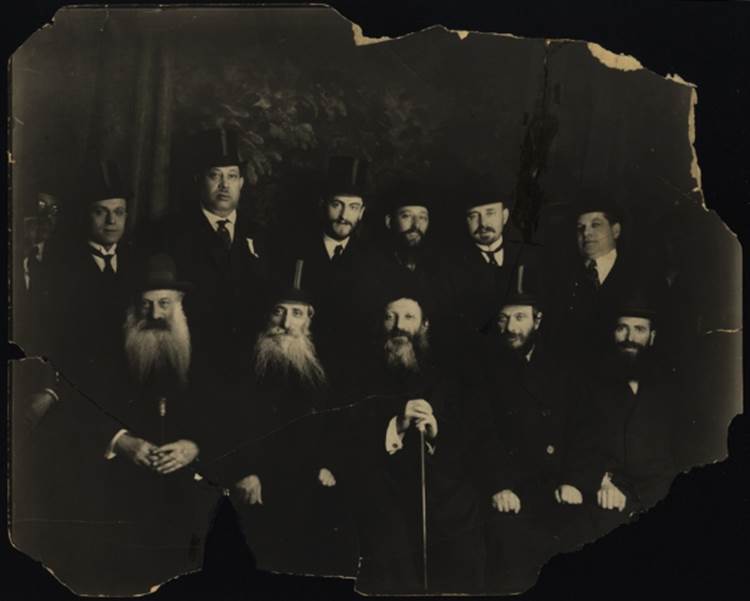
Rabbi Abraham Isaac Kook, the Chief Rabbi of Palestine (bottom centre), with Rabbis Epstein and Shapira, and local dignitaries including Lyon Cohen (top right), the mayor of Montreal (top, 2nd to left) and Rabbi Hirsch Cohen (lower left corner). Picture dated 1924.
Photo Credit : Alex Dworkin Canadian Jewish Archives
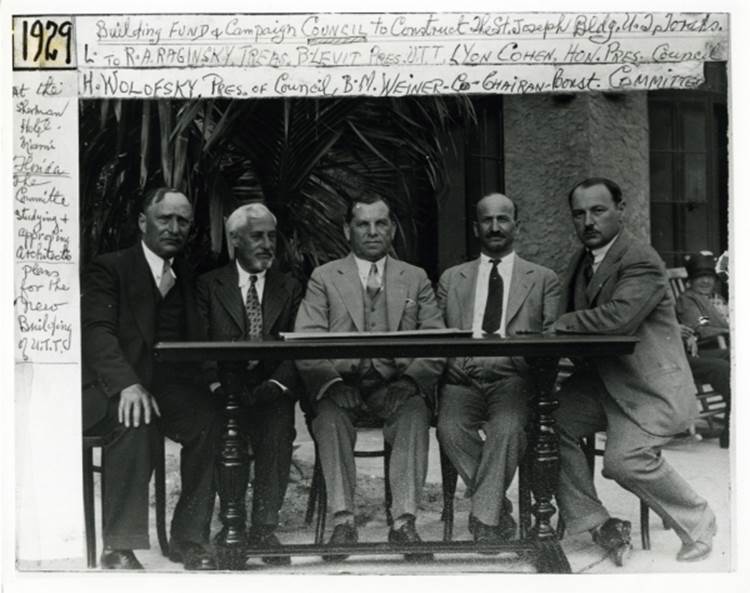
Building Fund and Campaign Council to construct the United Talmud Torah campus on St. Joseph and Jeanne-Mance. Photo taken at the Sherman Hotel in Miami, Florida in 1929. Lyon Cohen is second from left.
Photo Credit : Jewish Public Library - Archives
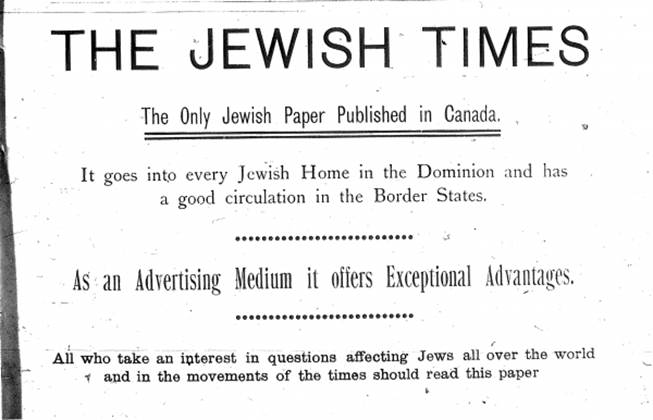
A solicitation for advertisements in the Jewish Times newspaper. From the Jewish Times, ca. 1900.
Photo Credit : Jewish Public Library - Archives
1868 - 1937
Lyon Cohen
Lyon Cohen was a business tycoon and community leader who co-founded the Jewish Times, Canada’s first English-language, Jewish-interest newspaper.
Born in Poland, Cohen came to Canada as a child. He moved with his family first to Ontario and later to Montreal, where he and his father, Lazarus, entered the coal business together. Cohen went on to establish himself as the owner of one of Montreal’s largest clothing corporations, the Freedman Company (in whose factory Lyon’s grandson, the poet and singer Leonard Cohen, briefly worked in the 1950s), and as the leading figure of the more affluent, West End-based “uptowner” contingent of the Jewish community. As president of the Freedman Company, he became one of the most prominent retailers in the ready-to-wear market.
Cohen served at one time or another as President of the Baron de Hirsch Institute, the Clothing Manufacturers Association of Montreal, the Montefiore Club, the first meeting of the Canadian Jewish Congress in 1919, and Congregation Sha’ar Hashomayim. His home in Westmount played host to such eminent personalities as Chaim Weizmann, Rabbi Stephen S. Wise, and Solomon Schechter. Despite his high positions, extensive connections and famous antipathy to unionizing Jewish workers and radicals, Cohen was known as a man in touch with the common person; he would greet new immigrants as they stepped off the docks, welcoming them to the Jewish community and to Montreal.
In 1897, Cohen and Samuel W. Jacobs founded the Jewish Times. It was the newspaper of the establishment, promoting speedy Canadianization of recent Eastern European arrivals and the acceptance of British customs. The Times was meant not only to inform the growing Montreal Jewish community of goings-on, but also to guide its readers into what the founders believed was the proper way of living and thriving in the New World. It was also intended to counter the rising anti-Semitism around the world, which Cohen and his more assimilated uptowner associates partially blamed on the Eastern European Jews themselves. This belief system and desire to fit in with the Anglo-Protestant elite led to conservative and often bland journalism and a de-emphasis on Jewish nationalism.
Faced with waves of immigrants who often spoke only Yiddish (which The Times labeled “a jargon of abrupt coarseness”), The Times declined in popularity and was bought in 1914 by Hirsch Wolofsky, owner of the Keneder Adler, who transformed it into the Canadian Jewish Chronicle. Cohen and Jacobs had meanwhile parlayed the publicity they received from The Times into further influence in the community. Jacobs was elected to Parliament in 1917 and Cohen became president of the Canadian Jewish Congress in 1919. When Cohen died in 1937, Samuel Bronfman, who in some ways was one of his successors, served as pallbearer at his funeral.
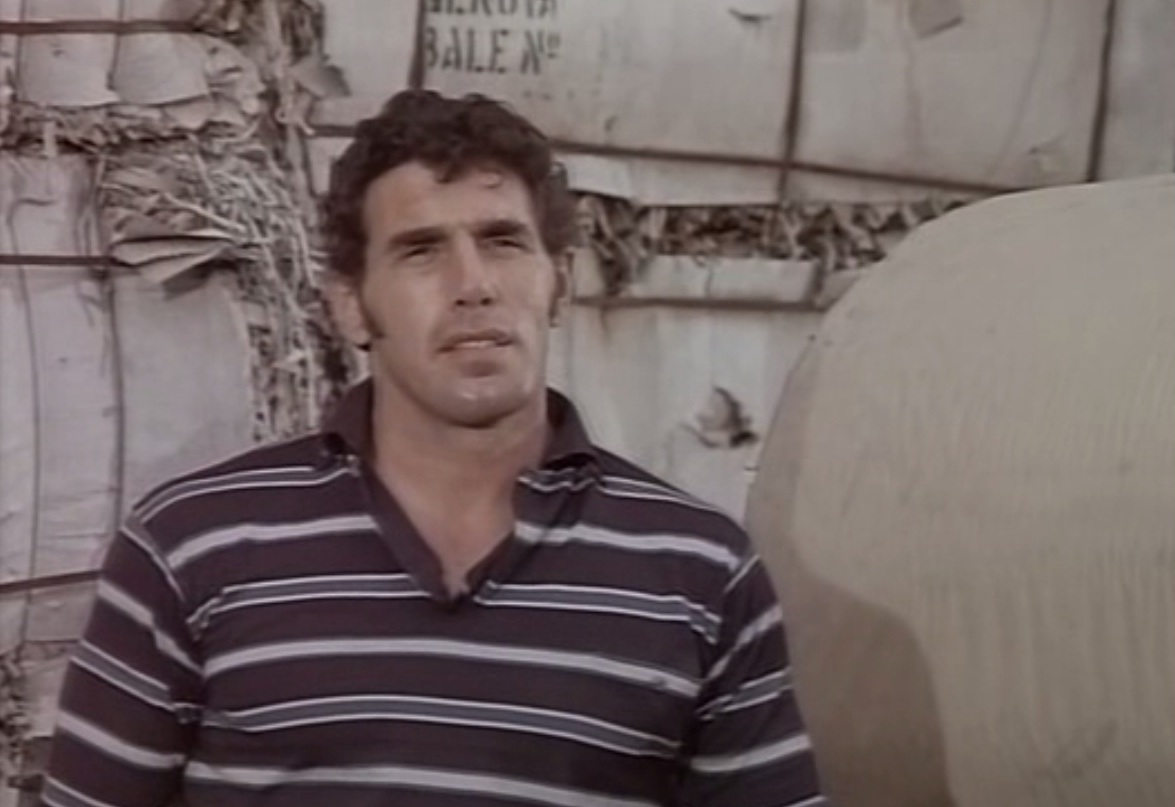
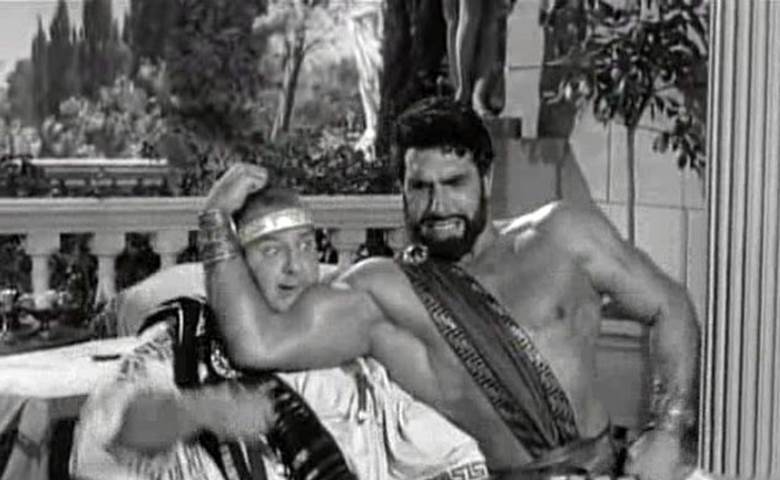
Screenshot from film Straziami, ma di baci saziami (1968).
Photo Credit : Cavarrone
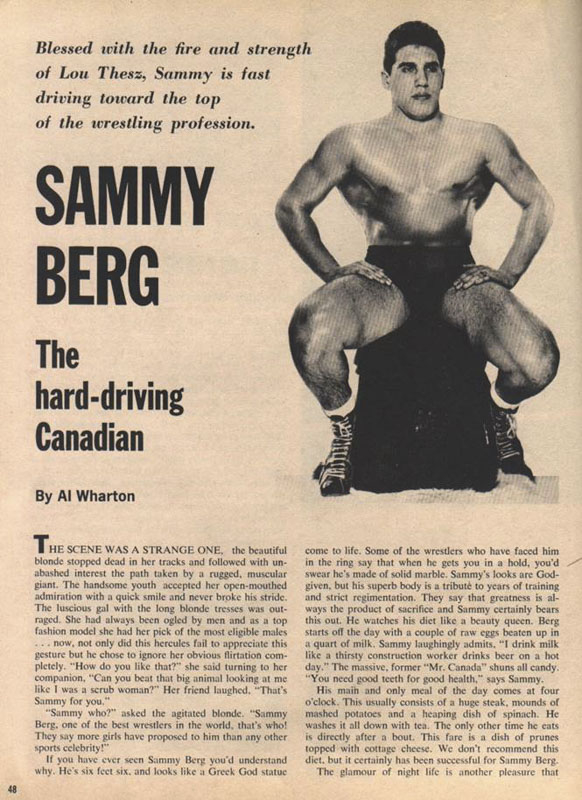
Sam wrestled under the name "Sammy Berg" in the 1950's. At 6'6" tall and 275lbs, Sam was a force to be reckoned with.
Photo Credit : Samson Burke
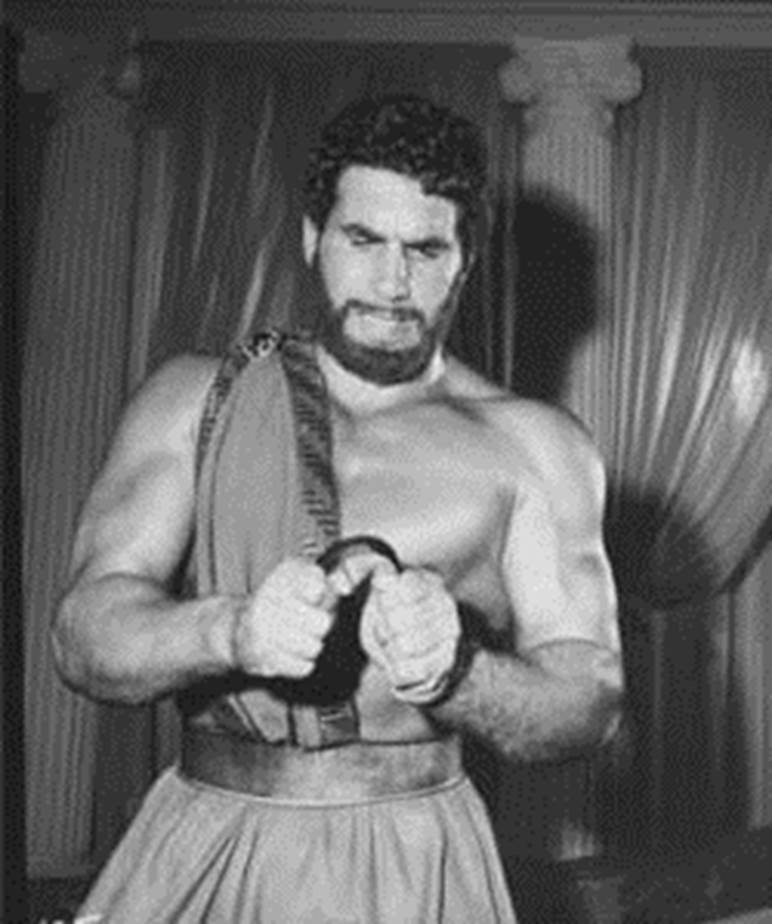
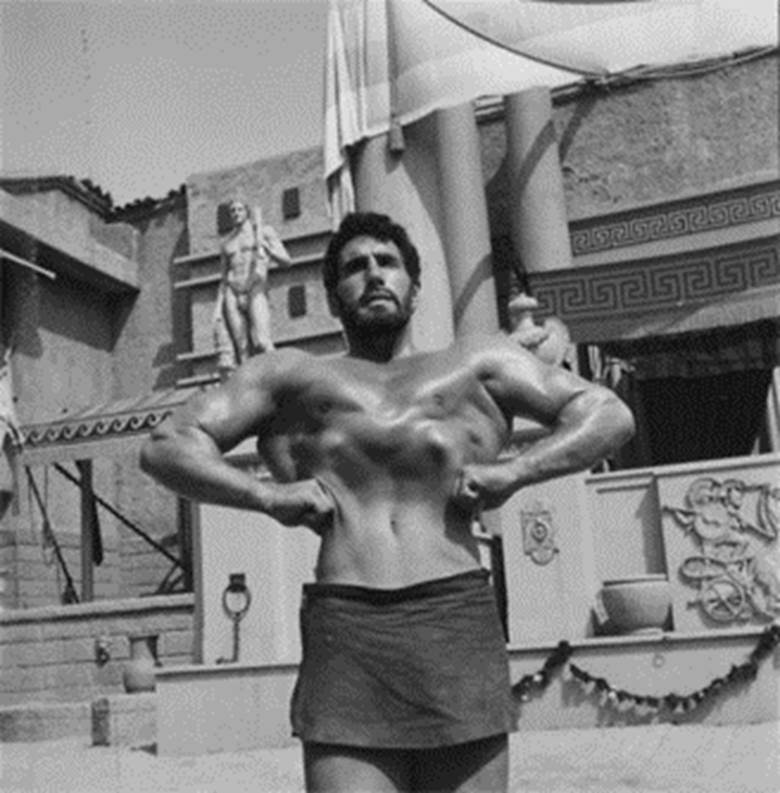
Samson Burke in THE 3 STOOGES MEET HERCULES (1962).
Photo Credit : Peplum TV
Samson Burke in THE 3 STOOGES MEET HERCULES (1962).
Photo Credit : Peplum TV
Samson Burke in THE 3 STOOGES MEET HERCULES (1962).
Photo Credit : Peplum TV
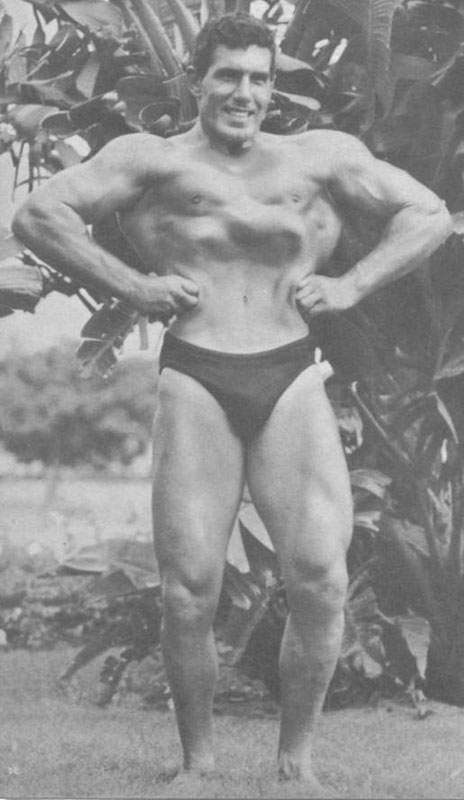
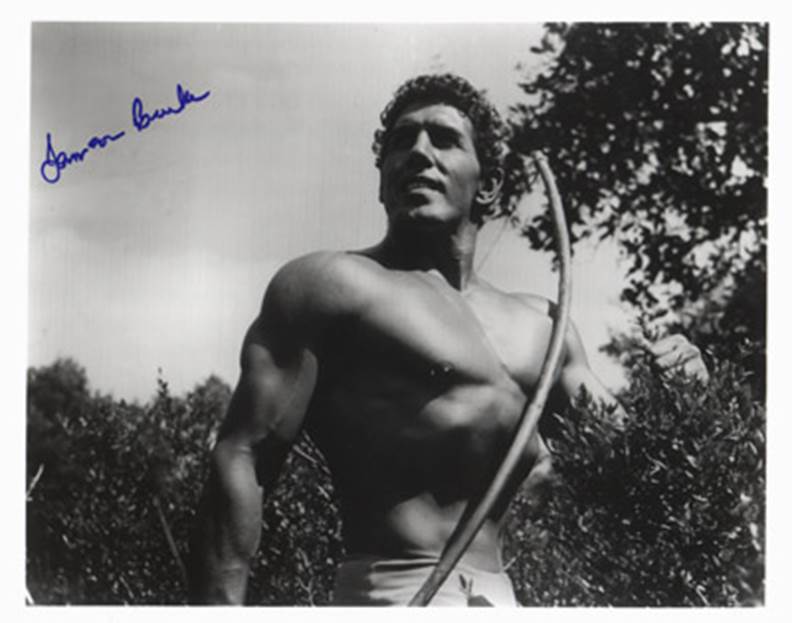
Photograph of Samson Burke -1950s.
Photo Credit : Samson Burke
Photograph of Samson Burke -1950s.
Photo Credit : Samson Burke
1929 -
Samson Burke
Samson Burke is a multi-talented competitive Olympic-winning swimmer and wrestler, bodybuilder, and actor.
A Montreal native, Burke went to Baron Byng High School and McGill University, earning a college degree in physical education. He was a competitive swimmer from a young age, winning several titles at the provincial and national level, for individual swimming as well as for water polo. As an undergraduate, he was named “Canada’s Greatest All-Around Collegiate Athlete.”
Burke went on to compete in bodybuilding, winning the titles of “Mr. Montreal,” “Mr. Muscle Beach” and “Mr. Canada.” In the 1948 Summer Olympics, he wrestled and swam for Canada. During the 1950s, he made his mark in wrestling, using the names “Sammy Berg” and “Mr. Canada,” and sparring with the major names of his era. In the late 1950s, he won the “World Heavyweight Wrestling” title. The International Federation of Bodybuilders named him the “Top Amateur Athlete in the World” at the world bodybuilding championships.
During the 1960s, Burke’s career took a turn from sports into acting. He got the lead role of Ursus in the 1961 film The Revenge of Ursus, and appeared opposite Italian comedian Totò in Toto vs Maciste, which became his breakout film. Norman Maurer then chose him to portray the mythical Greek hero Hercules in The Three Stooges Meet Hercules. This role brought him significant fame throughout North America. Burke also played Little John in an Italian version of The Triumph of Robin Hood, Polyphemus in a 1968 Italian miniseries of The Odyssey, and appeared alongside actor Klaus Kinski in the Western, Sartana the Gravedigger. In the 1980s, Burke relocated to Hawaii, where he worked on Magnum, P.I. until the show ended in 1988.
Burke later moved to California and worked as a personal trainer until his retirement in the early 1990s.