


-
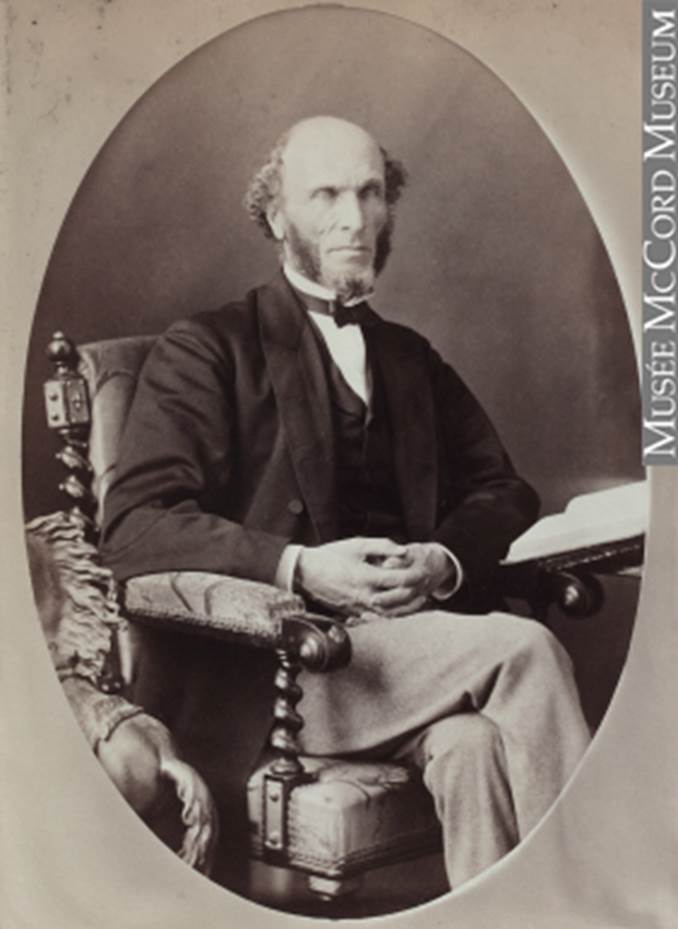
Ezekiel Moses Hart, Montreal, QC, 1874, William Notman (1826-1891). Purchase from Associated Screen News Ltd. II-9169.1.Photo Credit : © McCord Museum, Montréal. -
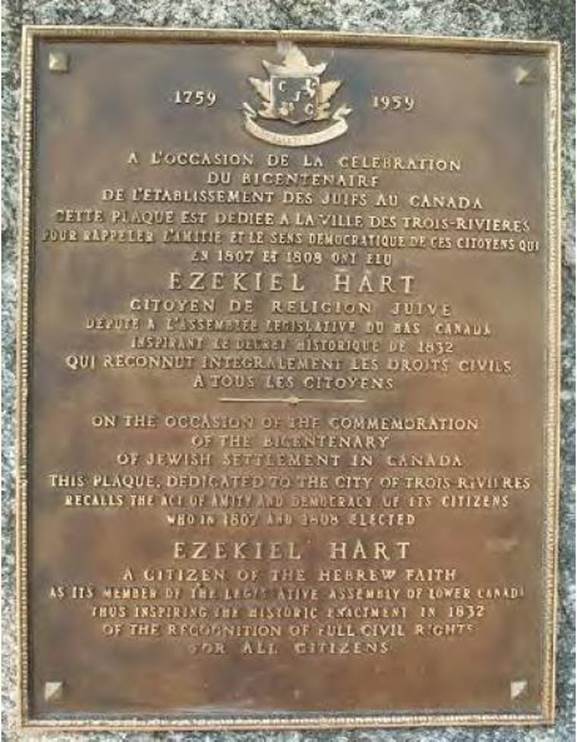
A plaque commemorating Ezekiel Hart in Trois-RivièresPhoto Credit : Daniel Robert -
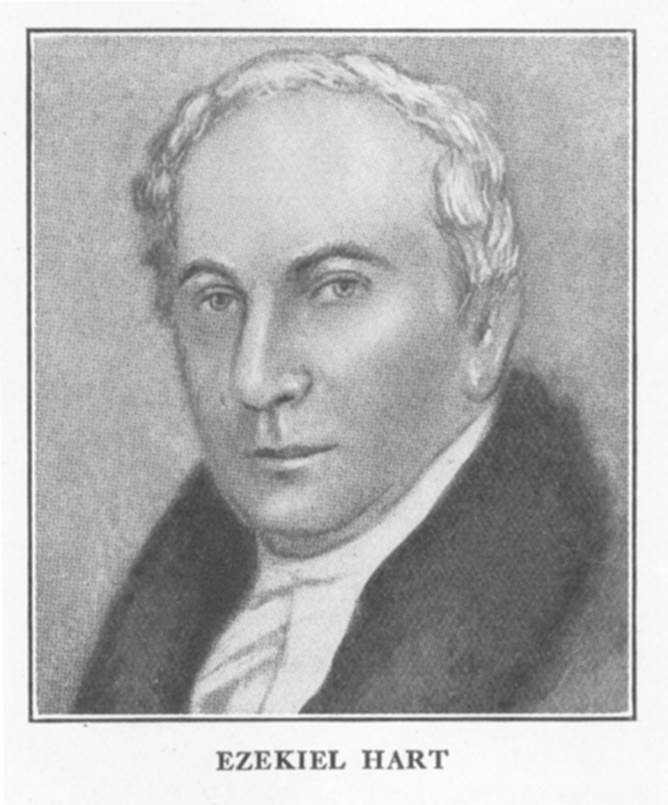
Image pulled from The Jew in Canada.Photo Credit : Jewish Public Library - Archives -
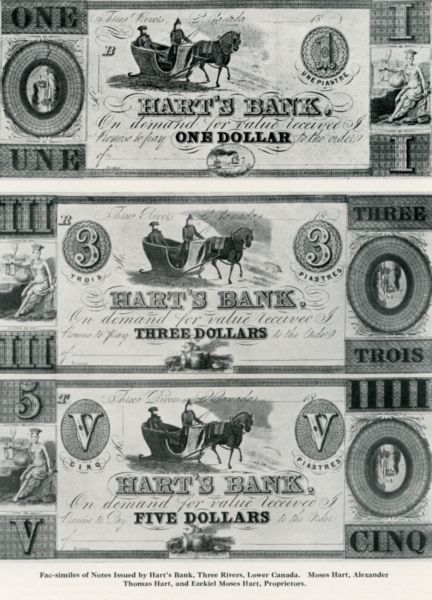
Facsimiles of Notes issued by Hart’s Bank.Photo Credit : Jewish Public Library - Archives -
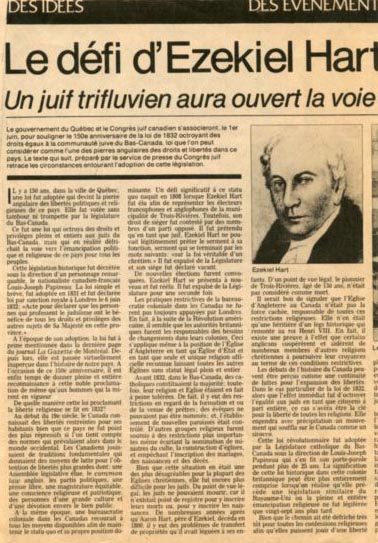
News clipping about Ezekiel Hart, one of the first generation of Jewish Canadians, and the first Jew to be elected to public office in the British Empire.Photo Credit : Jewish Public Library - Archives
Ezekiel Hart
Ezekiel (Ezechiel) Hart – son of Canada’s first Jewish settler, Aaron Hart – was an entrepreneur and politician, known for being the first Jew in the British Empire to be elected to political office.
Hart was born and raised in Trois-Rivières. Like his father, he was a prominent merchant. He ran a brewery with his brothers, Moses and Benjamin, and owned a general store. He was also a shareholder at the Bank of Montreal. Hart went on to be elected to the Legislative Assembly of Lower Canada in an1807 by-election. However, when he was being sworn in with the phrase “on the true faith of a Christian,” he substituted the word “Christian” for “Jew,” as was customary for Jews to do in court. Attorney general Jonathan Sewell and runner-up Thomas Coffin argued that this made him ineligible for the House of Assembly, and Hart was prevented from taking office. In 1808, L’Affaire Hart continued when Hart was re-elected, took the Christian oath without alterations, and was expelled once again.
In 1830, Hart’s son, Samuel Bécancour Hart, ran for magistrate of Trois-Rivières and was, like his father, met with strong opposition. However, Speaker of the House Louis-Joseph Papineau—who had voted for Ezekiel Hart’s expulsion in 1809—had a change of heart and was moved to enact the 1832 Act to Grant Equal Rights and Privileges to Persons of the Jewish Religion. This law granted the right to vote (but not eligibility to vote) to Jews equal to Catholics, a quarter century before these rights were granted elsewhere in the British Empire. Samuel Bécancour Hart finally became a magistrate in 1833. In 1837, Ezekiel Hart’s younger brother, Benjamin Hart, became justice of the peace in Montreal, as soon as he was no longer required to take a Christian oath.
Although antagonism towards Jews was undoubtedly a factor in L’Affaire Hart, most historians now stress that anti-Semitism was employed instrumentally, in attempts to shift the balance of power between the English and the French in Quebec.
Ezekiel Hart died in Trois-Rivières in 1843; he is buried in the Shearith Israel synagogue section of Mont Royal cemetery.
Special thanks to the Museum of Jewish Montreal.
Learn More:
http://imjm.ca/location/1176
http://www.cbc.ca/news/canada/montreal/quebec-jewish-beer-hart-family-1.3821868
http://www.biographi.ca/en/bio/hart_ezekiel_7E.html
https://www.historica-dominion.ca/content/heritage-minutes/hart-papineau-0
http://faculty.marianopolis.edu/c.belanger/QuebecHistory/docs/jews/1832act.htm
http://www.assnat.qc.ca/en/deputes/hart-ezekiel-3599/biographie.html
http://www.jewish-history.com/Occident/volume1/nov1843/obituary.html
-
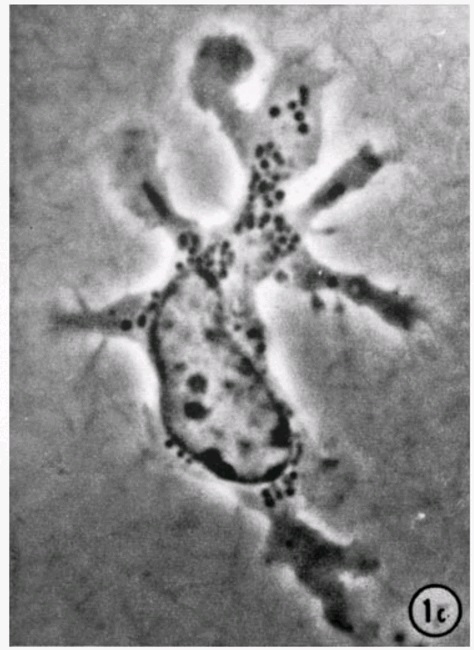
High-resolution image #1 of a dendritic cell made by Dr. Steinman in 1973.Photo Credit : Ralph Steinman/The Rockefeller University -
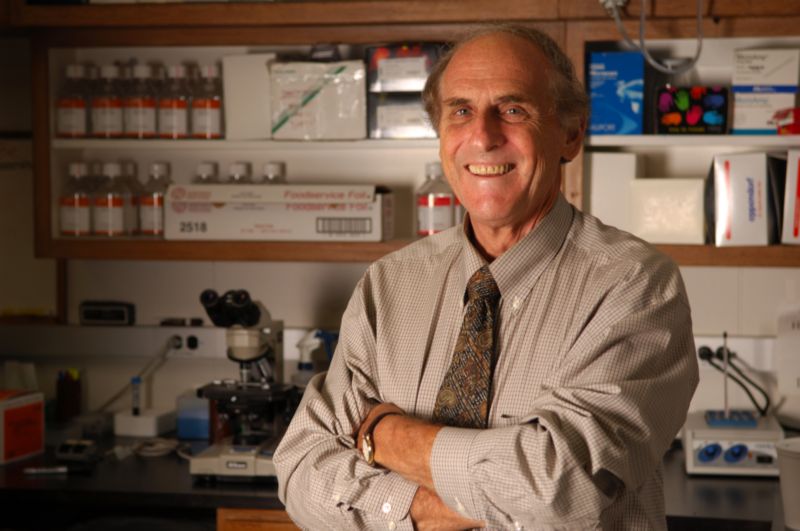
Dr. Ralph Steinman.Photo Credit : The Rockefeller University -
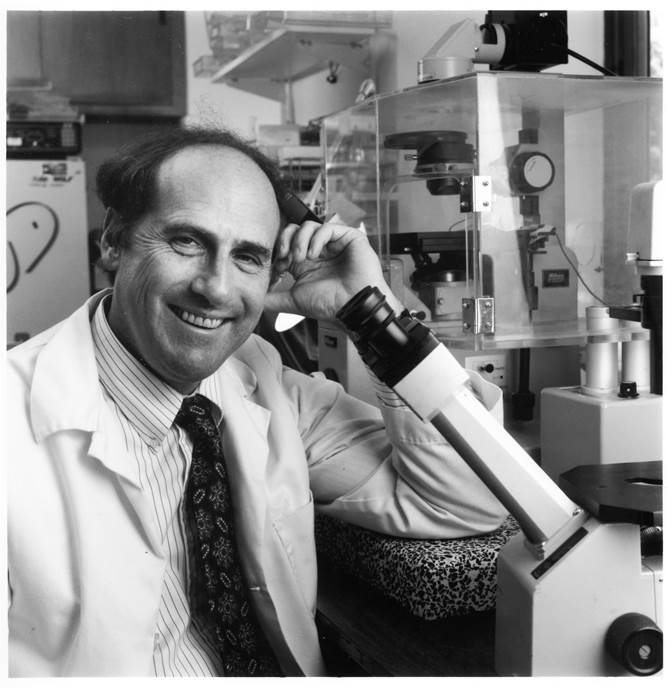
Dr. Ralph Steinman, 1992.Photo Credit : The Rockefeller Archive Center
Dr. Ralph Steinman
Dr. Ralph Steinman was a medical scientist, and Nobel Prize winner, who discovered dendritic cells.
Born in Montreal, and raised in Sherbrooke, Steinman received a Bachelor of Science from McGill University and his MD magna cum laude from Harvard University Medical School. After a residency at Massachusetts General Hospital, he joined Rockefeller University as a postdoctoral fellow, before being appointed full professor and then being named the Director of the University’s Centre for Immunology and Immune Diseases.
Steinman is best known for his discovery of what he called the dendritic cell (named for its resemblance to the shape of the neural dendrite). His research showed that dendritic cells play a key role in the immune system, a discovery which had wide-reaching implications, especially for chemotherapies. Among other developments, it led to the first therapeutic cancer vaccine, Dendreon’s Provenge, which treats men suffering from advanced prostate cancer.
Steinman’s last experiment was on himself. Diagnosed with Stage IV pancreatic cancer, he offered himself as a subject for experimental cancer treatments, including many based on his own scientific discoveries. In the end, he lived four years longer than predicted.
He died just days before receiving his Nobel Prize, and even though the Committee does not normally proffer posthumous awards, they bestowed this honour upon him even after his death.
Steinman won many awards for his work, including the New York City Mayor’s Award for Excellence in Science and Technology and the Gairdner Foundation International Award. He was also a member of the National Academy of Sciences and the Institute of Medicine.
Learn More:
http://www.reuters.com/article/us-nobel-medicine-experiment-idUSTRE7956CN20111006
http://www.rockefeller.edu/about/awards/nobel/rsteinman#sidebar
https://www.youtube.com/watch?v=xAm3Z5Iy85w
https://www.youtube.com/watch?v=Xl0PY-vqB4k
-
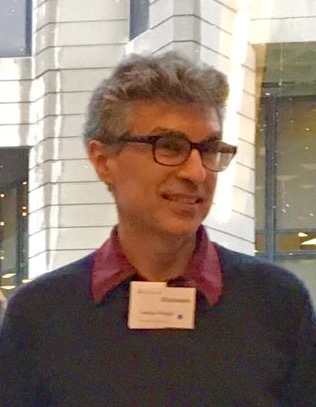
Yoshua Bengio.Photo Credit : Steve Jurvetson
Yoshua Bengio
Yoshua Bengio is one of the world's leading artificial intelligence experts.
After earning his PhD in Computer Science from McGill University, Bengio pursued his postdoctoral studies at the prestigious Massachusetts Institute of Technology and at AT&T Bell Labs in the US.
He is Full Professor at the Department of Computer Science and Operations Research at Université de Montréal, and Head of the Montreal Institute for Learning Algorithms (MILA). He is also Co-Director of the Neural Computation and Adaptive Perception Program at the Canadian Institute for Advanced Research, Canada Research Chair in Statistical Learning Algorithms and NSERC-Ubisoft Industrial Chair.
Bengio is Editor for the Journal of Machine Learning Research and Associate Editor for the Neural Computation journal.
He is the Scientific Director of the Institute for Data Valorization (IVADO), a strategic alliance between Université de Montréal and its two large affiliate schools, École Polytechnique and École des hautes études commerciales (HEC). IVADO has also partnered with McGill University. In 2016, the Federal Government awarded IVADO $93.5 M over seven years. This marks the largest grant in Université de Montréal’s history since its establishment at the end of the 19th century.
In fall 2016, along with Jean-François Gagné and Nicolas Chapado, Bengio launched a start-up incubator in artificial intelligence called Élément AI. Through their world-renowned work on learning algorithms, Bengio and his team are attempting to provide computers with the capacity to acquire operational knowledge by learning from examples.
With over 300 scientific publications to his name, Bengio is a pioneer of deep learning — a set of automatic learning methods in artificial intelligence.
His main research ambition is to understand principles of learning that yield intelligence. He is an internationally sought-after speaker.
-
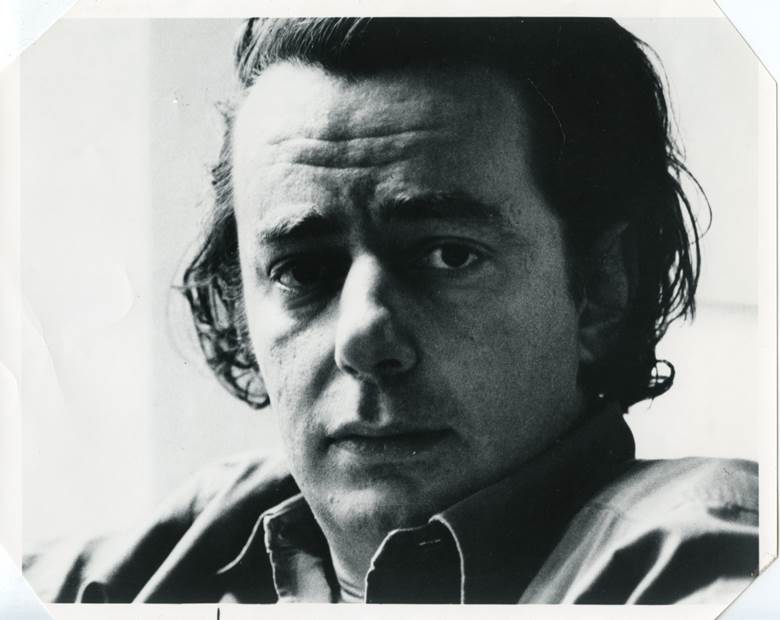
Mordechai Richler - 1970s.Photo Credit : Jewish Public Library Archives -
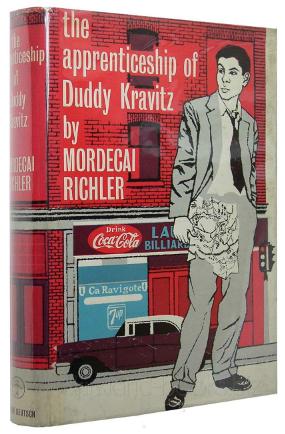
First edition of The Apprenticeship of Duddy Kravitz, one of Richler’s best-known works.Photo Credit : AbeBooks Canada -
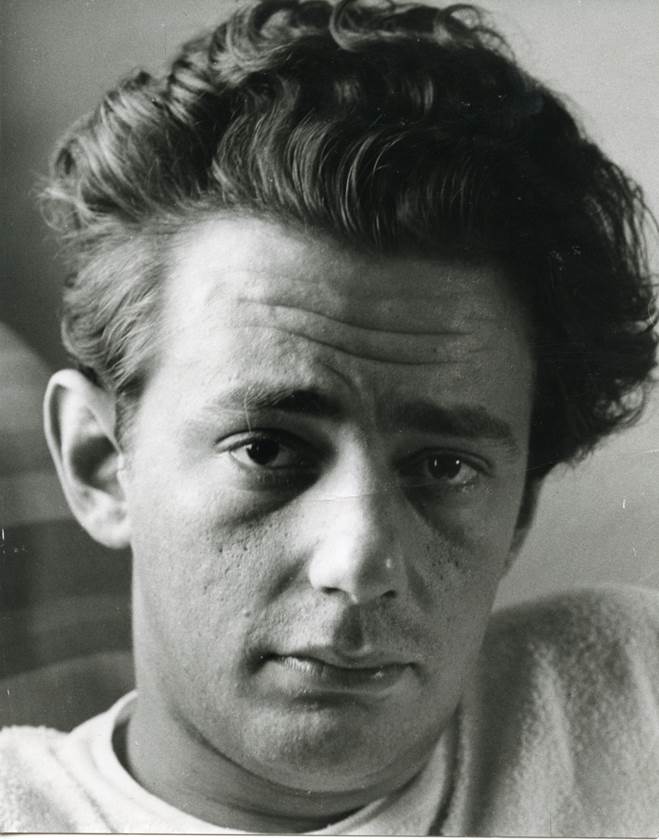
Mordechai Richler –1960s.Photo Credit : Jewish Public Library Archives -
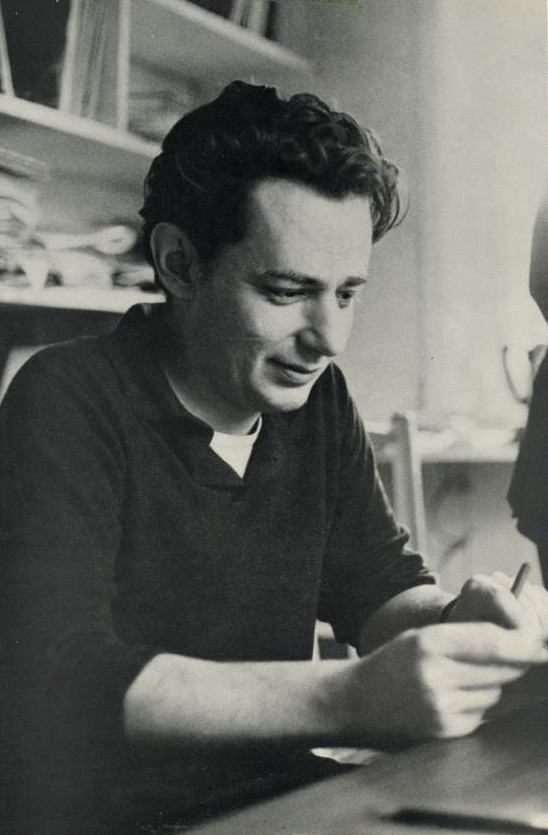
Mordechai Richler – n.d.Photo Credit : Jewish Public Library Archives -
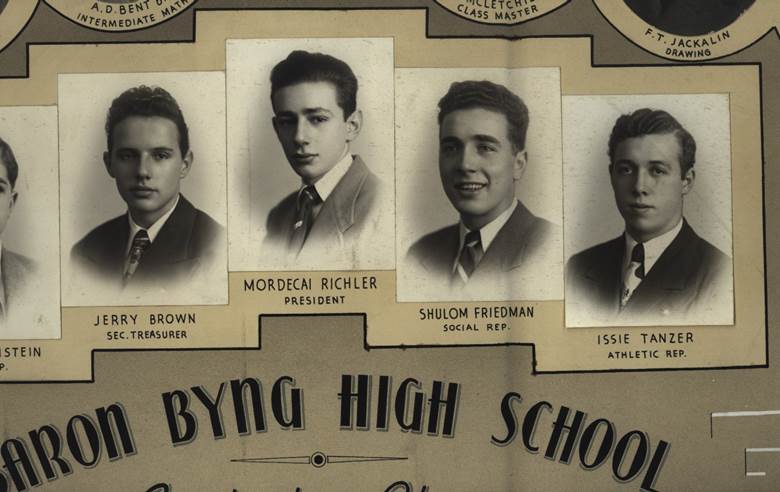
Mordechai Richler as class president at Baron Byng High School (1946).Photo Credit : Alex Dworkin Canadian Jewish Archives -
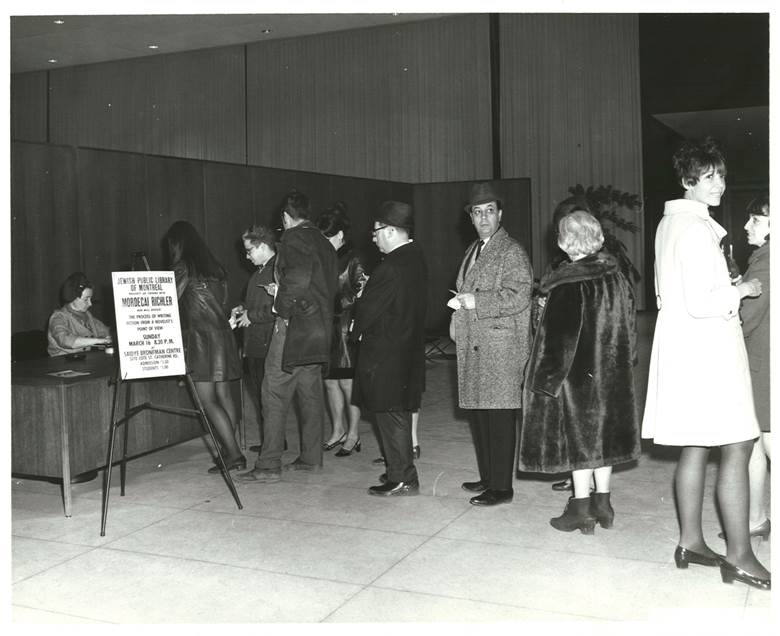
People lining up for tickets at an event with Mordecai Richler, 1969.Photo Credit : the Jewish Public Library Archives -
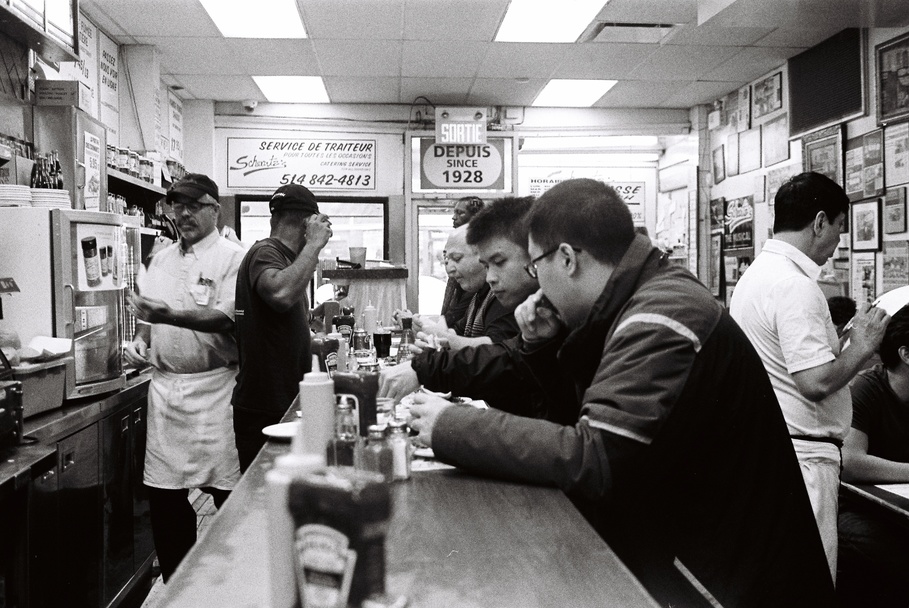
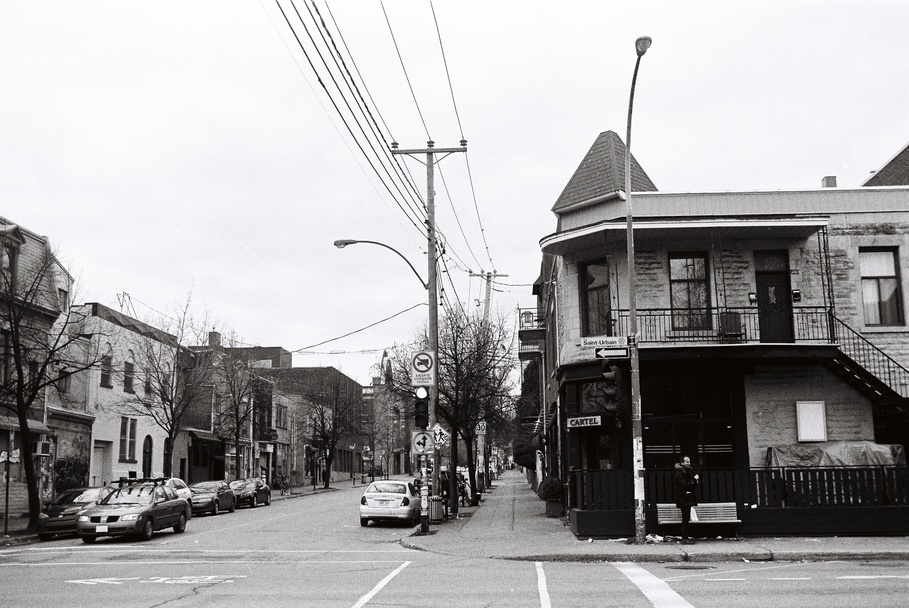
Locations in Montreal referenced in Richler's works.Photo Credit : Oh God! Oh Montreal! Travelling with Mordechai Richler, Andrea Paolella -
Locations in Montreal referenced in Richler's works.Photo Credit : Oh God! Oh Montreal! Travelling with Mordechai Richler, Andrea Paolella
Mordecai Richler
Mordecai Richler was an iconic Canadian author who famously, and controversially, explored Quebec separatism and the Montreal Jewish community in his work.
Born a “St. Urbain Street boy” to a poor family in the Montreal Jewish ghetto, Richler’s maternal grandfather was actually an influential religious leader and scholar named Rabbi Yudel Rosenberg, who was born in Poland but moved to Montreal in 1919. There, he became the Chief Rabbi of the United Hebrew Orthodox Congregations of Montreal and was known for translating the Zohar, a classic work of Jewish mysticism, from Aramaic into Hebrew.
Richler’s own status as Montreal’s most famous and celebrated Jewish author is ironic, given his fraught relationship with the community and his often biting portrayal of its idiosyncrasies. In dozens of novels, screenplays, and works of non-fiction, Richler explored what it meant to be a Jew growing up in the tight-knit, isolated, mostly poor, and largely immigrant world along St. Urbain and “the Main.” He also infamously tackled French-Canadian nationalism in books like, Oh Canada! Oh Quebec! Attracting both admiration and criticism, his writings provide an incomparable study of what life was like in his Montreal community, and are a portal through which one can view its unique and dynamic past.
Richler graduated from Baron Byng High School in 1948, where he was president of his class, before dropping out of Sir George Williams College (today’s Concordia University). He briefly lived in France and Spain in the early 1950s and then spent more than 15 years in London, England, before moving back to Montreal in 1972, because he worried “about being so long away from the roots of my discontent.” Richler remained in Montreal, writing and publishing on a variety of subjects, until his death from cancer in 2001.
Richler survives in his widely-read works of fiction, most notably The Apprenticeship of Duddy Kravitz (1959), St. Urbain’s Horseman (1971), Joshua Then and Now (1980), Solomon Gursky Was Here (1989) and Barney’s Version (1997), and in the legacy of the Montreal Jewish community, from which his life and work cannot be disconnected. Richler described and defined the community for Canada and for the world and, whether he liked it or not, the community defined him, too.
A special thanks to the Museum of Jewish Montreal.
Learn More:
http://www.imjm.ca/location/1126
http://www.theglobeandmail.com/news/national/mordecai-richler-gets-his-glory-montreal-renames-library-after-him/article23443003/
http://www.cbc.ca/news/canada/montreal/montreal-to-honour-mordecai-richler-1.1120737
-
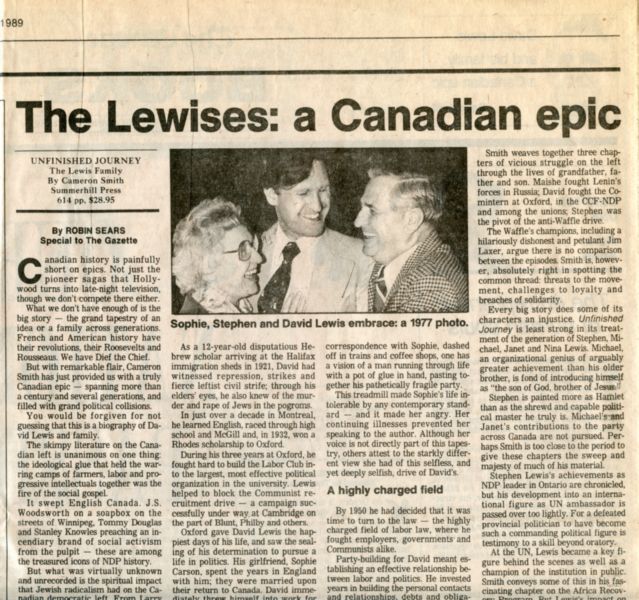
Newspaper clipping from the Montreal Gazette describing the social contributions the Lewis Family has made to Canadian Society (1989).Photo Credit : Jewish Public Library - Archives -
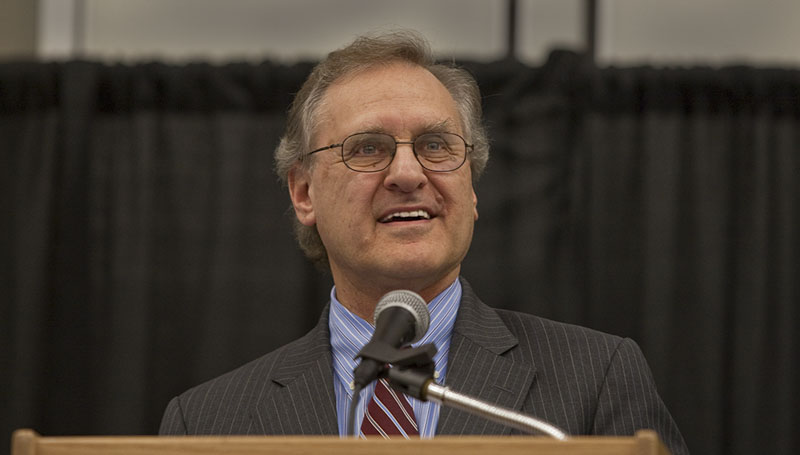
Stephen Lewis speaking at a public event, 2009.Photo Credit : Gordon Griffiths -
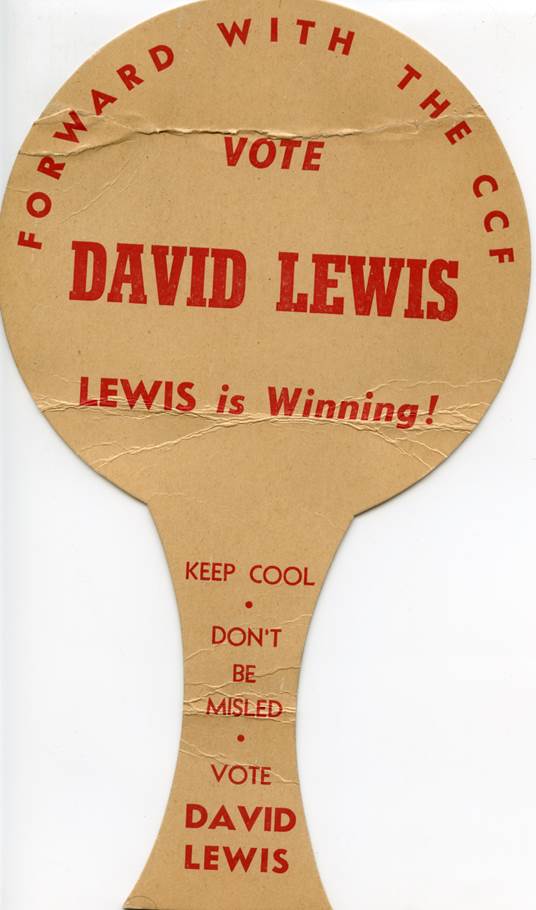
CCF Waving Pamphlet for David Lewis (1950s).Photo Credit : Jewish Public Library - Archives -
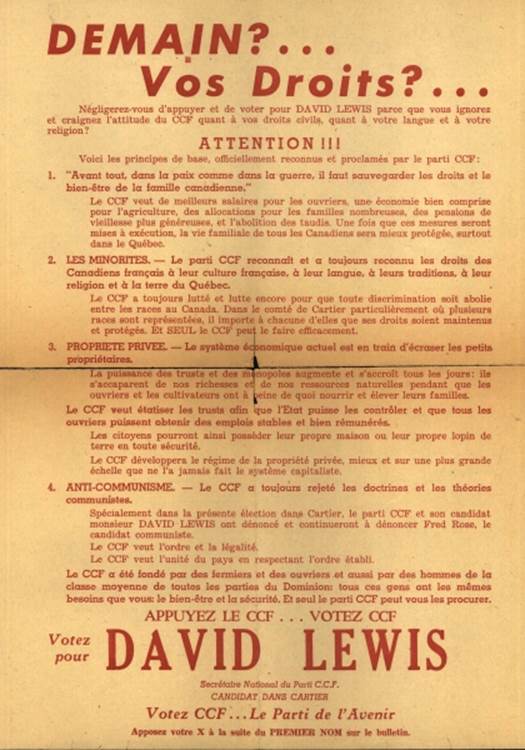
A political poster in support of David Lewis, ca. 1943. Four principles of the CCF are laid out: the rights of the Canadian family, the rights of French-Canadians and other minorities, private property and anti-communism.Photo Credit : Alex Dworkin Canadian Jewish Archives -
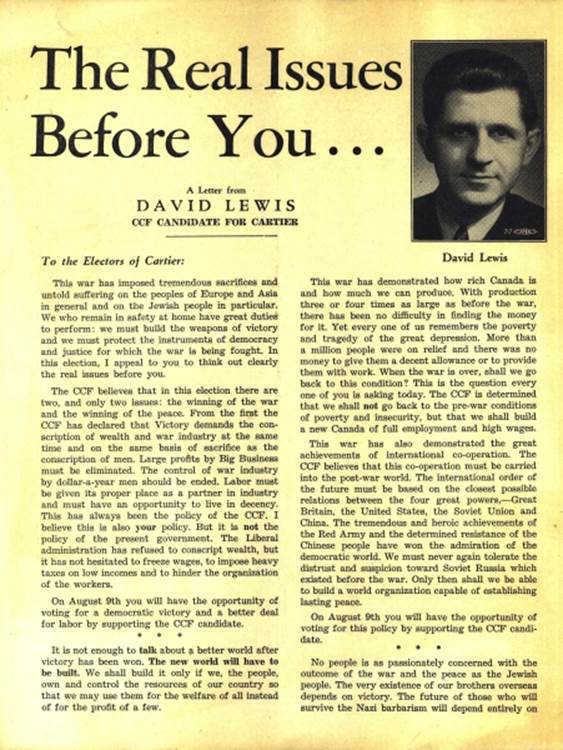
A letter from David Lewis, CCF candidate, to the electors of Cartier Riding, ca. 1943. The letter stresses the need to build a better world after the victory of WWII through a fair distribution of labour, resources and welfare to all. It also celebrates the international cooperation between the four great powers Great Britain, the United States, the Soviet Union and China: “We must never again tolerate the distrust and suspicious toward Soviet Russia that existed before the war.”Photo Credit : Alex Dworkin Canadian Jewish Archives -
David Lewis, 1973.Photo Credit : Alex Dworkin Canadian Jewish Archives
The Lewis Family
The Lewis Family is made up of four generations – Moishe, David, Stephen and Avi – who have all devoted their lives to labor and social rights issues.
The grandfather of the Lewis family, Moishe Lewis, was a local Bund leader (Jewish socialist party) in the shtetl of Svisloch (present-day Belarus). After immigrating to Montreal in 1921, he worked in his uncle’s clothing factory. He also continued his labour activism, becoming involved with the Workmen’s Circle, and serving as the Secretary of the Canadian Jewish Labour Committee for many decades. By 1947, Prime Minister Mackenzie King permitted a slight loosening of Canada’s stiff immigration policy, paving the way for the Jewish Labour Committee’s Moishe, along with Kalman Kaplansky and Bernard Shane, to spearhead the Tailors Project. This initiative, part of the 1947 federal bulk labour program, was designed to stimulate the Canadian economy by soliciting skilled labour from European displaced persons, successfully employing Jewish refugees in Canada’s textile industry. For his efforts with labor and civil rights, the Jewish Labour Committee honored Moishe by establishing the Moishe Lewis Foundation in 1975.
Moishe’s son, David Lewis, would follow in his father’s footsteps, leaving an indelible mark on Canadian politics as a labour lawyer and the key architect of Canada’s social democratic Co-operative Commonwealth Federation (CCF) and its successor, the New Democratic Party (NDP). At McGill University, David was sought after as a skilled debater and writer and was one of the first Jewish students awarded the Rhodes Scholarship. Completing his postsecondary studies at Oxford University, he became inspired by Britain’s Labour Party, returning home to implement a Canadian version of social democracy. His bold vision was evident at a scholarship assessment interview with Sir Edward Beatty, the president of the Canadian Pacific Railway (CPR). When asked what his first action would be if elected Prime Minister, he promptly replied, “I’d nationalize the CPR.”
In 1935, David turned down an offer to work in the British Parliament, instead obtaining a law degree in Ottawa, where he became national secretary of the Co-operative Commonwealth Federation (CCF) (1936–1950). His political career attracted attention in 1943 when he lost to his communist competitor, Fred Rose of the Labour Progressive Party, for Montreal’s Cartier riding. David’s work in furthering Canada’s social democratic cause led to correspondence with political leaders and union heads involved in Montreal’s labour struggles. A fierce critic of communism, Lewis relied on his brief experience as a labour lawyer to encourage union members to transfer their support to social democracy. His Make This Your Canada: A Review of C.C.F. History and Policy (1943) was a surprisingly popular history of his party’s policy statements advocating for state control of the economy. Considered more “controversial” than his predecessor, Tommy Douglas, David finally won a seat in Parliament in 1962–1963, and again in 1965–1974, in Toronto’s York South, despite difficulty in convincing the well-off Jews of the district that an atheist who was not a Zionist and had socialist inclinations would represent them well in Parliament.
His commitment to the CCF’s socialist mandate facilitated the emergence of its successor, the New Democratic Party (NDP) in 1961, with Lewis at its head a decade later. The only Jew to lead a national party in Canada, David campaigned against “corporate welfare bums” and paved the way for parliamentary acceptance of acts including affordable housing. After losing the 1974 election, he became a travel correspondent and professor in Ottawa, where he died in 1981.
Stephen Lewis is a Montreal-born politician, diplomat and social activist. Like his father and grandfather before him, he has been a long-standing and loud voice of progress on the left, both nationally and internationally, and is especially known for his work on HIV/AIDS prevention. Stephen served as leader of the Ontario NDP party from 1970 to 1978. He also worked with UNICEF and was Canada’s Ambassador to the UN before he was named UN Special Envoy for HIV/AIDS in Africa from 2001 to 2006.
In 2003, he co-founded and chairs the board of the Stephen Lewis Foundation, designed to fight HIV/AIDS in Africa, and holds professorships at McGill and Ryerson Universities. Stephen has been honoured with 40 doctorates and a myriad of awards including the Order of Canada, the highest honour of the African nation of Lesotho, and Canada’s Queen Elizabeth II Diamond Jubilee Medal, for which he was the first recipient. In 2005, Time Magazine counted him among the 100 most influential people in the world, and in 2012, Macleans called him the Canadian of the Year.
Stephen is married to journalist, author, and social activist Michele Landsberg and is the father of Avi Lewis, spouse of Naomi Klein, both prominent leftist broadcasters and NDP leaders. Michele has written three bestselling books, and was one of the first journalists in Canada to address issues like sexual harassment in the workplace. In 2006, she was made an Officer of the Order of Canada. Stephen’s son Avi has served as MuchMusic’s political specialist, has hosted CBC’s Newsworld’s show counterSpin, and has directed a number of documentaries.
Special thanks to the Museum of Jewish Montreal.
Learn More:
http://imjm.ca/location/1414
http://www.imjm.ca/location/1555
http://www.revparl.ca/9/3/09n3_86e_bournet.pdf
http://www.cjhn.ca/fr/permalink/cjhn277
http://www.dcf.ca/en/scholarships/david_lewis.htm
https://en.wikipedia.org/wiki/Moishe_Lewis
http://www.cbc.ca/player/play/2212119454
http://www.stephenlewisfoundation.org/who-we-are/about-stephen-lewis
King, Joe, and Johanne Schumann. From the Ghetto to the Main: the Story of the Jews of Montreal. Montréal: Montreal Jewish Publication Society, 2000.
King, Joe. Fabled City: the Jews of Montreal . Montreal: Price-Patterson, 2009.
Lewis, David, and F. R. Scott. Make This Your Canada; a Review of C.C.F. “History and Policy,”. Toronto: [Central Canada Pub.], 1943.
Lewis, David. The Good Fight: Political Memoirs 1909-1958 . Toronto, Canada: Macmillan of Canada, 1981.
Smith, Cameron. Unfinished Journey: the Lewis Family . Toronto: Summerhill, 1989.
Tulchinsky, Gerald. Branching Out: the Transformation of the Canadian Jewish Community. Toronto, Canada: Stoddart, 1998.
-
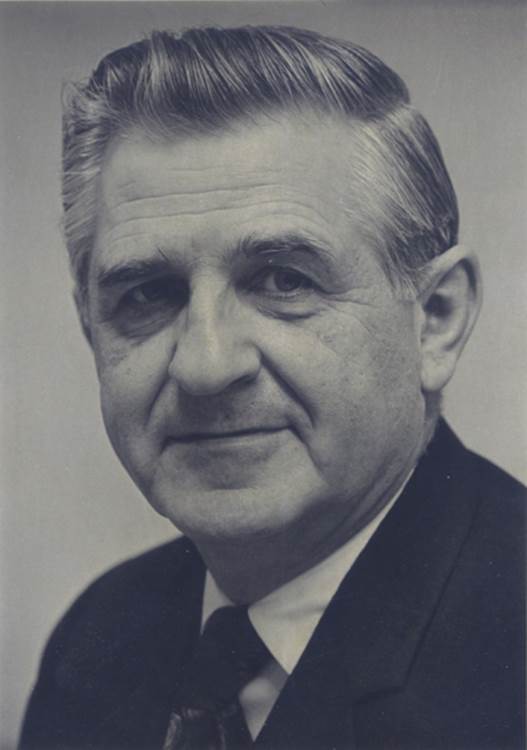
Rabbi Dr. Harry Stern, 1950s.Photo Credit : Alex Dworkin Canadian Jewish Archives -
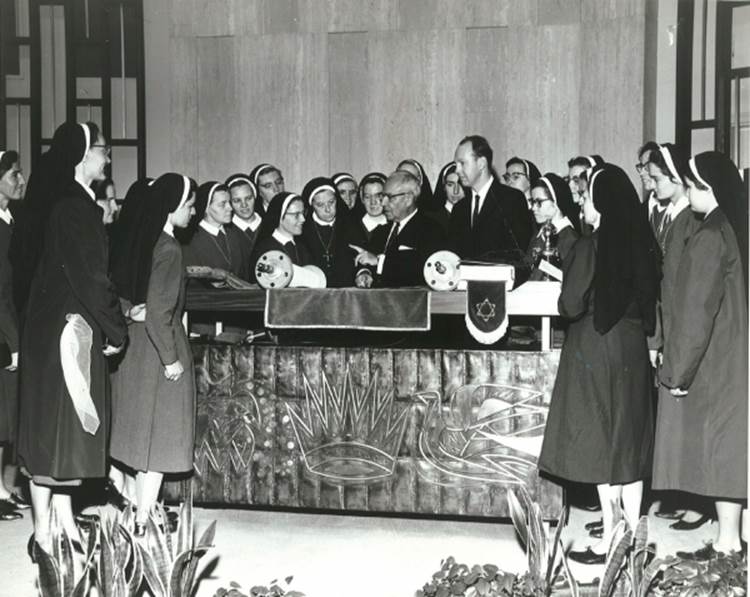
Rabbi Dr. Harry J. Stern explaining the reading of the Torah to a group of nuns from around the world, Temple Emanu-El, Montreal, Quebec, ca. 1960s.Photo Credit : Jewish Public Library - Archives -
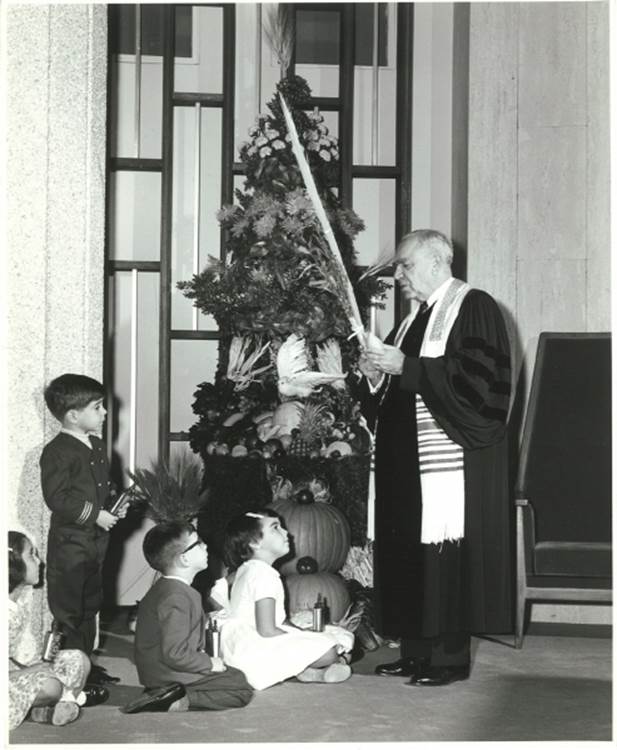
Rabbi Dr. Harry J. Stern holding the branches of a lulav and an etrog (citrus fruit) to celebrate the Jewish holiday of Sukkot, Temple Emanu-El, Montreal, ca. 1950s -1960s.Photo Credit : Jewish Public Library - Archives -
An interfaith Passover Seder with Rabbi Dr. Harry Stern, 1960s.Photo Credit : Jewish Public Library - Archives
Harry J. Stern
Born in Eragoly, Lithuania, Rabbi Harry Stern was a fervent Zionist, labour activist, accomplished intellectual and champion of interfaith dialogue.
Following the pogroms of 1905, Stern’s family decided to flee Eastern Europe and immigrate to the US, where they settled in Ohio. In 1927, Stern moved to Montreal to become rabbi of Temple Emanu-El, the city’s first Reform synagogue.
Soon after he arrived in Montreal, a major conflict broke out in the garment industry between workers and their employers, many of whom were members of his own congregation. At the time, more than 32% of the city’s garment workers were Jewish. Stern actively defended their interests in negotiations between the two parties. He rebuked the wealthy manufacturers for their treatment of their “downtowner” brethren, even referring to them as “Jewish anti-Semites.”
Rabbi Stern was also devoted to improving Jewish-Christian relations. He established ties with the Catholic and Protestant clergy and, in 1942, founded the Institute for Clergy and Religious Educators, through which representatives of various faiths exchanged information about their respective religious traditions. In the 1950s and 60s, his annual Fellowship Dinners were created for clerics and laypeople of a variety of faiths to socialize. Indeed, these events were attended by prominent members of the Jewish and non-Jewish communities, including Mayor Jean Drapeau, Cardinal Paul-Émile Léger and even Martin Luther King, Jr. Rabbi Stern was involved in these activities at a time when some Jews denied the legitimacy of Reform Judaism. In 1967, The Rabbi Dr. Harry J. Stern Award was created in his honour, to be conferred upon an individual noted for their significant contribution to interfaith and intercultural dialogue. After his death in 1984, Rabbi Stern’s name was given to a mountain in the Laurentians to commemorate his service to Quebec society.
Rabbi Stern fought against anti-Semitism in the Catholic clergy and in Quebec society, and he publicly denounced Nazism and the atrocities committed against Jews in Europe during the Second World War. A fervent Zionist, he participated in the creation of the Christian Council for Palestine in 1944, a group through which Zionists sought to raise awareness of their cause among the Christian clergy. Rabbi Stern was the Canadian delegate to the first World Jewish Congress in Geneva, in 1936, and served on the Executive Board of the Central Conference of American Rabbis.
Learn More:
http://www.imjm.ca/location/2431
http://www.cjhn.ca/en/permalink/cjhn253
http://www.jewishvirtuallibrary.org/jsource/judaica/ejud_0002_0019_0_19159.html
https://www.templemontreal.ca
-
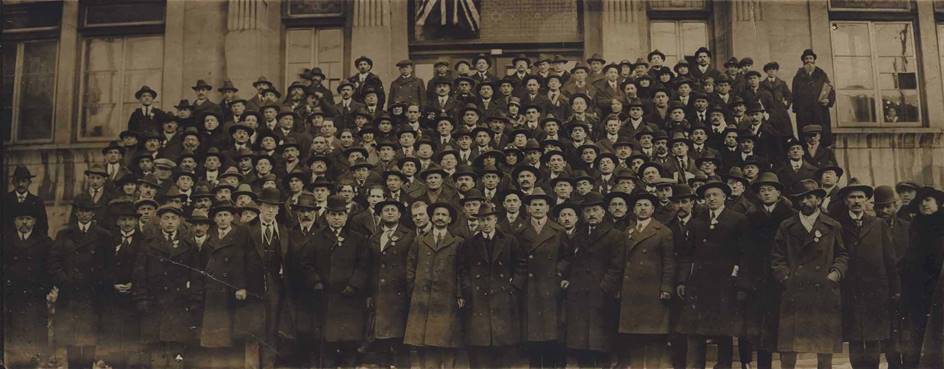
Delegates to the first Canadian Jewish Congress Plenary Assembly, March 1919.Photo Credit : Alex Dworkin Canadian Jewish Archives -
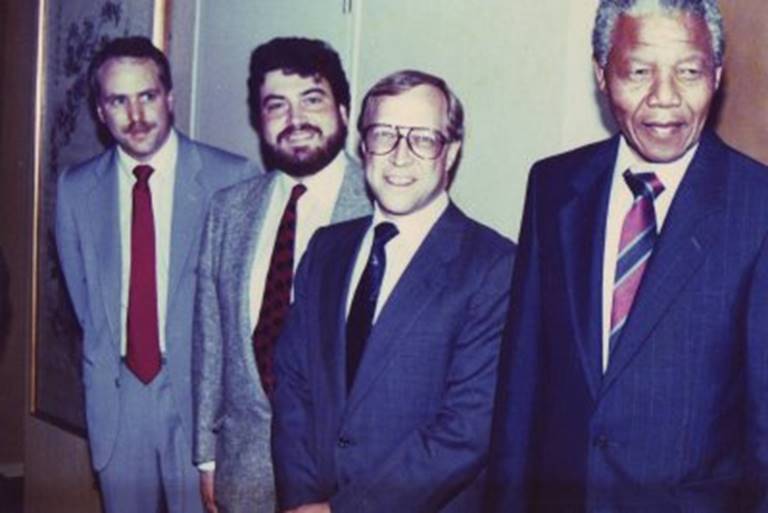
Bernie Farber, Moshe Ronen and Les Scheininger with Nelson Mandela. CJC was the only cultural community organization to meet with Mandela during his visit to Canada in 1990.Photo Credit : Alex Dworkin Canadian Jewish Archives -
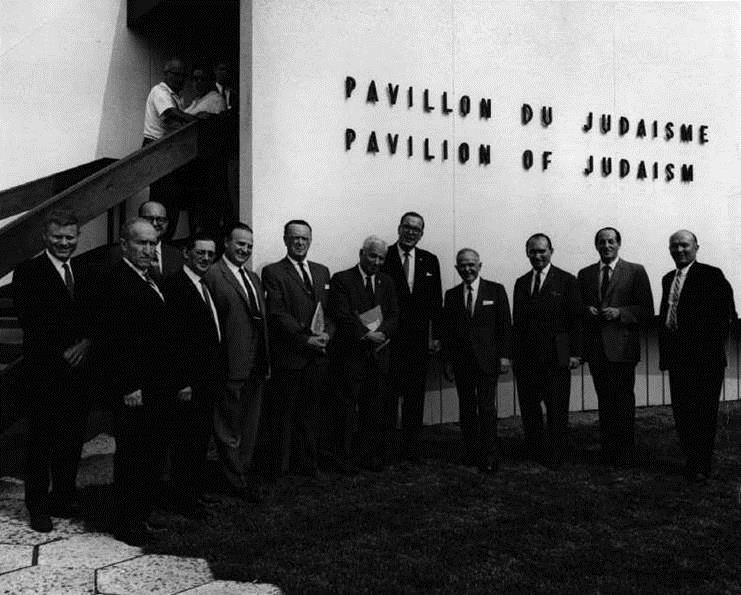
Having served as its consultants, CJC officers participated in the inauguration of the Pavilion of Judaism at Expo ’67 in Montreal, 1967.Photo Credit : Alex Dworkin Canadian Jewish Archives -
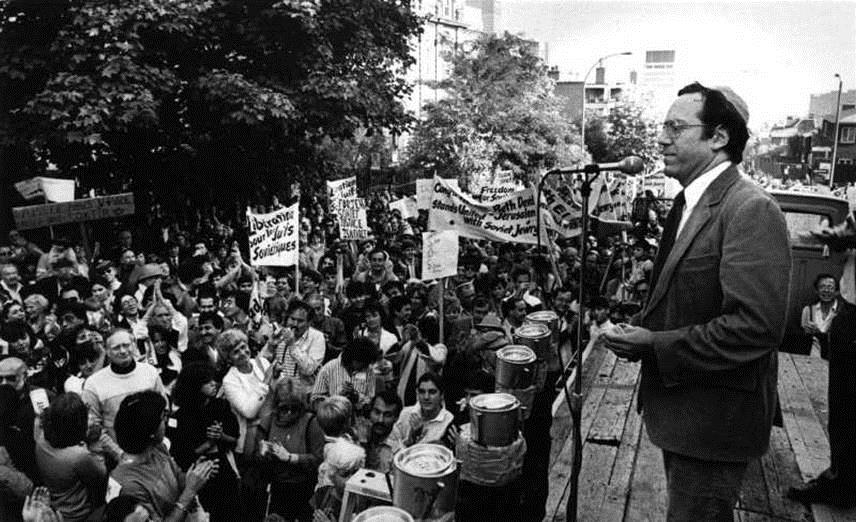
Irwin Cotler of CJC speaks outside the Montreal Soviet consulate during a rally organized in support of Soviet Jewry, 1985.Photo Credit : Alex Dworkin Canadian Jewish Archives -
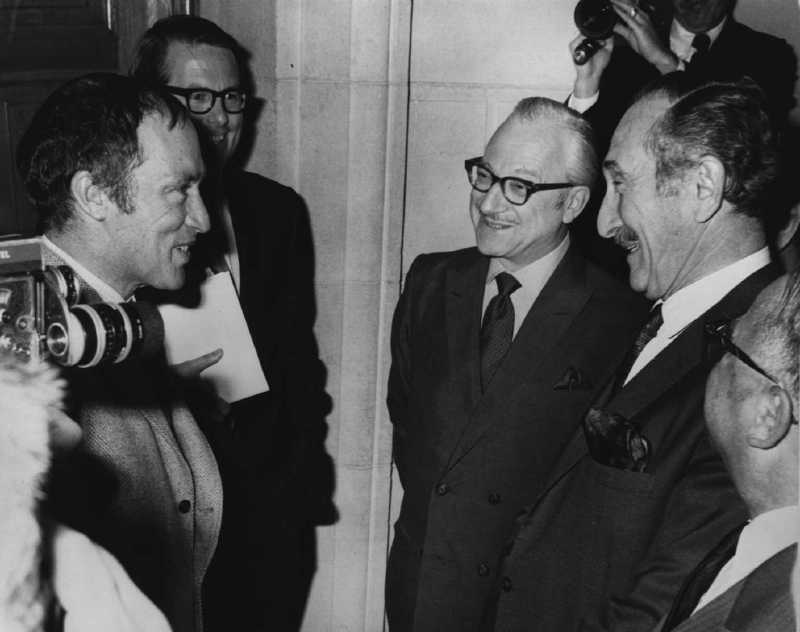
Prime Minister Pierre E. Trudeau with Sol Kanee and Saul Hayes at a CJC Plenary Assembly, 1971.Photo Credit : Alex Dworkin Canadian Jewish Archives -
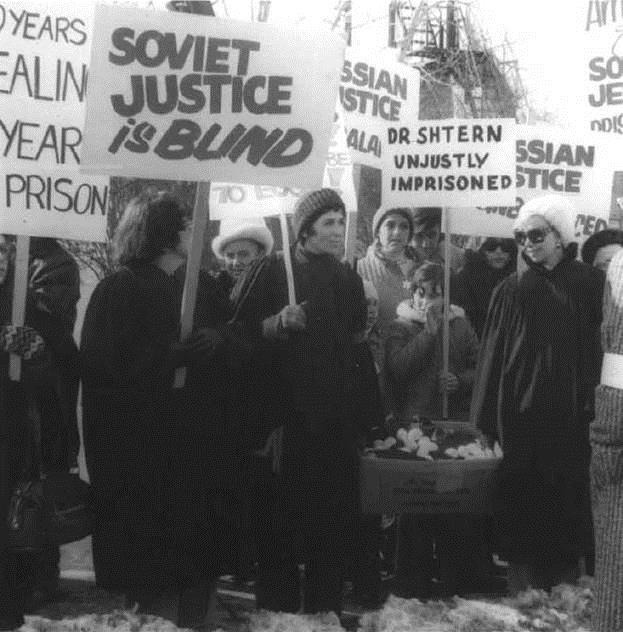
National Committee for Soviet Jewry activists in Montreal, 1970.Photo Credit : Alex Dworkin Canadian Jewish Archives -
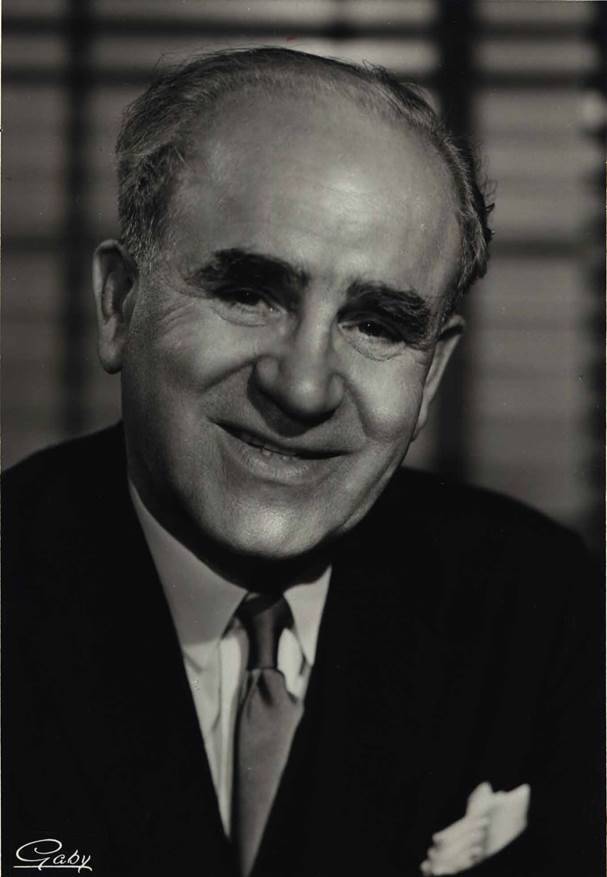
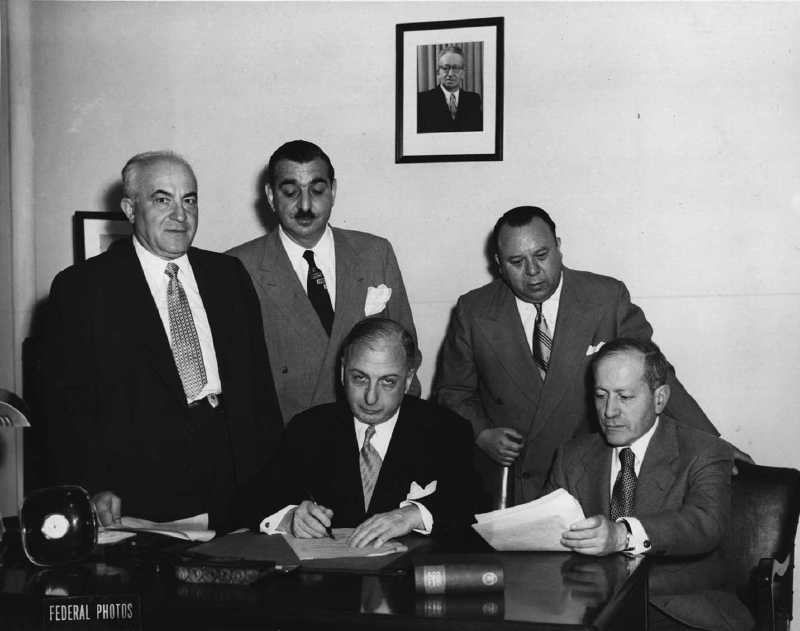
Sam Bronfman (centre)at the establishment of the Canada-Israel Corporation, 1951.Photo Credit : Alex Dworkin Canadian Jewish Archives -
A CJC delegation of community leaders and Holocaust survivors met with Premier Lucien Bouchard the day Yom Hashoah was legislated in Quebec, May 2000.Photo Credit : Alex Dworkin Canadian Jewish Archives -
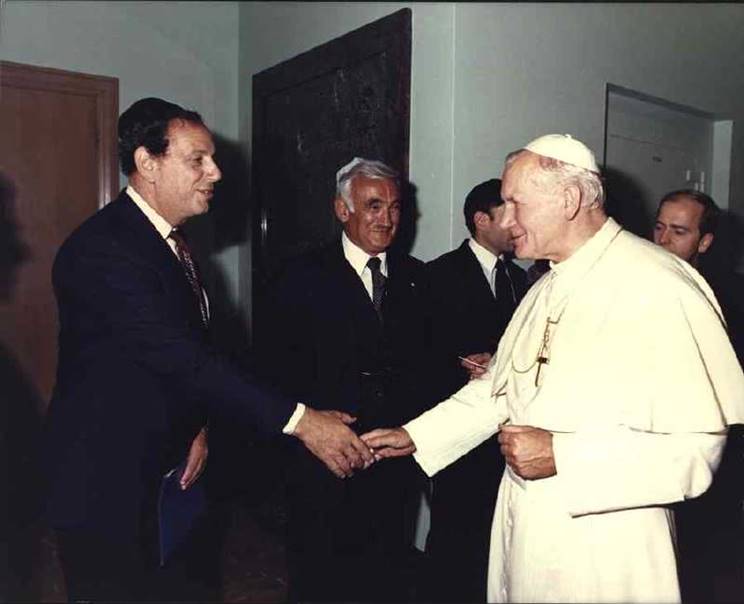
A CJC delegation led by Alan Rose met with Pope John Paul II in Montreal, 1984.Photo Credit : Alex Dworkin Canadian Jewish Archives
Canadian Jewish Congress
The Canadian Jewish Congress, the first democratically-elected representative body for Canadian Jewry, was founded in Montreal in 1919.
Initially, the breadth of the Canadian nation made national organization of the Jewish community difficult. For years, the only national body was the Federation of Canadian Zionists, whose leaders were nominated in the Central European fashion. But World War I, the devastation in Europe, the vast refugee problem and the increasing arrival of Eastern European Jews to Canada spurred the creation of a new national body. To reflect the growing democracy of the new immigrants, the Canadian Jewish Congress, composed of elected officials, set out to represent all of Canadian Jewry on its major political, national and international affairs. As many of the founding organizers were part of the left-leaning Po’alei Zion (Labour Zionism), CJC attempted to satisfy all the different elements of the community. Its first general secretary was Hannaniah Meir Caiserman, a Romanian-born tailor and labour organizer, who held that position until his death in 1950.
Among the longest serving Executive Directors was Saul Hayes, who held the position from 1940 to 1959. Hayes transformed the CJC umbrella organization into a formative lobby group. Working alongside Congress President Samuel Bronfman, he had political connections and public speaking skills that made him invaluable to the CJC Committee for Refugees in the 1930s. The plight of Jews under Nazi rule drew him to a career in which he would fight tirelessly on behalf of the Jewish community. Hayes was active in many lobbying efforts during his campaign to challenge Canada’s restrictive wartime immigration policies. One such delegation appealed to F. C. Blair, Ottawa’s seemingly obscure, but powerful, director of the Immigration Branch of the Department of Mines and Resources, to reverse policies preventing German Jewish refugees from coming to Canada. With the assistance of community leaders Hirsch Wolofsky, editor of the Keneder Adler (Montreal’s Yiddish daily), Peter Bercovitch, honorary President of the Federation of Polish Jews and a Member of Parliament, and fellow CJC leader Michael Garber, the delegation gained admission for 130 Jews. Unfortunately, the group was unable to shift federal policy further: Canada accepted fewer than 5,000 Jewish refugees from 1933 to 1948 – less than any other Western country.
Known as “Mr. Canadian Jewish Congress,” Hayes was an important ambassador for Canadian Jews to Ottawa. Under the leadership of the Bronfman-Hayes team, the CJC became the unchallenged parliament of Canadian Jewry, working to persuade the government to permit greater integration of Jewish refugees. Hayes was instrumental in Congress’s anti-defamation work, particularly concerning the Social Credit political party, which not only disseminated the Protocols of the Elders of Zion, a work of anti-Semitic propaganda, but whose leaders periodically injected allusions to Nazi discourse into their 1940s political campaigns.
Hayes represented Canadian Jewry at meetings of the World Jewish Congress, the San Francisco Conference on International Security in 1945, the Paris Conference on Peace Treaties in 1946, and at the United Nations Relief and Rehabilitation Agency, where he advocated for victims of war-torn Europe. In the latter capacity, Hayes became the first delegate to represent world Jewry before an international body since the 1919 Versailles Conference. The Saul Hayes Human Rights Award, established by the Canadian Jewish Congress, recognized individuals making significant contributions in the field of human rights.
Other notable members of the CJC include Presidents Lyon Cohen; Samuel William Jacobs; Monroe Abbey; Irwin Cotler; Dorothy Reitman; Irving Abella; Reuven Bulka; Sylvain Abitbol; and Samuel Bronfman, who sat from 1939 to 1962, making him the longest-serving President in its history.
CJC remained the national organization of Canadian Jews for many years – lobbying for, and defending, their rights. For instance, it launched pressure campaigns in an effort to allow Jewish emigration from the Soviet Union. In 2007, it became an organ of the Canadian Council for Israel and Jewish Affairs, and in 2011, it was officially disbanded.
Learn more:
http://imjm.ca/location/2328
http://www.cjhn.ca/en/permalink/cjhn189
http://archives.concordia.ca/hayes
-
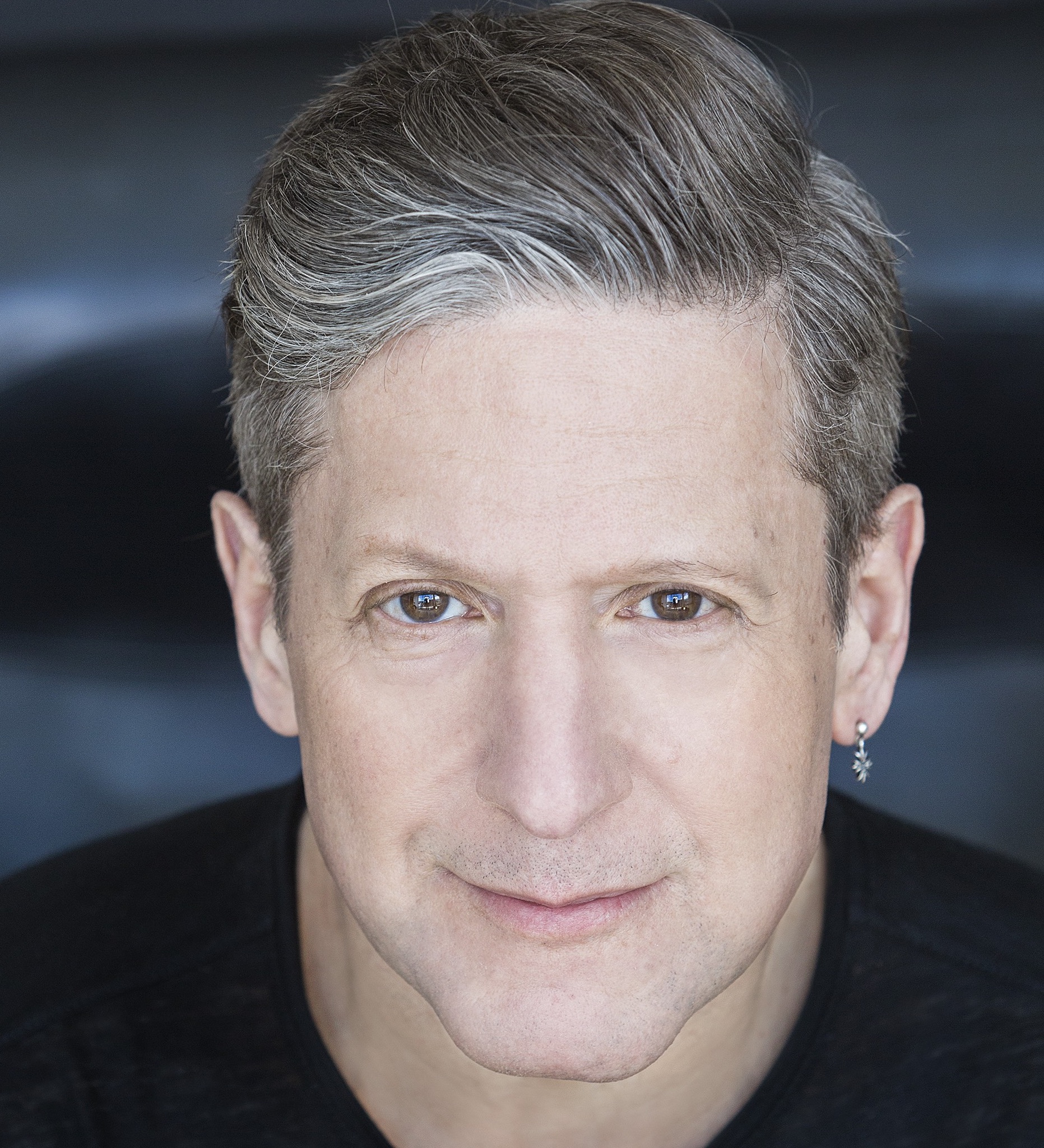
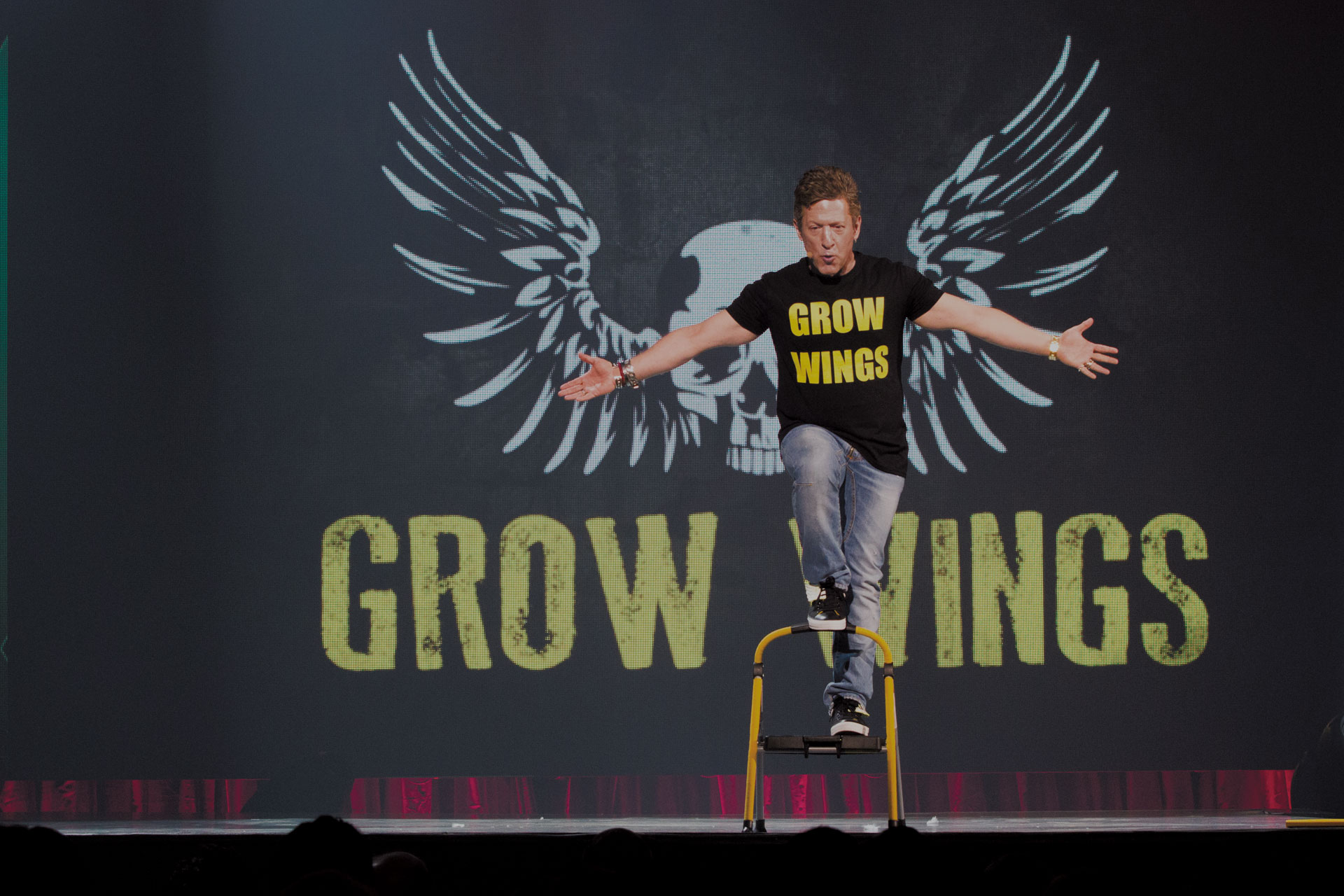
Photo Credit : Andy Nulman -
Photo Credit : Andy Nulman
Andy Nulman
Starting his career at the age of 16 as a journalist, Andy is best known for co-founding the Just For Laughs Comedy Festival in Montreal with Gilbert Rozon, and turning it into the world’s largest and most prestigious event of its kind.
At Just For Laughs, Nulman produced over 150 Festival TV shows, in a host of languages around the world. In 1997, he wrote, produced and even hosted The Worst of Just For Laughs for CBC and won a Gemini Award in 1993 for The Best of Just For Laughs. He is still working on The Average of Just For Laughs.
Following his success with Just For Laughs, in 1999 he went on to co-found mobile media pioneer Airborne Entertainment with Garner Bornstein, which he eventually sold for enough money to be able to hire people to write bios such as this one.
In 2010, he rejoined Just For Laughs as President, Festivals and Television until he left once again to embark on more world-changing digital ventures, including his most recent, the predictive gaming platform Play the Future. He’s also written three books, and is renowned as a risk-taking, trouble-making public speaker. Andy possesses a unique skill set of media, management and marketing expertise over a career spanning more than four decades. And that’s nothing to laugh at. Unless he slips on a banana peel…then you can crack up.
-
Aldo Bensadoun.Photo Credit : Jewish Public Library - Archives -
Photo Credit : Aldo
Aldo Bensadoun
In 1972, working out of a corner in a Le Chateau store, Aldo Bensadoun set up a small retail space selling clogs. In 1993, this visionary businessman opened his first store in the US. By 2016, Aldo was at the helm of an eponymous global footwear and accessories empire with over 3,000 points of sale, employing over 20,000 men and women and serving over 20 million customers annually.
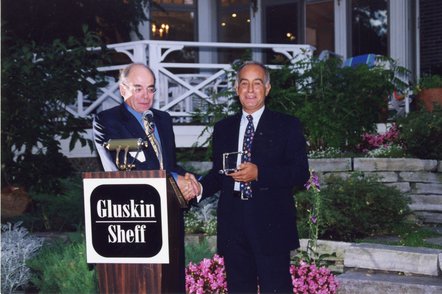
From his humble beginnings, Aldo’s vision incorporated an ethos of style, quality and affordability which has remained unchanged to this day. But more than anything, Aldo set out to build a brand with a conscience. In fact, the Aldo brand is one of the most iconic brands deeply committed to being an unparalleled corporate citizen and giving something back to the community. As the chain grew and prospered, ALDO has supported a host of major causes both locally and globally. It has made repeated donations to institutions including the Jewish General Hospital, the Montreal Children’s Hospital, Mount Sinai Hospital, the Montreal Heart Institute, McGill University, the Canadian Cancer Society, the Montreal Symphony Orchestra, the Montreal Museum of Fine Arts, War Child, Dans la Rue and, of course, the CURE Foundation for breast cancer.
One cause in particular has become synonymous with the ALDO brand. Since the mid-80s, when very few companies had the courage to take a stand, ALDO has been deeply committed to the fight against AIDS. It has been involved with raising awareness, education, prevention, protection and to finding a definitive cure. It has pioneered and collaborated in numerous initiatives such as friendship bracelets, VFILES, Partners in Health and HIV Equity, all of which continue to make a real difference. For those living with HIV/AIDS, and many others around the world, the ALDO group remains a shining example of a brand with a true conscience.
-
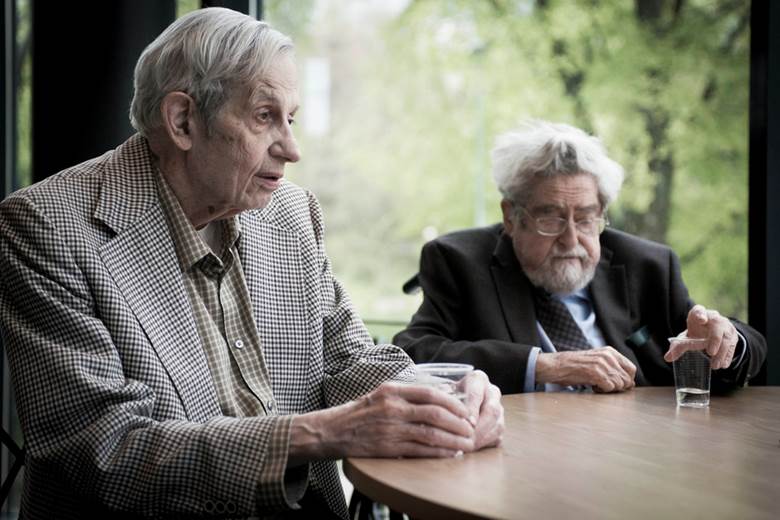
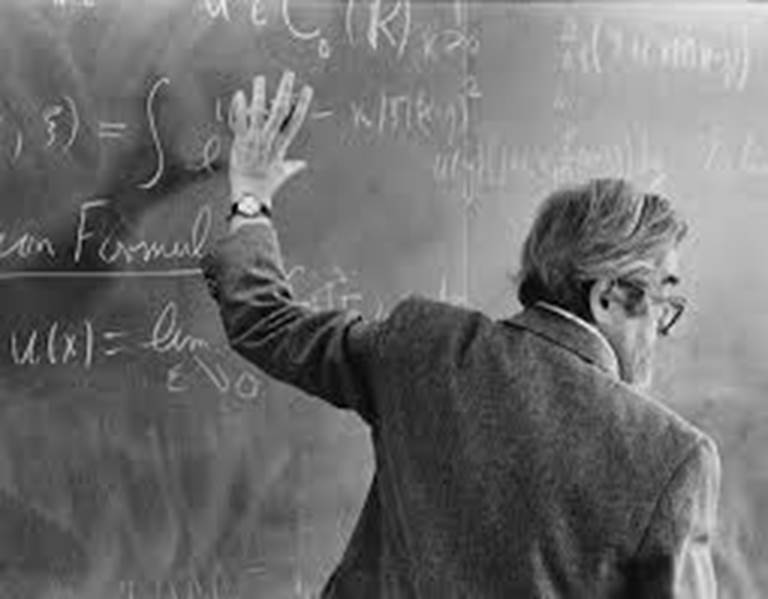
Louis Nirenberg teaching at the Courant Institute of Mathematical Sciences, New York University.Photo Credit : Courant Institute, NYU. -
Steven Nash and Louis Nirenberg (2015).Photo Credit : University of Bergen -
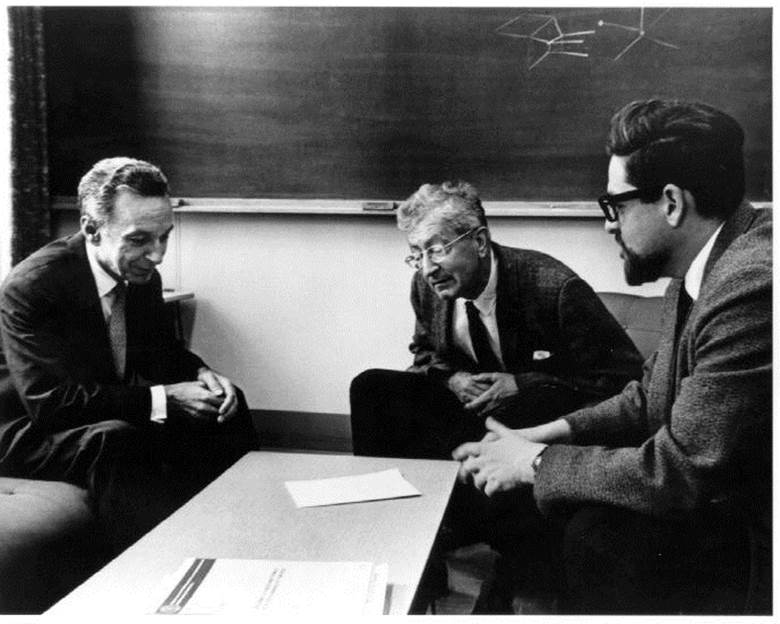
Eleazer Bromberg, James J. Stoker, and Louis Nirenberg (1960s).Photo Credit : Courant Institute, NYU. -
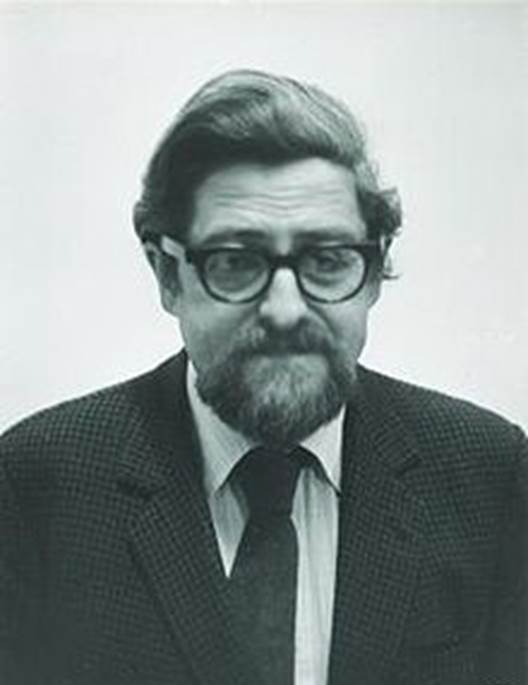
Louis Nirenberg.Photo Credit : Oberwolfach Photo Collection
Louis Nirenberg
Canadian mathematician Louis Nirenberg is considered one of the greatest theoretical analysts of the 20th century, having made singular contributions to the field of linear and nonlinear partial differential equations (PDEs).
Nirenberg was born in Hamilton, Ontario, but his family soon moved to Montreal to join the larger Jewish community. He attended Baron Byng High School and then earned his undergraduate degree from McGill University, where he studied math and physics. After graduating, he joined the National Research Council of Canada, and worked on the Manhattan Project. In 1949, he obtained his doctorate from New York University (NYU), leading to a Professorship at NYU’s Courant Institute of Mathematical Sciences.
Within the field of linear and nonlinear partial differential equations (PDEs), Nirenberg’s contributions include the Gagliardo–Nirenberg interpolation inequality, an essential discovery in the solution of the elliptic partial differential equations, which affect many areas of mathematics; he also contributed to the formalization of a new mathematical concept known as John–Nirenberg space, which is used to study the behavior of martingales: elastic materials and games of chance. He was also instrumental in solving one of the biggest problems in physics, the Navier–Stokes existence and smoothness problem of fluid mechanics and turbulence. His co-authored paper on solutions to the Navier–Stokes equations was honoured by the American Mathematical Society with its 2014 Steele Prize for Seminal Contribution to Research.
Among Nirenberg’s numerous awards are the Bocher Prize for the American Mathematical Society (1959), the Crafoord Prize (1982), the Steele Prize for Lifetime Achievement from the American Mathematical Society (1994), the National Medal of Science (1995), the first-ever Chern Medal for lifetime achievement by the International Mathematical Union and the Chern Medal Foundation (2010), and the Abel Prize from the Norwegian Academy of Science and Letters (2015).
Learn More:
http://www.baronbynghighschool.ca/alumni/louis-nirenberg/
http://www.mat.ucm.es/~ln06/nirenberg/interview.pdf